

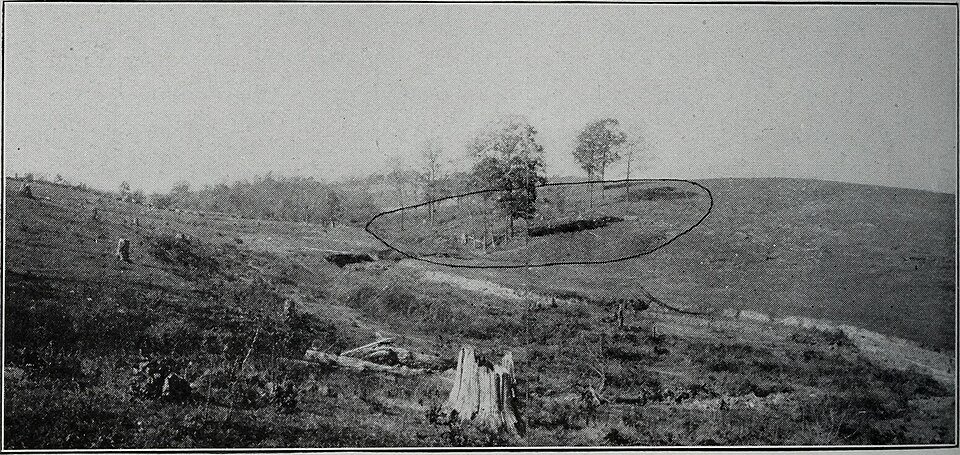
The oldest known asteroid impact site on Earth has been confirmed in Western Australia’s Pilbara Craton, pushing back the oldest recorded impact by more than half a billion years. The Miralga Impact Structure, preserved as the 35-kilometer-wide North Pole Dome, has been dated to 3.02 billion years ago by a team led by Chris Kirkland of Curtin University, using uranium-lead dating of impact-modified zircon crystals.
The finding, published in Geology, fills a critical gap in Earth’s impact record. The Archaean Eon (4.0 to 2.5 billion years ago) was a period when impacts were far more common than today, but virtually no craters have been preserved due to plate tectonics, erosion, and burial. The Miralga structure is the only confirmed impact site from this entire 1.5-billion-year stretch.
How the age was determined
The team found unusual branching, skeletal-shaped zircons at the North Pole Dome, interpreted as impact-modified crystals that formed when older zircons were disrupted, partially recrystallized, and regrown during the intense heat of the impact. They also dated apatite, a phosphate mineral that forms when hot fluids percolate through impact-shocked rocks. Both minerals returned the same age of 3.02 billion years, providing cross-validation.
The date resolves a scientific dispute. Kirkland’s group originally estimated the impact at roughly 3.47 billion years in 2025, but an opposing study published in Science Advances by Aaron Cavosie’s team argued it was no older than 2.7 billion years. The new zircon analysis, using laser ablation ICP-MS to measure isotopic signatures at microscopic scale, separated the impact event from later geological alterations and settled on 3.02 billion years.
A world with life already present
The site holds particular significance because stromatolite fossils roughly 3.5 billion years old, among the oldest traces of life on Earth, are found just a few kilometers away in the same region. The 3.48-billion-year-old Buick stromatolite site lies within the greater inferred area of the Miralga structure. This means the impact struck a world already teeming with bacterial mats and early microbial communities, making the site a valuable analogue for understanding how impacts affected early life on Earth and, by extension, potential life on Mars.
The original crater diameter is debated, Kirkland’s earlier estimate of up to 100 kilometers contrasts with Cavosie’s estimate of roughly 16 kilometers, but both sides agree on the structure’s impact origin, confirmed by the presence of shatter cones and shocked minerals.
What this means
The Miralga impact occurred during a time of major geological transition. The Pilbara Craton, one of the oldest intact pieces of continental crust on Earth, preserves a record of early Earth processes that most of the planet has lost. The discovery constrains the bombardment flux in the mid-to-late Archaean and provides a fixed point for calibrating impact models of the early solar system.
The study also demonstrates the power of zircon as an impact chronometer: even in a structure that experienced 3 billion years of geological overprinting, the uranium-lead system in impact-recrystallized zircon preserves the date of the event with remarkable precision.
Source: Kirkland, C.L. et al. (2026). Geology. DOI: 10.1130/G54866.1