

What happens if Taiwan comes under crisis tomorrow?
It is the question strategists in Washington, Tokyo, and Taipei have been gaming out for years. China’s pressure on the self-governing island has intensified through every channel available: military exercises that grow larger and more realistic, political warfare targeting the island’s international standing, and economic coercion designed to isolate it from global supply chains. These are the hallmarks of Beijing’s “gray zone” approach, a strategy of gradual assumption of control that deliberately stops short of triggering the conditions for full-scale war, at least until the balance of power shifts decisively.
Yet beneath all the wargaming and strategic scenario-building runs a deeper problem that no amount of planning can fix. Decades of offshoring have hollowed out America’s industrial base to the point where the gap between what strategy demands and what industry can deliver has become a chasm.
The timing could not be worse. In early June 2026, Chinese President Xi Jinping visited North Korea, a trip that produced a familiar but newly significant outcome: Kim Jong Un reaffirmed Pyongyang’s support for the “One China” principle. North Korea has already sent an estimated 15,000 troops to support Russia’s war in Ukraine, a development that raises sharp questions about Pyongyang’s potential role in a Taiwan scenario. If the crisis in Ukraine has demonstrated anything, it is that seemingly limited commitments can cascade into much larger entanglements, and the same logic applies in the Asia-Pacific.
The People’s Liberation Army conducted large-scale exercises around Taiwan in December 2025, a direct response to an $11 billion US arms sale to Taipei. These drills are no longer mere shows of force. They are rehearsals, and they are becoming more frequent, more complex, and more threatening with each iteration. The PLA is building the muscle memory for an amphibious blockade, and possibly for invasion.
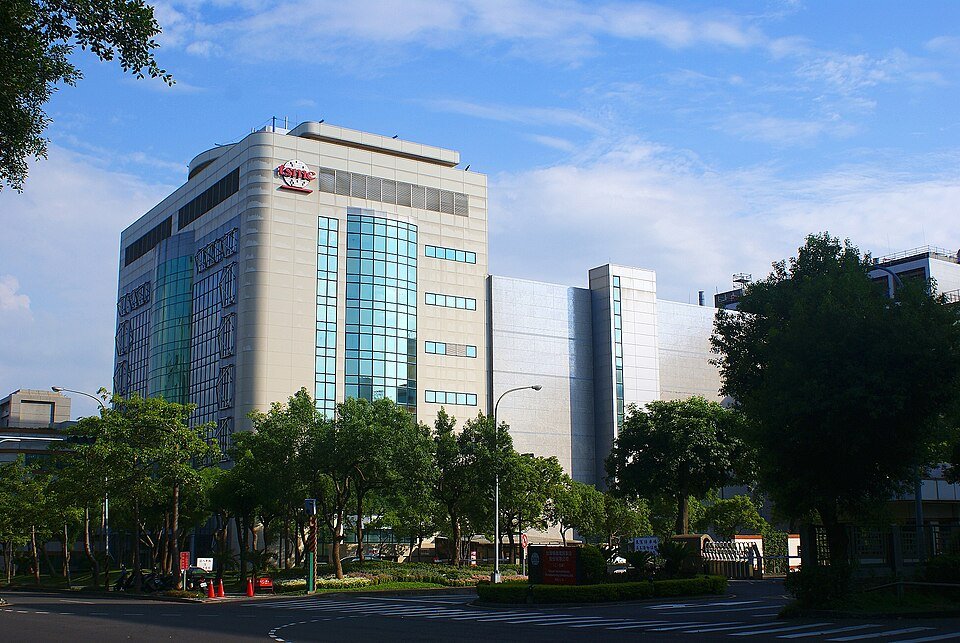
Then there is the semiconductor dimension, and it is the one that keeps defense planners awake at night. Taiwan produces over 90 percent of the world’s most advanced semiconductors. TSMC’s manufacturing dominance means that any disruption to the island, whether from blockade, invasion, or simply the chaos of crisis, would ripple through the global economy within hours. Advanced chips power everything from F-35 fighters to Patriot missile batteries to the guidance systems on precision munitions. A Taiwan crisis would not just be a geopolitical emergency. It would be a supply chain catastrophe for the very weapons systems the United States would need to respond.
Under the Taiwan Relations Act of 1979, the United States is obligated to maintain the capacity to resist any coercion against Taiwan. But capacity is not the same as capability, and capability depends on industrial production. The uncomfortable reality is that America’s defense industrial base has been hollowed out by the same offshoring trends that reshaped the broader economy. Shipbuilding capacity has atrophied. The supply chains for missile components, precision optics, and advanced electronics are stretched across multiple countries, many of which would be compromised in a conflict with China. The skilled labor force that once underpinned American defense manufacturing has aged out, and efforts to rebuild it have been slow and uneven.
What a prolonged Taiwan crisis would actually demand of American industry is sobering. Sustained naval operations in the western Pacific require ships, munitions, and maintenance capacity that the current industrial base cannot provide at the necessary tempo. The conflict in Ukraine has already shown how quickly modern warfare consumes artillery shells, missiles, and drones. A Taiwan scenario would be exponentially more demanding, involving sea denial, anti-access area denial operations, and the protection of supply lines across the entire Pacific.
The gap between strategic planning and industrial reality is the most dangerous blind spot in American defense policy today. Carefully drawn scenarios, war games, and strategic frameworks all assume a certain level of industrial output that simply does not exist. The cost of offshoring, so long treated as a matter of corporate efficiency and shareholder returns, has revealed itself as a strategic vulnerability of the first order. No amount of alliances, forward basing, or diplomatic maneuvering can compensate for the inability to build enough ships, missiles, and spare parts.
For now, the crisis in the Taiwan Strait remains latent. But the forces pushing it toward a breaking point are not diminishing. Xi’s visit to Pyongyang, the PLA exercises, the gray zone pressure, and the deepening interdependence of the semiconductor supply chain all point in one direction. The question is not whether a crisis will come, but whether the United States will have the industrial foundation to meet it when it does.
–