

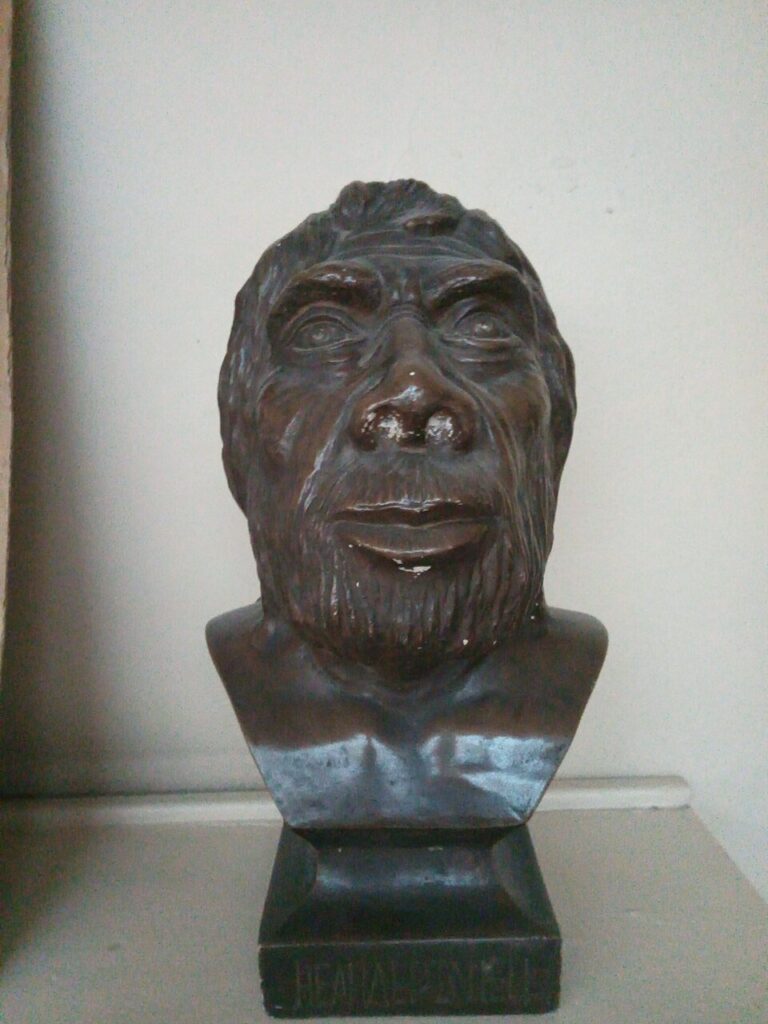
The classic narrative of Neanderthal extinction goes like this: as modern humans expanded across Europe, small, isolated Neanderthal populations suffered from inbreeding and progressive genetic deterioration until they simply faded away. A study published June 24 in Nature by researchers at the Max Planck Institute for Evolutionary Anthropology turns that story on its head, at least for northwestern Europe.
The team, led by Elena Bossoms Mesa, Elena Essel, and Stéphane Peyrégne, analyzed 27 Neanderthal individuals from 10 archaeological sites in Belgium and France, all living less than 52,500 years ago, in the final millennia before their extinction around 40,000 years ago. One specimen, Goyet Q56-1 (GN1) from Belgium, was sequenced to 22.4-fold coverage, becoming only the fifth high-coverage Neanderthal genome ever produced. For the remaining 19 remains with sufficient preservation, the team used a custom ArchaicPlus capture panel targeting approximately 2.3 million SNPs.
No evidence of inbreeding
The key finding is what the genomes do not show. GN1 had an autosomal heterozygosity of 1.51 × 10⁻⁴, within the typical Neanderthal range but much lower than present-day humans. However, analysis of homozygosity-by-descent (HBD) tracts found 6.6,22.3% HBD overall, with no excess of long tracts (>10 centimorgans). Long HBD tracts are the hallmark of recent inbreeding, mating between close relatives, and they were prominent in the well-known Altai and Chagyrskaya Neanderthals from Siberia. The northwestern European Neanderthals show no such signature.
Kinship analysis revealed no close relatives (up to third-degree) among the 15 remains with less than 5% contamination. Three sets of genetically identical remains were identified, likely representing different skeletal elements from the same individuals, but the assemblage includes unrelated adults and adolescents (mostly female) and two juvenile males, consistent with a larger, connected social network rather than isolated family groups.
Higher connectivity than previously thought
Population structure analysis using D-statistics showed that all Belgian and French Neanderthals are significantly more similar to GN1 than to the Vindija 33.19 specimen from Croatia (Z-scores 2.97,10.20), with an estimated split time from the Vindija lineage of roughly 54,000 years ago. This suggests that late Neanderthals in northwestern Europe formed a coherent population with genetic connectivity maintained through isolation-by-distance, very different from the fragmented, isolated groups seen in Siberia.
Mitochondrial DNA analysis placed most individuals in a large clade of late western Neanderthals, with two notable exceptions: Couvin G6-0083 shares a deeply divergent lineage with the “Thorin” specimen from Mandrin, France, and Les Cottés Z4-1514 belongs to a deeper clade associated with the Chagyrskaya and Okladnikov Neanderthals from the Altai.
Importantly, the team found no evidence of modern human introgression in any of the Neanderthal genomes, despite the fact that early modern humans were present in northwestern Europe from around 47,000 years ago. The absence of reciprocal gene flow in Neanderthals remains an open question.
What this means for the extinction question
If late Neanderthals in northwestern Europe were not suffering from inbreeding or progressive genetic meltdown, then something else drove their extinction. The authors write that “western Neanderthals had higher genetic diversity and greater connectivity than did the Denisova and Chagyrskaya Neanderthals from the Altai region,” directly challenging the idea that genetic deterioration was the primary cause.
The findings shift the focus back to other extinction drivers: competition with modern humans for resources, demographic advantages of the incoming populations, climate instability, or some combination of factors. The data also show that Neanderthal population structure was heterogeneous across their range, what happened in Siberia was not what happened in Belgium.
Source: Bossoms Mesa, E., Essel, E., Peyrégne, S. et al. Genetic diversity of late Neanderthals in northwestern Europe. Nature (2026). DOI: 10.1038/s41586-026-10625-1