

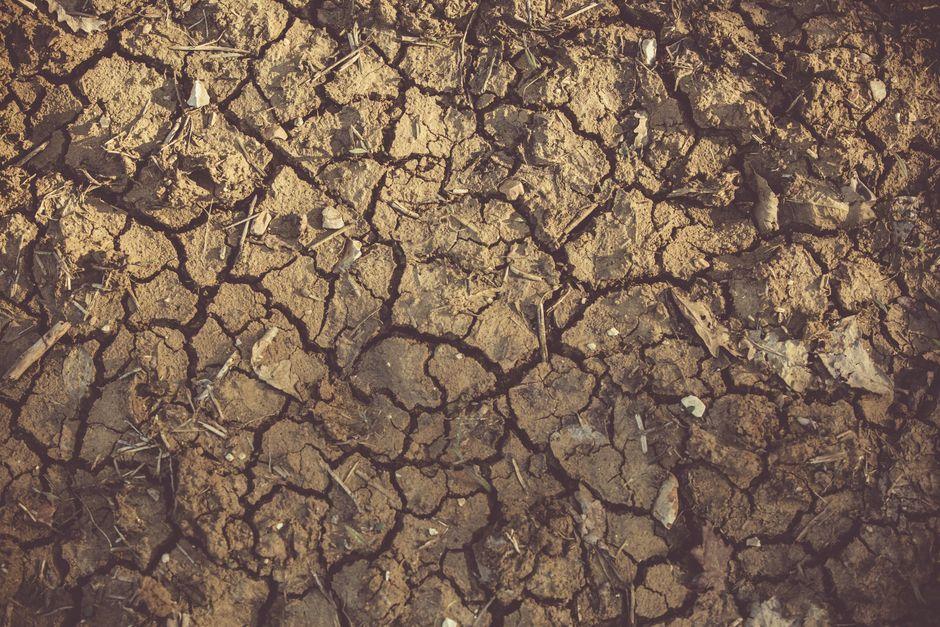
In early March, most of England’s reservoirs were brimming. Two months of relentless winter rain had replenished supplies depleted during the 2025 drought, and water managers breathed cautiously. By mid-July, seven English regions were in official drought, more than 20 million people faced hosepipe bans, and the Environment Agency was warning that parts of Devon and Hampshire had gone more than a month without measurable rainfall.
The transition was not gradual. It was abrupt, violent, and deeply unusual, a phenomenon that scientists have begun calling a “flash drought.” And it is forcing a fundamental reassessment of how Britain’s water infrastructure handles a climate that no longer follows the old rules.
The Numbers That Explain the Crisis
July 2026 delivered just 7 percent of England’s average monthly rainfall. In southern England, the figure was an almost incomprehensible 1 percent. Those statistics sit alongside data from the opposite end of the spectrum: January and February 2026 were among the wettest on record, with prolonged Atlantic storms saturating the ground and refilling depleted aquifers.
The whiplash has been ferocious. Reservoirs that stood near capacity in early spring have drawn down at rates faster than any year in the past decade. The dry ground, baked by record-breaking June heat, could not absorb what little rain did fall; instead, it ran off or evaporated within hours of contact.
June 2026 set a new UK temperature record of 38.0 degrees Celsius (100.4 degrees Fahrenheit) in Lingwood, Norfolk, on the 26th of that month. That single reading, combined with the fourth official heatwave of the year so far, has essentially cooked the landscape. More than 200 wildfire incidents were recorded across England and Wales in the past two weeks alone, stretching fire services that are not equipped for what is becoming a regular summer occurrence.
Seven Regions, One Problem
The seven English regions declared to be in drought span the country: East Anglia, Hertfordshire and London, the Thames Valley, Hampshire and the Isle of Wight, Devon and Cornwall, the West Midlands, and Wessex, which covers Dorset, Somerset, Wiltshire, and South Gloucestershire. The drought has also extended into North Wales and the Upper Severn basin, threatening water supplies that serve major population centers further downstream.
For the 20 million people living under hosepipe bans, the restriction is an inconvenience. But for the Environment Agency, it is a symptom of a deeper and more dangerous imbalance. Helen Wakeham, a director at the agency, has described the situation in blunt terms: water across much of the country is now being used faster than nature can replenish it. The deficit is not seasonal. It is structural.
What a Flash Drought Means
The term “flash drought” emerged from agricultural meteorology in the United States, where rapid onset dry spells have long threatened the Great Plains. It applies when drought conditions develop within weeks rather than months, driven not by a slow absence of rain but by a perfect storm of heat, evaporation, and depleted soil moisture.
England’s current drought fits the definition precisely. The abrupt switch from a wet winter to a torrid summer, what climate scientists call “climate whiplash,” is the signature of an accelerating hydrological cycle. Warmer air holds more moisture. It pulls water from soils and plants faster. When it does rain, the events are often intense and short, with much of the water running off rather than soaking in.
The result is a paradox that water managers are only beginning to grapple with: a region can enter a drought with full reservoirs and still run out of water within months, because the rate of loss far exceeds anything the system was designed to handle.
Infrastructure Built for a Different Climate
Britain’s water supply network relies on assumptions about gradual seasonal transitions. Reservoirs are filled over the winter and drawn down over the summer, with the expectation that autumn rains will arrive to begin the cycle again. The system was designed for a climate in which droughts built slowly, over multiple dry seasons, and in which winter recharge was reliable.
Those assumptions no longer hold. The 2022 drought was followed by the 2025 drought. Now, barely a year later, 2026 has produced an even more severe event. Three droughts in five years is not a run of bad luck; it is a pattern, and it points toward a future in which the concept of a “normal” year becomes meaningless.
Professor Hayley Fowler of Newcastle University has attributed the crisis to four converging factors: rising temperatures driven by a warming climate, increasing water demand from a growing population, aging infrastructure that loses vast volumes through leaks, and the growing volatility of Britain’s rainfall patterns. All four, she has argued, must be addressed simultaneously, because no single intervention will be sufficient.
The Environment Agency has projected that England could face a water supply shortfall of 5 billion liters per day by the middle of the century. That figure, already alarming when it was first published, now looks conservative given the speed at which conditions are deteriorating.
Farmers on the Front Line
For English farmers, the drought has accelerated a harvest that was already running ahead of schedule. Cereal crops ripened weeks early under the relentless sun, and some growers have completed harvests that would normally extend into late August. While early harvests reduce certain risks, they also compress income into a shorter window and leave fields bare through the hottest part of the summer, increasing the risk of soil erosion and dust loss.
The true cost, however, is in the planting for next year. Dry soils make autumn sowing difficult or impossible. Irrigation bans restrict the ability to protect high-value fruit and vegetable crops. Every drought year makes food production in England more expensive and riskier, pushing the country further from self-sufficiency at a time when global food supply chains face their own climate pressures.
Nature Does Not Have a Hosepipe Ban
The hosepipe restrictions that apply to 20 million people do not extend to the natural world. And nature is already showing the strain.
River levels across southern England and the Midlands have fallen to critically low flows. In several river systems, the water is too shallow and too warm for Atlantic salmon to move upstream to their spawning grounds. The salmon run, one of the great ecological events of the British year, has effectively been halted. Conservation groups warn that if these low-flow summers become the norm, wild Atlantic salmon could be functionally extinct in English rivers within two decades.
The same low flows concentrate pollutants, increase water temperatures, and reduce dissolved oxygen, creating conditions in which fish kills become likely. In the 2022 drought, thousands of fish died in rivers across England. There is little reason to believe 2026 will be kinder.
The Road Ahead
Britain is not running out of water in an absolute sense. The country receives enough annual rainfall, even in dry years, to meet its needs. The problem is one of timing, storage, and distribution. A climate that delivers half its annual rainfall in two months and then nothing for the next four requires infrastructure that can capture and hold that water for use during the dry season.
That infrastructure does not currently exist at scale. Reservoir capacity in England has not kept pace with population growth or climate change. Leakage rates in many water company networks remain stubbornly high, wasting billions of liters every day. And the regulatory framework that governs water abstraction and use was written for a world in which droughts were rare events, not annual occurrences.
The flash drought of 2026 is not an anomaly. It is a preview of the operating conditions that England will face with increasing frequency as the planet continues to warm. The reservoirs were full in March. By July, they were critically low. Next year, the whiplash could be worse.
The question is not whether England can survive a single drought summer. It is whether the country can build a water system that survives the decade.
Reference: BBC News, 29 July 2026. Reporting by Mark Poynting.