

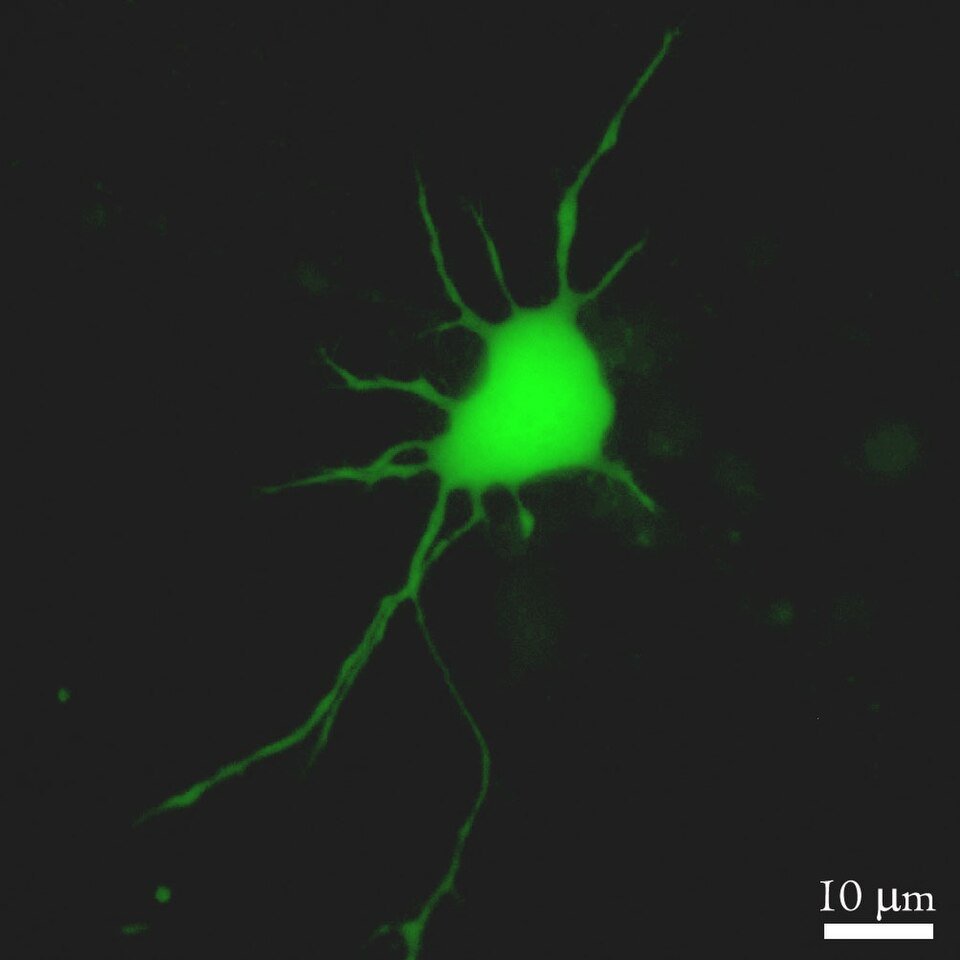
The accumulation of hyperphosphorylated tau protein into neurofibrillary tangles is one of the defining pathologies of Alzheimer’s disease and related tauopathies such as progressive supranuclear palsy and corticobasal degeneration. For decades, drug developers have tried, and largely failed, to clear tau from the brain. Antibodies, small molecules, antisense oligonucleotides: the approaches have been many, the clinical breakthroughs few.
A study published June 23 in PLOS ONE (DOI: 10.1371/journal.pone.0352120) from Kyung Hee University in Seoul suggests a new candidate: omipalisib (GSK2126458), a dual PI3K/mTOR inhibitor originally developed by GlaxoSmithKline for cancer and idiopathic pulmonary fibrosis, and already tested in Phase I trials.
The mechanism
The logic is straightforward in outline. Tau becomes hyperphosphorylated and aggregates in part because the cell’s quality-control machinery, autophagy, the system that degrades and recycles damaged proteins, is impaired in aging neurons. The mTOR pathway is the master regulator of autophagy: when mTOR is active, autophagy is suppressed; when mTOR is inhibited, autophagy is unleashed.
Omipalisib inhibits both PI3K and mTOR, making it a more potent autophagy inducer than rapamycin (which targets only mTORC1) or single-pathway inhibitors. Its Ki values are in the pico- to subnanomolar range: 0.019 nM for PI3K-alpha and 0.18 nM for mTORC1, among the most potent dual inhibitors known.
The Kyung Hee team, led by Kyung-Soo Inn and Jong Kil Lee, tested this in human neuroblastoma cells expressing P301L mutant tau (SH-Tau cells). Omipalisib at 0.3 to 1 nM reduced phosphorylation at tau sites Ser262 and Ser404 within hours, without causing cytotoxicity (10 nM was toxic). Crucially, total tau levels (measured by Tau5 antibody) did not change, only the hyperphosphorylated fraction. The autophagy inhibitor 3-methyladenine blocked the effect, confirming the mechanism: omipalisib was not directly modifying tau but was activating autophagy, which then cleared the hyperphosphorylated species.
The animal data
The team then moved to PS19 mice, a transgenic strain expressing human P301S tau that develops progressive tau pathology and cognitive deficits by 6-8 months of age.
Forty mice were divided into four groups: wild-type plus vehicle, wild-type plus omipalisib (1 mg/kg daily intraperitoneal injection), PS19 plus vehicle, and PS19 plus omipalisib. The dose was selected from a pilot tolerability study, 1 mg/kg was well-tolerated, while 3 mg/kg caused three of seven mice to reach humane endpoints.
After two months of treatment, the biochemical results were clear. In brain lysates, omipalisib significantly reduced RIPA-insoluble (tightly aggregated) phospho-tau at Ser396 (p = 0.0055) and AT8 sites (Ser202/Thr205, p = 0.0383), as well as RIPA-soluble Ser396 (p = 0.0041) and AT8 (p = 0.0001). Phosphorylated mTOR was significantly reduced (p = 0.0017), confirming target engagement in the brain.
Cognitive testing in the Morris water maze showed that omipalisib-treated PS19 mice learned faster (shorter escape latency during training), crossed the platform location more times in the probe trial, and spent more time in the target quadrant, all with no difference in swim speed, ruling out motor impairment as a confound. Their navigation patterns resembled those of wild-type controls more closely than vehicle-treated PS19 mice.
The repurposing opportunity
The significance of the finding lies less in the novelty of the mechanism, mTOR inhibition as a strategy for tau clearance has been explored with rapamycin and other agents, than in omipalisib’s drug development history. The compound has already been through Phase I testing in humans for advanced solid tumors and lymphoma (sponsored by GSK), with documented safety, tolerability, and pharmacokinetic data.
It also crosses the blood-brain barrier, an essential property for any Alzheimer’s therapeutic. After oral administration at 10 mg/kg in mice, omipalisib was detectable in brain tissue at concentrations sufficient to inhibit mTOR, with a calculated logP of approximately 3.2, in the optimal range for CNS penetration.
The PS19 model has limitations. It is a pure tauopathy model driven by a human transgene, not a model of sporadic Alzheimer’s disease, which also involves amyloid-beta pathology. The study used only male mice. And the authors note that autophagic flux was not directly confirmed with lysosomal inhibitors or genetic approaches, the evidence for autophagy dependence is associative, relying on the 3-MA co-treatment experiment and p62/LC3B marker modulation.
What comes next
The paper positions omipalisib alongside other autophagy-inducing candidates for tauopathies, including rapamycin, the dual PI3K/mTOR inhibitor NVP-BEZ235, and trehalose. Its competitive advantage is prior clinical development, a shorter path to repurposing trials than de novo drug discovery.
Whether that advantage translates into clinical benefit depends on tolerability at CNS-effective doses. The therapeutic window in the mouse study was narrow: 1 mg/kg worked, 3 mg/kg was toxic. In humans, PI3K/mTOR inhibition causes metabolic and immunosuppressive effects that were acceptable in oncology but may be harder to justify in slowly progressive neurodegenerative disease. The question is whether tau clearance can be achieved at doses that preserve the beneficial functions of PI3K and mTOR in peripheral tissues.
Source: PLOS ONE 21(6): e0352120, DOI: 10.1371/journal.pone.0352120, “Omipalisib reduces hyperphosphorylated tau protein by modulating mTOR-autophagy pathway” by Hwang, Kim, Jeon et al., June 23, 2026.