

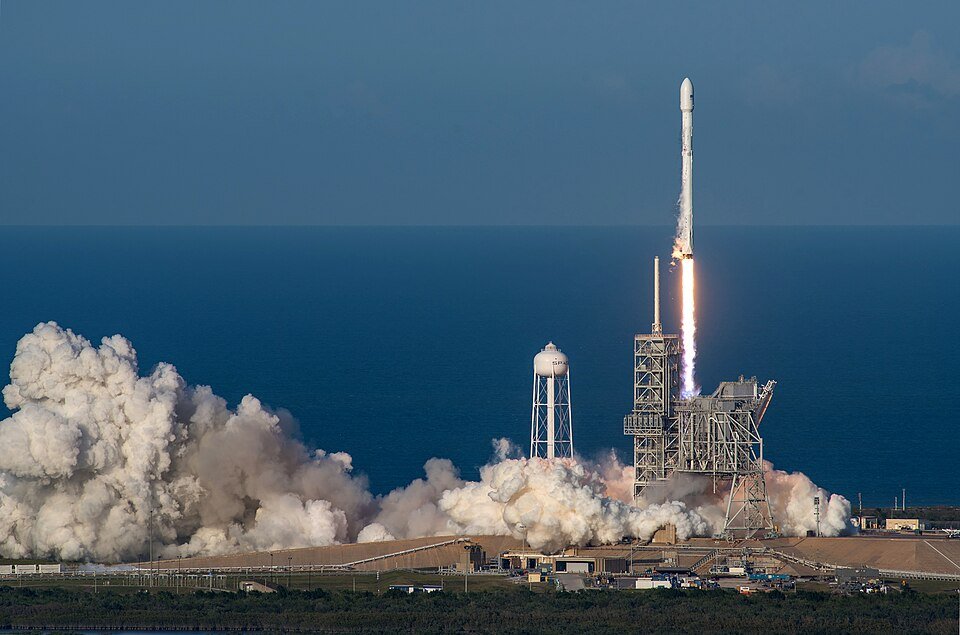
NASA’s launch infrastructure is approaching a breaking point. A new report from the agency’s Office of Inspector General (OIG) warns that Kennedy Space Center (KSC) in Florida and Wallops Flight Facility in Virginia will operate at near capacity by 2028 to 2029, driven by a surge in commercial launch activity that has outpaced the aging facilities built for the Apollo and Space Shuttle eras.
The report, IG-26-010, paints a stark picture of infrastructure that is “dated and lacks the capacity to meet the growing demands of the agency and government and commercial partners.” KSC and the adjacent Cape Canaveral Space Force Station handled 109 launches in 2025. By 2030, that number is projected to reach 268. Wallops, which supported 17 launches in 2025, could see that number rise to 44 by 2030, potentially hitting capacity even earlier.
An infrastructure built for a different era
The core problem is straightforward: most of KSC’s infrastructure was designed in the 1960s for the Apollo program and later modified for the Space Shuttle. Parts of Wallops date back to the 1940s. The systems that supported a handful of launches per year are now being asked to handle a launch every three days on average, with the pace only accelerating.
Three critical bottlenecks stand out. The electrical grid, already aging beyond its design life, may be unable to support future Starship launches from Launch Complex 39A, the former Apollo and Shuttle pad now operated by SpaceX. The shared gaseous nitrogen and helium pipelines that serve both KSC and Cape Canaveral are already strained, and Blue Origin has warned that future Space Launch System (SLS) missions could create one- to two-month blackout periods for the pipeline, effectively halting all other launches in that window.
Then there are the roads. KSC’s roads and bridges were built in the 1960s and remain in marginal-to-poor condition. When KSC supported 17 launches in 2019, that generated 1,956 truck trips. At 109 launches in 2025, truck trips rose to 8,752. With further growth projected, the OIG anticipates roughly 19,000 additional truck trips per year, and no comprehensive pavement condition survey has been conducted since the Shuttle was retired.
Commercial demand is driving the surge
The launch boom is overwhelmingly commercial. Since 2020, approximately 70 percent of all launches from NASA’s ranges have been commercial, and the growth shows no signs of slowing.
SpaceX launched 134 Falcon 9 missions in 2024 alone, contributing to a record 145 U.S. orbital launches nationwide. The company is pushing to bring Starship operations to KSC, which could strain electrical capacity beyond its limits. Blue Origin’s New Glenn is entering service with ambitious plans: more than 50 launches per year by 2030 and more than 120 per year by 2035, according to internal projections cited in the report. United Launch Alliance’s Vulcan Centaur is also ramping up, targeting 20 to 25 launches annually by 2026.
Industry executives have been sounding the alarm for over a year. In March 2025, Blue Origin CEO Dave Limp, SpaceX Vice President Jon Edwards, and ULA CEO Tory Bruno all warned at a defense conference that U.S. spaceports cannot meet projected demand. A May 2026 report from the Commercial Space Federation projected that up to 7,000 satellites per year would need to be launched by the mid-2030s, further straining the already limited infrastructure.
The funding gap
The budget reconciliation bill allocated $250 million for KSC improvements, but NASA estimates that at least $1 billion is needed for full upgrades. The agency’s overall construction and maintenance budgets have declined 11 to 47 percent over the past five years in inflation-adjusted terms.
A complicating factor is that NASA is legally limited in how much it can recover from commercial users. The agency does not use certain fee mechanisms available under NASA policy to charge companies for common-use infrastructure, a practice that Wallops does employ. The SpaceX Launch Complex 39A agreement further limits cost recovery.
New KSC Director Brian Hughes, who took over in June 2026, has accepted all three of the OIG’s recommendations: prioritize the $250 million for launch infrastructure improvements, study the effects of increased road traffic and develop a mitigation plan, and assess fee mechanisms for commercial use of launch infrastructure.
The search for new spaceports
The report has renewed interest in alternative launch sites. The Commercial Space Federation has proposed developing inland and sea-based spaceports at an estimated $200 million per site, capable of supporting 10 to 20 orbital launches annually, but warns the market alone is unlikely to fund them without federal anchor tenancy or direct capital support.
Blue Origin, meanwhile, approached NASA about another location at KSC for a second launch site, but the only identified parcel north of Launch Complex 39 is a protected wetland requiring extensive federal and local environmental review.
SpaceX Vice President Kiko Dontchev has argued that spaceports should operate more like airports, which handle hundreds of thousands of takeoffs and landings per year, and that the industry needs to rethink airspace closures, pad refurbishment cycles, and rapid reusability of both rockets and launch pads.
The OIG report is available in full under report number IG-26-010 on the NASA OIG website.