

Europe’s Strongest Condemnation Yet: France, UK, Germany Push Back as Israel Deepens Lebanon Incursion
France has requested an emergency UN Security Council meeting after Israeli forces captured the medieval Beaufort Castle and Benjamin Netanyahu vowed to push deeper into Lebanon — the most forceful European response since the war began.
France’s president, Emmanuel Macron, did not mince words on Sunday. “Nothing justifies the major escalation under way in south Lebanon,” he said. The country’s foreign minister, Jean-Noel Barrot, followed up by requesting an emergency meeting of the UN Security Council for Monday.
The UK and Germany joined France in condemning Israel’s expanding ground operation. Britain’s foreign secretary, Yvette Cooper, called for the April ceasefire between Israel and Hezbollah to be respected — a truce that has rarely been observed and is now effectively dead.
This is the strongest joint condemnation from Europe since Israel’s campaign in Lebanon began in March. It comes after the Israeli military captured Beaufort Castle, a 12th-century Crusader fortress near Nabatiyeh, in the deepest Israeli incursion into southern Lebanon in 26 years. Netanyahu called the capture a “dramatic shift” in the campaign and issued a direct order: “to deepen and expand our hold in places that were under Hezbollah’s control.”
The current war began in March, after Hezbollah fired rockets towards Israel in retaliation for the US-Israeli killing of Iran’s supreme leader. The conflict has since spiralled into the most destructive confrontation between Israel and Hezbollah since the 2006 war — and by many measures, worse. The ground operation, which has now pushed further into Lebanese territory than at any point since Israel ended its 18-year occupation of southern Lebanon in 2000, shows no sign of slowing.
The Ceasefire That Never Was
The US-brokered ceasefire between Israel and Hezbollah, agreed in April in Washington, was supposed to halt the fighting. It did not. From the start, it was a truce on paper only — observed in breach more than in observance. Israel continued operations in southern Lebanon. Hezbollah continued to fire rockets into northern Israel. The ceasefire was a diplomatic fiction, and the capture of Beaufort Castle has now made that official.
The collapse of the ceasefire leaves a diplomatic vacuum. Talks between senior Israeli and Lebanese officials began in April in Washington — the first such negotiations in over three decades between two countries that have no formal diplomatic relations. Those discussions are set to continue this week. But Hezbollah is not participating and has said it will not accept any results. Without Hezbollah at the table, any agreement between Israel and the Lebanese government is a document that applies to half the room.
Israel says it is targeting Hezbollah, which maintains a strong political and military presence in southern Lebanon and has launched thousands of missiles and drones into northern Israel since the conflict began. The scale of Israel’s response, however, has drawn increasing alarm from European capitals that had largely remained quiet during the earlier phases of the campaign.
The numbers tell a grim story. More than a million people have been displaced from their homes in Lebanon — roughly one in every five people in the country. Three thousand three hundred people have been killed, including dozens of children. Lebanon’s prime minister, Nawaf Salam, accused Israel on Saturday of “implementing a policy of total destruction of cities and towns.” This is not propaganda. It is the observable reality of what sustained airstrikes and ground operations in populated areas produce. Entire villages in southern Lebanon have been reduced to rubble. The infrastructure — roads, hospitals, schools — has been systematically degraded.
The Castle and the Symbol
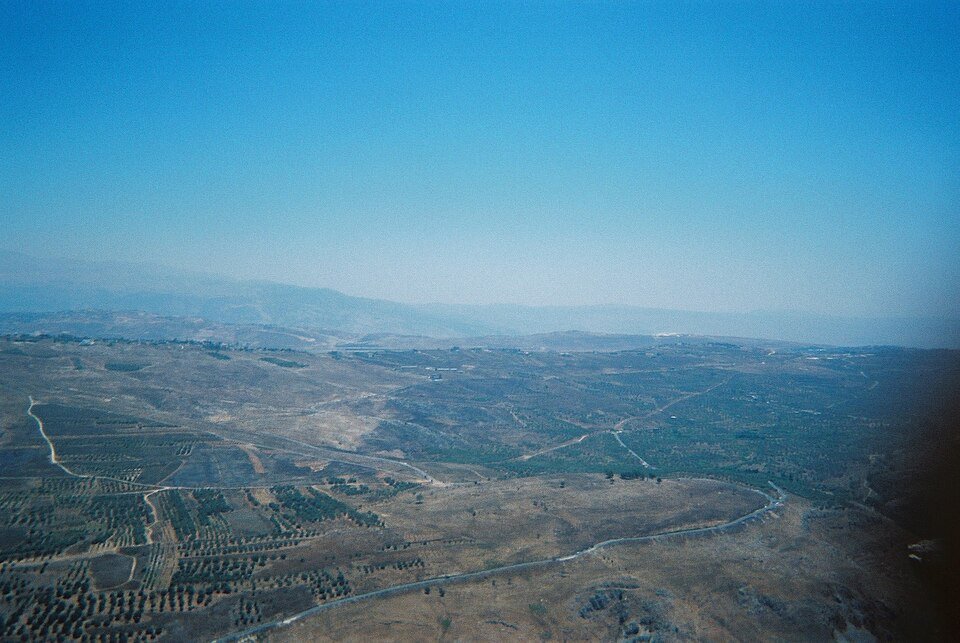
Beaufort Castle — Qalaat al-Shaqif in Arabic — sits atop a steep hill ridge near Nabatiyeh, commanding views across southern Lebanon and deep into northern Israel. It was built by Crusaders in the 12th century, later held by Saladin’s army, the Ottomans, the French, and the Palestinian Liberation Organisation. The PLO used it as a command post until the Israeli invasion of 1982, when Israeli forces seized it and turned it into a military outpost for the occupation that followed.
That occupation lasted 18 years. Israeli troops withdrew in 2000, ending what many in Israel had come to accept as a costly and strategically pointless presence on Lebanese soil. Now they are back.
Netanyahu understands the weight of returning to a place that symbolizes the longest period of Israeli military control over Lebanese territory. In a video statement released after the military took the castle, he said: “We have returned united, determined and stronger than ever. We have returned to a symbol of a heroic battle for our fighters.” The message is directed squarely at the Israeli domestic audience — a prime minister fighting corruption charges, presiding over a war with no clear end, offering a trophy.
But symbolism is not strategy. Orna Mizrahi, a former deputy director in Israel’s national security council, told the Associated Press that the castle’s capture amounts to little more than a public relations coup. “The military’s presence there will not solve the issue with Hezbollah,” she said. “We are damaging them in the operations, but in parallel we need to pursue a political and diplomatic solution.”
An Israeli official told reporters that there were no Hezbollah militants at Beaufort Castle and no weapons were found there. The castle was empty. If the objective was to degrade Hezbollah’s military capability, this particular operation achieved nothing at all. If the objective was to generate images of Israeli flags flying over a medieval fortress for domestic television, it succeeded entirely. The gap between the military achievement and the political presentation is wide, and it matters because wars that are fought for domestic optics rarely end well.
The Iran Link
The timing of the escalation is not accidental. Observers have suggested that Israeli officials and military commanders want to inflict as much damage as possible on Hezbollah before a potential diplomatic settlement imposes new limits or stops the offensive. The logic is straightforward: negotiate from a position of maximum destruction. Every day the operation continues is another day of weakening an adversary that will have to be dealt with politically eventually.
But the calculus is complicated by Iran, and here the story connects to a much larger chessboard. Tehran has continued to insist that any agreement to extend the current ceasefire with Washington — and to return shipping to the Strait of Hormuz — must include an end to fighting in Lebanon as well. The Lebanon front and the Hormuz front are now explicitly linked. You cannot resolve one without addressing the other, and Iran has made that position clear in every channel available to it.
This linkage is a problem for the United States, which has been pursuing a separate track with Iran while supporting Israel’s operations in Lebanon. It is also a problem for Europe, because a crisis in the Strait of Hormuz — through which roughly a fifth of the world’s oil passes — would have immediate and severe economic consequences for every European capital. France, the UK, and Germany may be condemning the incursion in Lebanon, but they also have a direct interest in preventing a wider war that shuts down the Gulf’s shipping lanes.
What Comes Next
The European condemnation is significant because it breaks the pattern of relative silence that has characterized the international response to Israel’s Lebanon campaign since March. France, the UK, and Germany together represent the most influential voices on Middle East policy within the EU. When all three speak in the same direction, it signals a real shift in the diplomatic temperature.
But statements do not stop tanks. The UN Security Council meeting on Monday will produce resolutions. The United States will likely veto anything substantive or water it down to meaninglessness. The ceasefire is dead. The ground operation is expanding. A million people are displaced and 3,300 are dead, and those numbers will be higher by the time you finish reading this.
The honest assessment is this: Europe has finally said what should have been said weeks ago. Whether that makes any difference to the people of southern Lebanon — the ones sheltering in basements, the ones burying their children, the ones who have already fled their homes with nothing but what they could carry — is another question entirely. Diplomatic condemnations are useful for the historical record. They are less useful for people living through a war.