

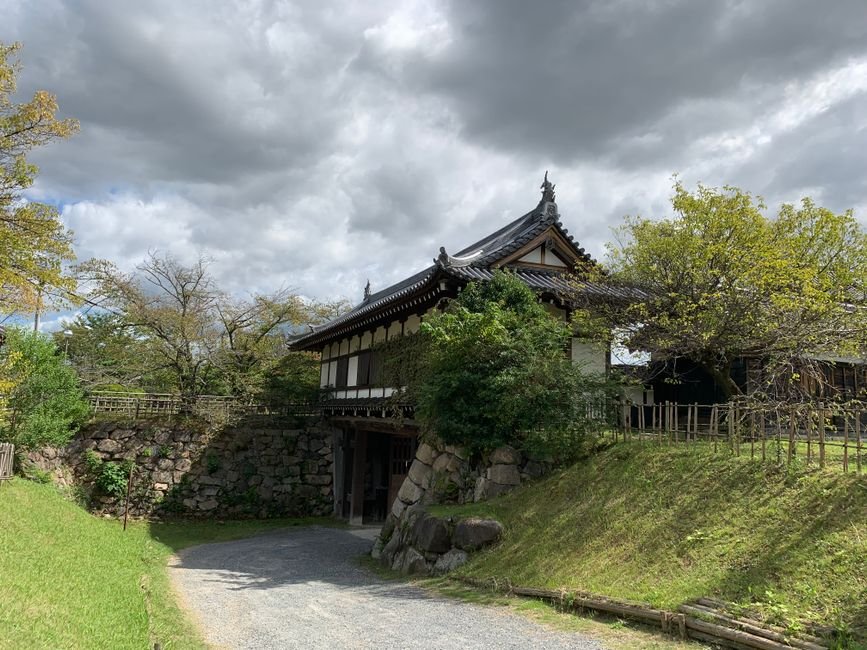
The birthplace of the Japanese state is now officially a World Heritage site. UNESCO’s World Heritage Committee, meeting in Busan, South Korea, voted Sunday to inscribe the “Asuka-Fujiwara: Archaeological Sites of Japan’s Ancient Capitals and Related Properties” on the list. It is Japan’s 27th World Heritage site, 22 cultural and five natural.
The decision took about 15 seconds for the committee to announce. In the city of Kashihara, where part of the site is located, a public viewing venue drew around a thousand people. They cheered and released golden ribbons when the announcement came through.
The 19 archaeological sites spread across Nara Prefecture date from the Asuka period (538-710), one of the most consequential eras in Japanese history. During this time, Japan’s first centralized state took shape. Buddhism arrived from the Korean Peninsula. Political institutions shifted from clan-based rule to an imperial bureaucracy. The first full-scale capital city was built at Fujiwara, a planned metropolis modeled on Chinese Chang’an, though it lasted only 16 years before the capital moved to Nara.
The key sites tell this story through foundations rather than standing buildings. The Asuka Palace site, where four successive emperors ruled, is today a grassy field with excavated post holes. The Fujiwara Palace site offers a wide plain with reconstructed pillars marking where the audience hall once stood. The Ishibutai burial mound, a massive stone chamber, remains one of the most recognizable structures from the period.
Two burial mounds within the cluster have yielded extraordinary finds. The Takamatsuzuka tomb contains vividly colored murals of a courtly procession. The Kitora tomb holds the oldest surviving astronomical chart in East Asia, painted on its ceiling. Both are closed to the public but documented extensively.
The inscription is Japan’s first new World Heritage site in two years, following the Sado Island gold and silver mine complex in 2024. Prime Minister Sanae Takaichi, who is from Nara Prefecture, called the sites “Japanese treasures that have become world treasures.”
Less remarked upon but worth noting: the decision was made in Busan, South Korea, at a meeting where Korea itself has pushed for more representation of its own heritage on the list. The UNESCO committee’s work is always political, but the Asuka-Fujiwara sites earned their place on historical merit. They are the archaeological record of a civilization taking shape and now, officially, part of the world’s shared inheritance.