

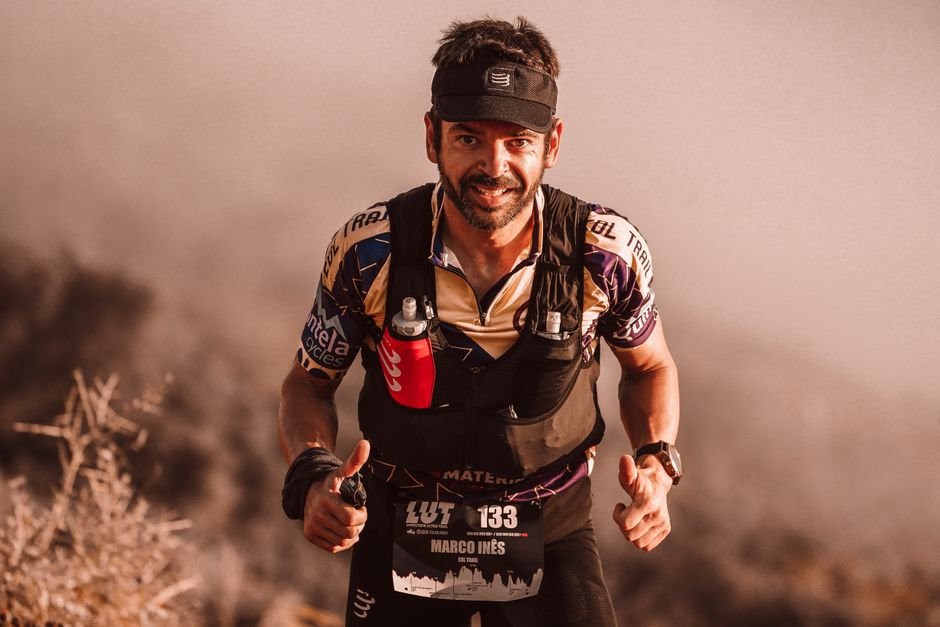
A strange thing happens in the middle of a 100-mile trail race. Runners who have been awake for 30 hours, climbing vertiginous alpine passes in the dark, often refuse the one thing they objectively need most: sleep. They worry that stopping to nap will cost them minutes, maybe a podium spot, maybe a finish at all.
This “performance paradox” — the fear that sleeping is somehow cheating — has shadowed ultra-endurance sport for decades. But a new field study from the Ultra-Trail du Mont-Blanc, published this month in Sleep Medicine, suggests the fear is unfounded. Runners who took a 20-minute power nap during the race reported significantly less sleepiness afterward, and their reaction times at the final checkpoint were actually better than those who pushed through without stopping. Crucially, they finished the 170-kilometer race just as fast as everyone else.
What They Did
The research team followed 52 runners who completed the UTMB across three editions (2022, 2023, 2024), measuring sleep objectively with wrist accelerometers and assessing sleepiness and cognitive function at five checkpoints along the course. At the first three intermediate checkpoints, runners could choose a 20-minute sleep opportunity or remain awake. The researchers then compared the two groups on subjective sleepiness (Karolinska Sleepiness Scale, or KSS) and objective vigilance (a three-minute Psychomotor Vigilance Test on a laptop), both at checkpoint entry and one kilometer after departure.
The Subjective-Objective Split
The results reveal an important dissociation between how tired runners felt and how their brains were actually performing.
Sleepiness climbed steadily over the race, increasing by 0.075 units on the KSS for every hour spent running (p < 0.001). By the second and third checkpoints, runners who chose to nap were significantly sleepier than those who kept moving. That makes sense: nappers self-selected based on how they felt.
The nap produced an immediate subjective benefit. Among the nappers, KSS scores dropped sharply one kilometer after the checkpoint (t = 6.32, p < 0.0001). They felt noticeably more alert.
But the objective measure told a more complicated story. Reaction times (PVT RTm) also slowed with race duration — 1.30 milliseconds per hour running (p < 0.001) — yet there was no immediate improvement in reaction time after a nap at any of the first three checkpoints. Nappers did not get faster right away.
The cognitive payoff arrived later. At the final checkpoint (CP4, kilometer 158), runners who had napped at CP3 showed significantly faster reaction times than those who had not (beta = -53.4 ms, t = -2.28, p = 0.025). The benefit was delayed, emerging only after several more hours of running. The authors describe this as a “delayed cognitive benefit” — the nap may have prevented further degradation rather than instantaneously restoring performance.
The practical lesson is that subjective recovery can be misleading. “Feeling better” after a nap does not mean you are immediately safe to navigate technical terrain at full speed. The researchers note that the feeling of recovery may mask a lingering cognitive vulnerability in the first kilometers after waking.
Why This Matters Beyond Trail Running
This dissociation between subjective sleepiness and objective performance has direct implications for safety-critical professions. Military personnel, firefighters, healthcare workers, and long-haul drivers all face the same dilemma as ultramarathoners: they are tired, they know they should sleep, but the mission or the shift demands they keep going.
The study demonstrates that a short nap — brief enough to avoid entering deep N3 slow-wave sleep, which causes sleep inertia upon waking — can deliver genuine cognitive protection hours later. The runners’ nap decisions were driven by subjective sleepiness, not by objective vigilance deficits, which mirrors exactly how professionals in safety-critical roles make the same choice.
The circadian data in the study also reinforce a well-known pattern. Alertness bottomed out around 3:18 AM for subjective sleepiness and 3:29 AM for reaction time — the classic early-morning trough that has been documented in shift work research for decades. Napping during that window may be especially protective.
What to Take Away
Runners who napped averaged a finish time of 42 hours 4 minutes; those who did not nap averaged 41 hours 33 minutes. The 31-minute difference was not statistically significant. Napping did not slow them down.
Nearly 79% of finishers showed at least one significant sleep trace on their accelerometers, and 77% had been reported to nap in an earlier UTMB study — suggesting a cultural shift is already underway. The fear of the nap penalty appears to be fading.
The study’s main limitation is self-selection. Runners chose whether to nap based on how they felt, so the napping group was systematically sleepier from the outset. Nutrition, hydration, and caffeine use were not controlled, and 26% of sleep occurred outside the monitored checkpoints, meaning total sleep was likely underestimated. The sample included only five women, which limits generalizability.
Still, the core finding is robust: a 20-minute power nap during an extreme endurance event reduces subjective sleepiness, delivers a delayed cognitive benefit, and does not hurt race performance. For ultramarathoners and anyone else who has to perform safely through prolonged wakefulness, that is permission to rest.
Bottom Line
Ultramarathon runners who took a 20-minute nap during a 170-kilometer race felt less sleepy afterward and showed better reaction times hours later at the final checkpoint than runners who stayed awake. Their finish times were no different. A short nap that avoids deep sleep appears to be a safe, effective strategy for prolonged wakefulness without a performance penalty.
Source
Bourlois V, Boulagnon A, Elsworth-Edelsten C, Ceugniez M, Claeyssen C, Smith M, Comont L, Clergue J, Baron P, Bonduelle C, Peze T, Hurdiel R. The 20-minute reset: Power naps during 100-mile races reduce sleepiness without slowing finish times. Sleep Med. 2026 Jul 23;147:109159. doi: 10.1016/j.sleep.2026.109159. PMID: 42497815. Open access.