

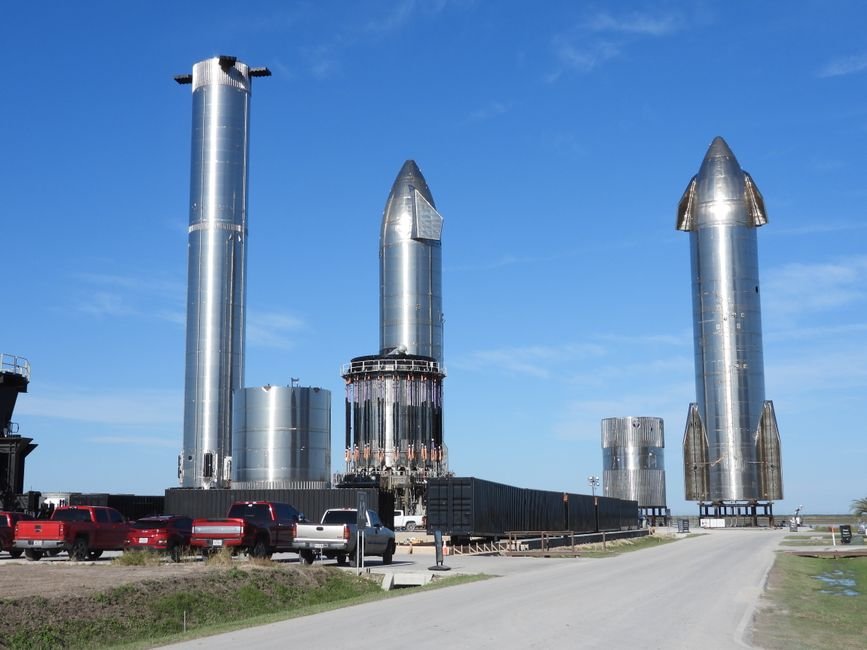
On the evening of July 24, 2026, the upper stage of SpaceX’s Starship spacecraft descended over the Indian Ocean, executed a precision flip maneuver, and settled upright into the water in what the company described as its softest ocean landing yet. Hours later, the company’s chief executive posted publicly that unless data review uncovered problems, the next flight would attempt something no aerospace organization has ever done: catch that same upper stage in midair using a launch tower.
The gap between a splashdown and a declaration of intent to attempt an orbital-class upper-stage catch measured roughly 24 hours. By contrast, the gap between the first Falcon 9 drone-ship landing in April 2016 and the first operational reuse of that stage spanned nearly a year. Between the first successful tower catch of a Starship booster in October 2024 and the announced plan to catch the upper stage, the elapsed time was 21 months. The pace at which SpaceX is now advancing reveals something fundamental about how the company’s engineering culture operates, and why it produces timelines that traditional aerospace programs cannot match.
The Flight 13 Milestone
Flight 13 lifted off from Starbase in Boca Chica, Texas, at 5:51 p.m. Central Time on July 24. The two-stage Starship vehicle deployed the first 20 operational Starlink V3 satellites from its PEZ dispenser-style payload bay, a significant step beyond the mass simulators carried on previous flights. SpaceX confirmed it established contact with all 20 satellites, which transmitted telemetry before reentering the atmosphere roughly 20 minutes later as planned. The stage then cruised along its arc, relit a single Raptor engine in space as a planned test, and descended toward the Indian Ocean. Onboard cameras provided the first clear post-splashdown views of a largely intact heat shield, with most hexagonal thermal tiles still attached. The landing flip and touchdown were precise enough that a company commentator described the flight as a dream scenario.
The next morning, the company’s chief executive posted on the social platform X that unless post-flight data analysis revealed hidden problems, SpaceX would attempt to catch the upper stage using the launch tower on the very next flight.
Why Catching the Upper Stage Is Harder
The launch tower in question, known informally as Mechazilla, uses a pair of massive mechanical arms called the chopsticks to pluck returning vehicles out of the air. The system has been demonstrated multiple times with Super Heavy boosters. The first successful booster catch occurred during Flight 5 in October 2024, and subsequent catches followed on Flights 8, 11, and 12. Several recovered boosters have been inspected, refurbished, and reflown.
An upper-stage catch presents different challenges. The Starship upper stage, at 50 meters (164 feet) tall, reenters the atmosphere at near-orbital velocities, subjecting its structure, control surfaces, and catch pins to thermal and aerodynamic loads far beyond what a booster experiences on its shorter return trajectory. The boostback and entry burns require precise propellant management, and the final approach to the tower demands real-time guidance corrections that must account for the vehicle’s lighter, less stable configuration. The margin for error shrinks substantially because the stage, unlike a booster, has no dedicated landing legs and relies entirely on the tower arms for capture.
SpaceX had previously stated that upper-stage catch attempts would only follow multiple successful soft ocean touchdowns, to minimize the risk of debris over populated areas. Flight 13 provided exactly that kind of validation, and apparently in a single instance sufficient to move the timeline forward.
Compressing the Timeline
To understand how unusual this pace is, consider the development arcs of comparable aerospace achievements. The Apollo program took eight years from President John F. Kennedy’s 1961 lunar landing pledge to the first Moon landing in 1969, working within a single program on a fixed, government-funded budget. The Space Shuttle’s development from the 1972 concept approval to the first orbital flight in 1981 spanned nine years. The F-35 Joint Strike Fighter program logged 15 years between contract award and initial operational capability.
Even within SpaceX’s own history, the rhythm has accelerated. The Falcon 9 landing program required five years of increasingly ambitious landing attempts, from the first controlled ocean touchdown in 2014 to the first drone-ship landing in 2016, before the booster became reliably reusable. The transition from first Starship booster catch (Flight 5, October 2024) to upper-stage catch attempt (Flight 14, likely before the end of 2026) represents roughly two years. But the decisive compression is happening now: the step from first intact upper-stage splashdown to announced catch attempt took less than a day.
This compression reflects an engineering methodology that treats each flight as a learning experiment. When engines fail or a vehicle breaks up during reentry, the response is not a lengthy root-cause investigation. The response is data collection, rapid modification, and another launch as soon as the hardware is ready. The gap between Flight 7’s upper-stage failure in January 2025 and Flight 8 in March 2025 was seven weeks. The gap between the Flight 12 booster loss in May 2026 and Flight 13’s booster recovery in July 2026 was nine weeks. Each flight tests specific hardware changes at a cadence that traditional cost-plus contracting cannot support.
The Broader Landscape
Other organizations are making progress on rocket recovery by different methods. Rocket Lab has recovered the first stage of its small Electron rocket by helicopter, catching the descending booster under a parachute. The China Academy of Launch Vehicle Technology (CALT) achieved the first recovery of an orbital-class booster outside the United States on July 10, 2026, when it caught the first stage of a Long March 10B rocket using a net system on a recovery ship in the South China Sea. China became only the second nation to recover an orbital booster, but the Long March 10B catch targeted a first stage and used a net rather than a tower catch, representing a less demanding set of engineering problems.
No organization has recovered an orbital-class upper stage by any method. The physics of upper-stage reentry, with higher velocities, greater thermal stress, and longer return trajectories, have discouraged attempts. SpaceX appears to be treating this difficulty as a problem to solve through iteration rather than analysis.
What Flight 14 Means
A successful upper-stage catch on Flight 14 would mark a step change in launch economics. Full and rapid reusability of both Starship stages is central to the vehicle’s architecture. The Super Heavy booster is designed to return to the launch mount, be refueled, and fly again within hours. The upper stage, if caught and refurbished on a comparable timeline, would eliminate the need to build a new ship for each launch. The cost per kilogram to low Earth orbit would drop by orders of magnitude relative to expendable rockets, making high-volume deployments of Starlink V3 satellites and crewed lunar missions under NASA’s Human Landing System contract economically plausible.
No date has been set for Flight 14. Data review from Flight 13 is ongoing, and the Federal Aviation Administration will need to approve an expanded landing zone profile that brings a returning upper stage back to the Texas coast rather than into the Indian Ocean. But the intent to attempt the catch on the very next flight signals something important: SpaceX believes it has built a system robust enough to accelerate its own timeline. That belief is grounded not in theoretical margins but in empirical results from a program that has burned, exploded, and rebuilt its way through 13 flights in just over three years.
The approach may seem reckless when measured against the standards of an industry that once spent decades between first flight and operational reuse. But on July 24, Ship 40 demonstrated an intact splashdown with a working heat shield, deployed real satellites, and returned more data than any previous Starship flight. On July 25, the company announced it was ready to skip the slow, conservative staircase and go straight for the leap. The question is no longer whether the engineering culture works. The question is how fast it can run.
References
1. Clark, Stephen. “SpaceX eyes tower catch for next Starship after auspicious end to 13th flight.” Ars Technica, July 25, 2026. https://arstechnica.com/space/2026/07/spacex-eyes-tower-catch-for-next-starship-after-auspicious-end-to-13th-flight
2. Klender, Joey. “SpaceX wants to catch Starship for launch 14, Elon Musk says.” Teslarati, July 25, 2026. https://www.teslarati.com/spacex-catch-starship-launch-14-elon-musk/
3. “SpaceX Targets First Starship Upper Stage Tower Catch for Flight 14.” SatNews, July 25, 2026. https://satnews.com/2026/07/25/spacex-targets-first-starship-upper-stage-tower-catch-for-flight-14/
4. “Starship’s Thirteenth Flight Test.” SpaceX, July 24, 2026. https://www.spacex.com/launches/starship-flight-13
5. Klender, Joey. “SpaceX Starship just nailed something it’s never done before.” Teslarati, July 24, 2026. https://www.teslarati.com/spacex-starship-just-nailed-something-its-never-done-before/
6. Jones, Andrew. “China becomes second country to recover orbital booster with Long March 10B.” SpaceNews, July 10, 2026. https://spacenews.com/china-becomes-second-country-to-recover-orbital-booster-with-long-march-10b
7. “China Achieves Historic First Orbital Booster Recovery via At-Sea Net System.” SatNews, July 11, 2026. https://satnews.com/2026/07/11/china-achieves-historic-first-orbital-booster-recovery-via-at-sea-net-system/
8. Edwards, Brooke. “SpaceX’s Starship Flight 13 from Texas ends with intact splashdown.” Florida Today, July 24, 2026. https://www.floridatoday.com/story/tech/science/space/spacex/2026/07/24/spacex-starship-flight-13-ends-with-intact-v3-splashdown-a-first-for-its-test-flights/91044812007/