

It is the paradox that haunts transplant medicine: more than 104,000 Americans sit on the kidney transplant waiting list, while roughly one out of every three donated kidneys is thrown away. The organ shortage Americans hear about is real, but there is a second, quieter shortage hiding inside it — not a scarcity of donated organs, but a scarcity of time.
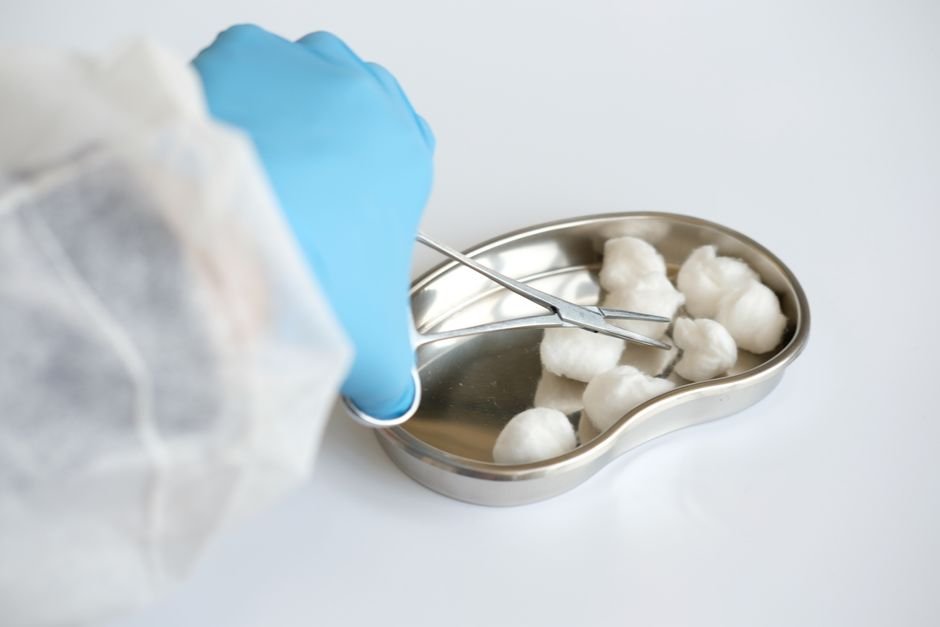
Every kidney extracted from a deceased donor faces a merciless countdown. Packed on ice at roughly 4 degrees Celsius, the organ remains viable for transplantation for about 24 hours. After that, cellular damage accumulates past the point of no return. The clock does not pause for bad weather, for a frozen highway that delays a delivery courier, for a transplant surgeon who is already tied up in another operation, or for the cross-country logistics of matching an organ to the right recipient. When time runs out, the kidney is discarded.
A team of researchers at Texas A&M University has now demonstrated a way to push that window from hours to days. Working under the leadership of Dr. Matthew Powell Palm, the group used a pressure-controlled supercooling device to store pig kidneys at minus 4 degrees Celsius for 72 hours before successful transplantation. The kidneys not only survived the extended storage, they recovered function faster than organs held the conventional way on ice. The results were presented at the American Transplant Congress in Boston in June 2026.
The device itself is strikingly practical. It uses standard University of Wisconsin preservation solution — the same chemical recipe already approved and widely used in transplant medicine — and requires no cryoprotectants, the antifreeze-like compounds that are essential to most freezing protocols but toxic to cells at the concentrations needed for organ banking. The absence of cryoprotectants is not merely a technical detail. Because the device works with a solution already cleared by the FDA, the path to clinical use could be considerably shorter than it would be for a method requiring novel pharmaceuticals.
Instead of freezing the kidney solid, supercooling brings the temperature below the freezing point of the solution without allowing ice crystals to form. The pressure-controlled device maintains this unstable state by carefully regulating pressure within the storage chamber. Ice crystallization — the primary mechanism that shreds cells during freezing — never gets a foothold. The result is an organ that spends three days in suspended animation and emerges ready to work.
The Texas A&M experiments tested this against the standard of care. Kidneys stored by conventional ice preservation for 24 hours were transplanted alongside kidneys that had spent 72 hours in the supercooling device. The supercooled kidneys performed as well or better on standard measures of post-transplant recovery, including blood flow through the organ, urine production, and clearance of waste products from the bloodstream. In some respects, they did better — the supercooled kidneys showed less evidence of tissue injury and appeared to resume normal function more quickly.
What this means for transplantation goes well beyond the biology of better organ storage. Extending preservation from roughly 24 hours to 72 hours transforms the logistics of organ allocation from an emergency operation into a planned procedure. Consider what happens today when a donor kidney becomes available. A match is identified through the national waiting list. The organ is rushed from the donor hospital to the recipient’s transplant center, often by chartered medical flight. The entire chain — procurement, cross-matching, transportation, recipient preparation, surgery — must compress into a single day. Any delay at any link in the chain collapses the operation.
With a 72-hour window, the same logistics become fundamentally different. There is time to complete sophisticated tissue-typing to ensure the best possible match between donor and recipient. There is time to transport the organ across the country using commercial cargo rather than emergency medical flights, dramatically reducing cost. There is time for the transplant team to prepare the recipient optimally — to stabilize fluid balance, to adjust medications, to ensure that the operating room and the surgeon are available at a scheduled time rather than in the middle of the night. There is time to run additional screening tests for infection or malignancy before committing the organ to a recipient.
This last point is worth dwelling on. One reason donated kidneys are discarded at such high rates is caution. When an organ comes from a donor with an ambiguous infection risk or an unclear cancer history, the 24-hour window forces a binary decision: use it now or lose it. There is no time for additional testing. Many transplant teams, unwilling to take that gamble, let the organ go. A 72-hour storage window changes that calculus. A sample can be sent to the lab, the results can come back, and the transplant team can proceed with confidence.
The scale of the discard problem puts the urgency of this advance into focus. According to federal data, roughly one in three kidneys recovered from deceased donors in the United States is ultimately not transplanted. That represents thousands of organs per year that could have saved lives but were instead disposed of, primarily because the clock ran out or because teams lacked confidence in what they could not fully evaluate in the available time. Meanwhile, 17 people die every day waiting for a kidney that never arrives.
A company is now being formed to commercialize the pressure-controlled supercooling device and move it toward human trials. The founders will need to navigate the regulatory path, but the use of standard UW solution eliminates one significant hurdle. If the device performs in human kidneys the way it has performed in pig kidneys, the implications for transplant medicine will be hard to overstate. The organ shortage will not disappear, but the silent shortage — the one caused by the limits of ice and a ticking clock — could shrink dramatically.
The end of the 24-hour tyranny would not just keep kidneys alive longer. It would change how we think about organs, from perishable cargo that must be shipped in frantic haste to a resource that can be managed, tested, allocated, and deployed with the kind of careful planning that every patient deserves.