

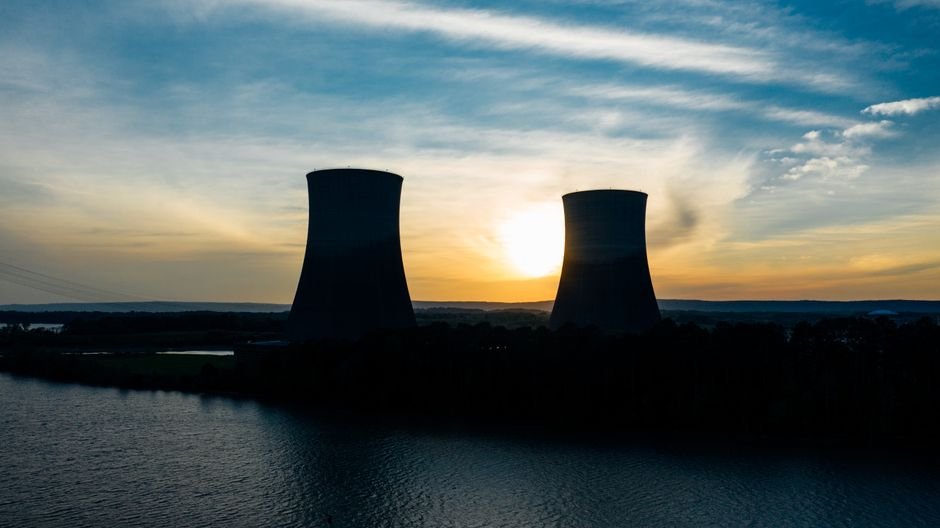
Donald Trump has discovered a new kind of diplomatic leverage: civilian nuclear technology as a bargaining chip for recognition of Israel.
The president announced Thursday that the recently signed US-Saudi civilian nuclear cooperation agreement will not go forward unless Riyadh normalizes relations with Israel through the Abraham Accords. “The Civil Nuclear Deal… will be approved, but is totally subject to Saudi Arabia joining the very respected and successful Abraham Accords,” Trump wrote on Truth Social.
White House press secretary Karoline Leavitt confirmed the position bluntly: “If they don’t join the Abraham Accords, the deal is off.”
The maneuver is a departure from how nuclear cooperation agreements are normally handled. Civilian nuclear deals between the US and other countries are typically negotiated on their technical merits, safeguards, nonproliferation commitments, reactor design approvals. Linking one to a diplomatic normalization demand is unusual, and it places Saudi Arabia in a position it has publicly resisted.
The kingdom has long stated it will not normalize relations with Israel without the establishment of a Palestinian state. Crown Prince Mohammed bin Salman has not responded to Trump’s demand, and Saudi officials have remained silent since the announcement.
For Israel, the demand is a win. Prime Minister Benjamin Netanyahu’s office welcomed Trump’s statement as “a historic leap forward for peace in the Middle East.” Economy Minister Nir Barkat said Israel “can manage it” if Saudi nuclear power remains peaceful.
But not everyone in Israel is comfortable with the arrangement. Former defense minister Avigdor Lieberman warned that “every military nuclear program begins with a civilian one”, a pointed observation from a country widely believed to possess nuclear weapons itself.
Trump insisted the deal explicitly bars enrichment. “There will be no enrichment of material!” he wrote, capitalizing the prohibition. The agreement covers only non-military use and would be sent to Congress for review.
Rosemary Kelanic of the Defense Priorities think tank called the prospect of Saudi enrichment “quite shocking,” noting that the US has never helped another country enrich uranium on its own soil because it increases the risk of weapons proliferation.
The Saudi position on nuclear weapons has been consistent. MBS stated in a 2018 CBS interview: “Without a doubt if Iran developed a nuclear bomb, we will follow suit as soon as possible.” Iran is still months or years away from a weapon, but the war with Iran has given Saudi Arabia every reason to accelerate its nuclear ambitions.
The Abraham Accords, brokered in Trump’s first term, saw the UAE, Bahrain, Sudan, Morocco, and Kazakhstan normalize relations with Israel. Saudi Arabia, the most powerful and wealthiest Arab state, has remained the big prize. Trump appears intent on collecting it by holding a nuclear reactor as ransom.
The question nobody has answered is what happens if Saudi Arabia refuses. Does Trump kill a multi-billion-dollar nuclear deal with a strategic ally he has spent years cultivating? And does Riyadh, watching Iran’s nuclear program survive repeated US bombing campaigns, decide it can no longer afford to wait for a Palestinian state that shows no sign of arriving?