

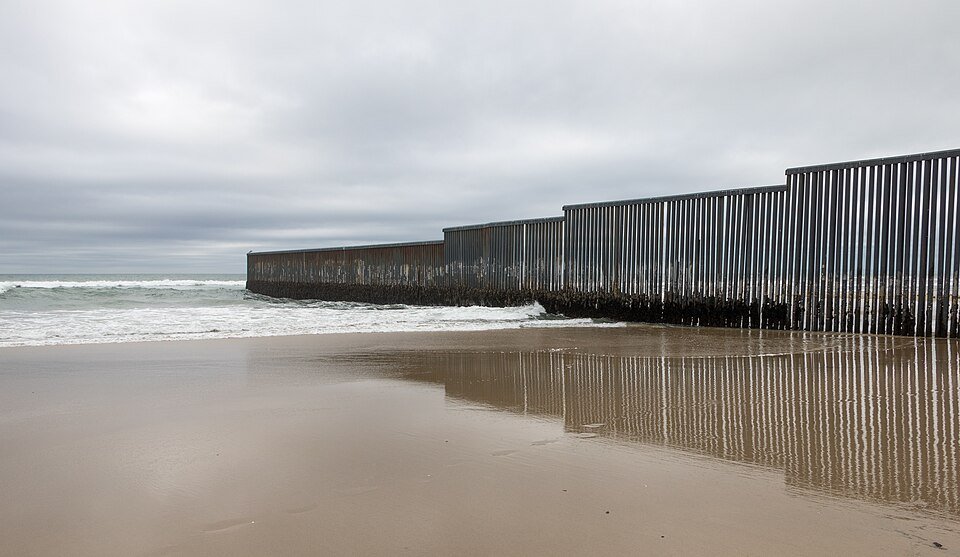
Homeland Security Secretary Markwayne Mullin went before Congress this month with a confident declaration: the primary U.S.-Mexico border wall will be finished by June 2027. A secondary reinforcement wall would follow by summer 2028. All remaining construction contracts, he assured lawmakers, would be out the door by the end of the fiscal year.
It was the kind of definitive timeline that President Donald Trump’s supporters have waited a decade to hear. But the closer you look at Mullin’s promise, the harder it becomes to make the numbers work.
The wall was the signature promise of Trump’s 2016 campaign. It survived a government shutdown, a national emergency declaration, a Supreme Court battle, and the wholesale abandonment of construction during the Biden years. Trump was re-elected in January 2025 on a pledge to finally get it done. Now, with roughly a year left on Mullin’s primary-wall deadline, the gap between political ambition and administrative reality is coming into sharp focus.
What Mullin Told Congress
Testifying before the House Homeland Security Committee in early June, Mullin laid out a two-phase construction plan. The primary barrier, he said, would run from the Pacific Ocean to the Gulf of America and be complete by June 2027. A secondary wall would follow by summer 2028 in high-traffic areas where cartels have learned to breach the primary barrier.
“Every mile of fencing the department puts up, the smaller the choke point gets for criminals to cross,” Mullin told the committee, according to records of the hearing.
He described plans for a “smart wall” integrating physical barriers with detection technology, cameras, lighting, and drone surveillance. In certain key areas, secondary barriers could reach 150 feet tall.
Mullin’s testimony reflected a significant acceleration from the first Trump term. During those four years, the administration built roughly 452 miles of barrier, though only 47 miles of that was new construction where no barrier previously existed. The rest replaced older, dilapidated fencing.
The second term started from a lower base. Biden halted construction on his first day in office, canceled contracts, and sold off steel bollards purchased for the project. It was not until Trump’s return to the White House that wall construction resumed in earnest.
The Numbers Problem
The core tension in Mullin’s timeline is simple: the math does not easily add up.
The U.S.-Mexico border stretches 1,954 miles. Before Trump’s second term, roughly 654 miles of primary fencing existed, built under the Bush, Obama, and first Trump administrations. That left more than 1,200 miles without any barrier at all.
Trump’s second-term push began with a national emergency declaration in January 2025. In July 2025, the Republican-controlled Congress passed the One Big Beautiful Bill Act, which included $46.5 billion for wall completion, along with $17.3 billion for law enforcement, $10 billion for DHS operations, and $7.8 billion for 3,000 new Border Patrol agents.
By October 2025, CBP had awarded 10 construction contracts totaling $4.5 billion for 230 miles of barrier. By December 2025, DHS signed a $609 million contract with Parsons to oversee wall construction. The administration aimed to reach 10 miles of installation per week.
As of June 2026, according to CBP data, 221 miles of primary smart wall are under active construction, with contracts awarded and design underway for an additional 370 miles. Another 44 miles of replacement wall are being built, plus 183 miles of secondary wall.
The Washington Post reported in early June that construction crews are erecting roughly five miles of wall per week, introducing barriers in parts of Texas that previously had none and installing a second wall across much of California, Arizona, and New Mexico.
At five miles per week, completing the remaining planned miles would take well over a year, even before accounting for the sections not yet under contract or the inevitable delays that come with large-scale infrastructure projects across some of the most challenging terrain in North America.
Obstacles on the Ground
The wall does not cross empty desert alone. It traverses private ranches, indigenous sacred sites, a national wildlife refuge, and at least one mountain that has become a flashpoint for religious opposition.
In May 2026, the federal government filed an eminent domain claim for land on Mount Cristo Rey in New Mexico, where the border wall stops at the base of a mountain topped by a statue of Jesus. The Catholic Diocese of Las Cruces has asked a federal judge to block the action, arguing the site is sacred and a wall would block pilgrims from visiting.
Further west, the administration has faced resistance from environmental groups over waivers that bypass the National Environmental Policy Act and the Endangered Species Act. In June 2025, DHS permitted 36 miles of wall across Arizona and New Mexico after waiving environmental regulations. The Pentagon shifted $200 million from military construction projects, including barracks and schools, to fund wall sections on the Barry M. Goldwater Range.
Land acquisition remains a persistent bottleneck. The Department of Interior transferred 760 acres of public land near the border to the Navy in December 2025 to establish a National Defense Area, a workaround for sections where private owners have refused to sell.
What Success Would Look Like
Mullin’s defenders note that illegal border crossings have dropped to historic lows under the second Trump administration, a development they credit to the combination of wall construction, enhanced enforcement, and deterrence policies. The political pressure to declare the wall complete is immense. Trump has staked his legacy on it, and every delay gives opponents fresh ammunition.
But the real question may not be whether the wall is finished by June 2027. It may be whether the definition of “finished” shifts to match what is actually achievable. The primary wall stretching from the Pacific to the Gulf without a single gap, as Mullin described it, would require a construction pace that the administration has not yet demonstrated it can sustain.
For now, the clock keeps ticking. And the closer the deadline gets, the longer the road looks.