

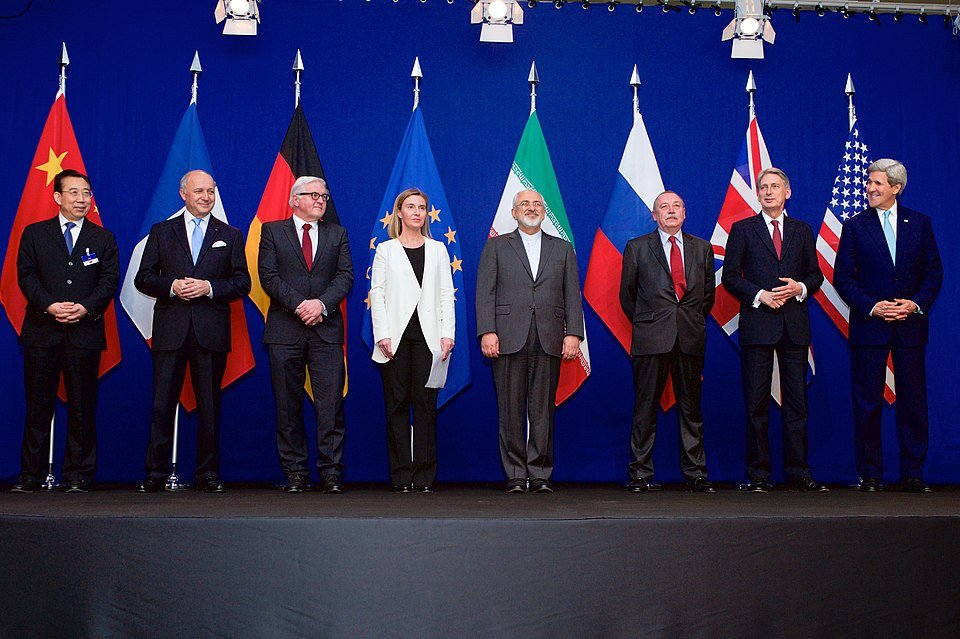
Diplomats sit in one room, warplanes fly in another, and tankers stay anchored in the Strait of Hormuz. That is the picture on June 21 as U.S. Vice President JD Vance arrived in Switzerland to open direct talks with Iran while Israeli airstrikes pounded southern Lebanon and Iran kept the world’s most vital oil chokepoint sealed for a second week.
Vance landed in Switzerland on Sunday morning for what the White House described as the highest-level face-to-face contact between Washington and Tehran since the 2015 nuclear deal unraveled. Speaking to reporters before the session, Vance said the administration’s goal was to “make progress on the nuclear issue, make progress on the Lebanon ceasefire issue,” framing the two tracks as inseparable. The talks follow months of back-channel exchanges and a controversial Memorandum of Understanding that the Trump administration signed with Iran without submitting it to Congress.
That MOU is now a political problem in Washington. The document is structured as a non-binding executive agreement, meaning the administration argues it does not require legislative approval. But Senate Republicans and Democrats alike have signaled skepticism. Several senior senators from both parties have questioned whether the White House is trying to bypass Congress on a deal that could reshape U.S. commitments across the Middle East. The administration has not ruled out a formal submission, but sources close to the process say they are betting the legal distinction holds. The clock may force the issue: if the talks produce a binding follow-on accord, congressional approval would become unavoidable.
On the Swiss side of the ledger, Iranian Deputy Foreign Minister Majid Takht-Ravanchi struck a cautiously open tone. “We are ready to move forward,” he said ahead of the talks, “if the United States is serious and if it can ensure Israel abides by the ceasefire.” The condition is significant. Iran has long insisted that any nuclear understanding must be tied to regional security guarantees, specifically an end to Israeli operations in Lebanon. Tehran views the two files as a single negotiation, a position the Vance delegation has not publicly rejected.
But even as the diplomats took their seats, the contradictions were impossible to ignore. Israel launched a series of airstrikes across southern Lebanon on Sunday that killed at least 16 people, according to Lebanese health officials. The strikes hit several villages north of the Litani River, an area that had been relatively quiet under the existing ceasefire arrangement. Hezbollah responded with rocket fire into northern Israel, raising the specter of a broader escalation on the very day Washington and Tehran opened their channel. Vance did not comment on the strikes directly, but the timing was a stark reminder that the administration’s diplomatic track does not control events on the ground.
Meanwhile, the Strait of Hormuz remains closed. Iran re-closed the strategic waterway on Friday, citing what it called “ongoing Israeli aggression against Lebanon” as justification. The decision effectively reimposed the blockade that had been lifted just days earlier as a goodwill gesture ahead of the talks. The strait handles roughly one-fifth of the world’s oil supply, and the closure has already pushed global crude prices higher for five consecutive sessions. Shipping insurers have raised premiums for transits through the Persian Gulf, and naval forces from multiple nations remain on alert in the region.
The juxtaposition is stark. In Switzerland, Vance and Takht-Ravanchi sat across a table trading proposals on enrichment levels, sanctions relief, and the architecture of a regional ceasefire. Outside the conference room, Israeli F-35s were dropping munitions on Lebanese villages, Iranian Revolutionary Guard Corps vessels were patrolling the Strait of Hormuz with orders to intercept any tanker attempting passage, and the families of 16 dead Lebanese civilians were burying their dead.
The fundamental question the talks must answer is whether the diplomatic track can overtake the military one. Iran’s demand is straightforward: if Washington wants a deal on the nuclear file, it must deliver Israeli compliance with the Lebanon ceasefire. But Washington has limited leverage over Israel’s tactical operations, especially when Israel views Hezbollah’s presence on its northern border as an existential threat that cannot be frozen by a diplomatic MOU.
For the United States, the calculus is equally difficult. Reopening the Strait of Hormuz is a stated priority, but doing so requires Iranian cooperation. Iran has made clear that cooperation depends on Israeli restraint. Israel has made equally clear that it will not accept operational constraints imposed through U.S.-Iran negotiations. The Vance delegation is effectively negotiating in a triangle where two of the three sides are shooting at each other.
Back in Washington, the congressional dimension adds another layer of uncertainty. Even if Vance and Takht-Ravanchi reach an understanding in Switzerland, the MOU’s legal vulnerability means the deal could unravel on the Senate floor. Skeptical Republicans worry the agreement gives Iran sanctions relief without verifiable nuclear rollback. Skeptical Democrats worry it bypasses the treaty process and locks in a Republican administration’s terms without durable enforcement mechanisms. Neither camp is yet willing to endorse what they have not seen.
The talks are scheduled to continue through Monday. In the best case, they produce a framework that freezes Iran’s enrichment program, reopens the strait, and pressures Israel into a genuine ceasefire with Hezbollah. In the worst case, they become a diplomatic backdrop for an escalating regional war. Right now, both outcomes remain equally possible, and the gap between the table in Switzerland and the ground in Lebanon is as wide as it has ever been.