

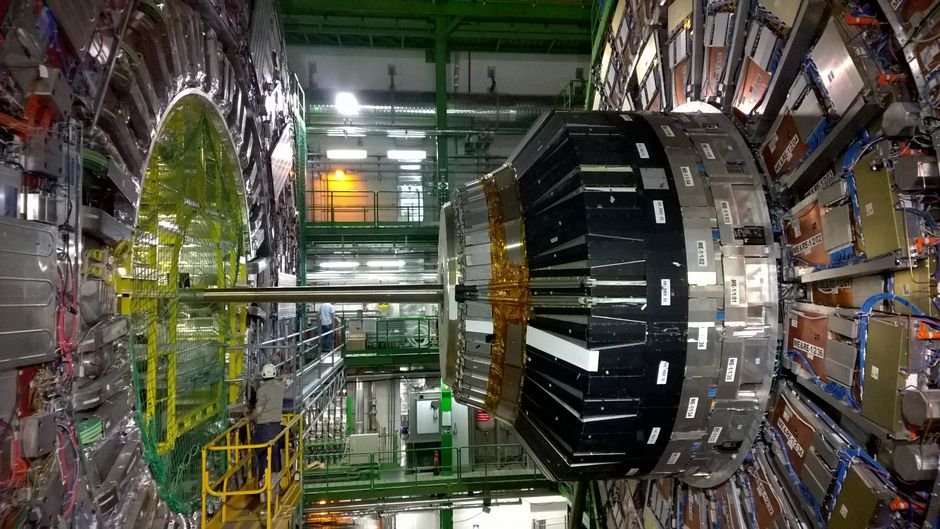
CERN has reached a critical milestone in the upgrade of the world’s largest and most powerful particle accelerator. A new generation of superconducting magnets was powered to full operating current for the first time on July 8, bringing the High-Luminosity Large Hadron Collider (HiLumi LHC) a significant step closer to its planned 2030 operational debut.
The magnets, built with niobium-tin superconducting coils instead of the niobium-titanium coils used in the current LHC, generated a magnetic field of 11.3 teslas, about 35 percent stronger than the existing magnets. They also feature a substantially larger aperture, expanding from 70 millimeters (2.8 inches) to 150 millimeters (5.9 inches), which allows for tighter beam focusing and significantly more collision events per second.
No quench, excellent memory
The test took place at the Inner Triplet (IT) String facility, a full-scale replica of a HiLumi LHC sector that allows engineers to validate all systems before installation in the main tunnel. All 17 electrical circuits were powered to their target currents, with the Inner Triplet quadrupole magnets reaching 16,230 amperes without a single quench — the sudden loss of superconductivity that can damage magnets and delay operations.
Susana Izquierdo Bermudez, head of CERN’s Large Magnet Facility, noted that the magnets demonstrated “excellent memory,” meaning they retained their superconducting properties through repeated power cycles without requiring retraining — a key performance requirement that minimizes commissioning time, cryogenic consumption, and operational delays.
One of the separation dipole magnets required a few training quenches before reaching its target current, which CERN engineers described as normal for the first full-power test of a new magnet type. All corrector magnet circuits achieved design currents in both individual and combined operation.
The magnet protection system successfully and safely released 38 megajoules of stored energy into the surrounding liquid helium bath, which is maintained at 1.9 kelvin (minus 456 degrees Fahrenheit, or minus 271 degrees Celsius).
One step closer to new physics
The HiLumi LHC is designed to dramatically increase the number of particle collisions per unit time, allowing physicists to gather larger datasets and search for rare phenomena beyond the Standard Model of particle physics. The upgrade has been in development for years and involves not just stronger magnets but entirely new focusing systems, power converters, and cryogenic infrastructure.
CERN has scheduled a second operational campaign for September 2026, focused on validating commissioning procedures and analysis tools, as well as demonstrating the reproducibility of the integrated system performance across all subsystems — including superconducting magnets, cold powering, power converters, quench detection and protection, cryogenics, vacuum systems, controls, and alignment.
Marta Bajko, the IT String facility head, described the successful July test as the completion of the hardware commissioning phase, adding that “the campaign generated a vast amount of data that we are now analyzing to better understand how all the systems interact.”
The HiLumi LHC is expected to begin operations in 2030 and operate for at least a decade, extending the LHC’s scientific lifetime well into the 2040s. If the September campaign confirms the July results, CERN will have cleared one of the most technically challenging hurdles on the path to higher luminosity.
Sources: CERN upgrades particle accelerator with 11.3 tesla magnets (Interesting Engineering, July 22, 2026)