

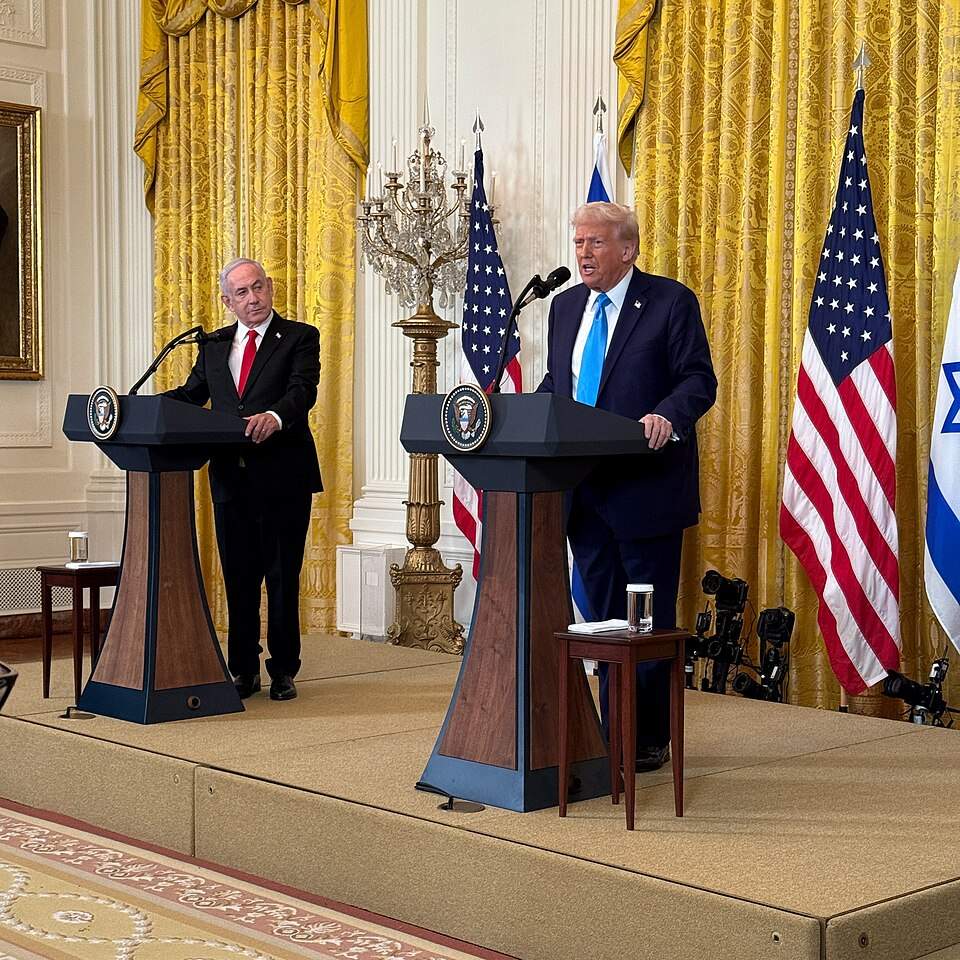
Israeli officials and U.S. lawmakers from both parties have unleashed a wave of criticism against the U.S.-Iran peace deal signed on June 17, arguing that the Memorandum of Understanding amounts to a strategic surrender that fails to curb Iran’s nuclear ambitions, missile arsenal, or support for proxy militias across the Middle East.
The deal, which kicked off a 60-day clock for negotiations over Iran’s nuclear program and other outstanding issues, was celebrated by the Trump administration as a breakthrough that ended active fighting and reopened the Strait of Hormuz. Gas prices in the United States dropped below $4 per gallon for the first time in months, a domestic win the White House was quick to highlight. But among Israel’s security establishment and a bipartisan bloc in Congress, the mood is closer to alarm than relief.
“This is a catastrophic capitulation,” said David Horovitz, editor of the Times of Israel, reflecting the widespread sentiment in Jerusalem that the United States gave away its leverage for little in return. Chuck Freilich, a former Israeli deputy national security advisor, went further, calling the accord “an Iranian victory over the U.S. and Israel.”
Israeli Prime Minister Benjamin Netanyahu warned that “the struggle is not yet over” and reaffirmed Israel’s intention to keep forces in southern Lebanon, even though the MOU includes a Lebanon cease-fire to which Israel was not a party. Israeli officials told Channel 12 that “the Iranians don’t agree to this framework agreement for nothing,” noting that Washington largely accepted Tehran’s conditions.
The core Israeli complaint is straightforward. The deal does not require Iran to dismantle any part of its nuclear program. It does not address Iran’s ballistic missile arsenal or its vast stockpile of drones. It imposes no new restrictions on Iran’s funding of Hamas, Hezbollah, or the Houthi rebels. And the 60-day negotiation timeline contains no enforcement mechanism to hold Tehran accountable if talks stall.
Benny Gantz, the former Israeli defense minister, delivered a particularly pointed assessment. He argued that the decision to link the Iran negotiations with a cease-fire in Lebanon was a strategic failure, giving Hezbollah breathing room while Iran walks away with sanctions relief and access to hundreds of billions of dollars in frozen assets.
In Washington, the backlash was just as sharp.
Sen. Bill Cassidy, a Louisiana Republican, called the MOU “the worst foreign policy blunder in decades” in a post on X. “Iran’s nuclear ambitions were not curbed,” Cassidy wrote, “and they have learned that threatening the Strait of Hormuz works and will undoubtedly leverage it in the future.”
Sen. Chris Murphy, a Connecticut Democrat on the Senate Foreign Relations Committee, delivered a blistering assessment from the other side of the aisle. “I knew the deal was likely going to be humiliating for the United States of America, but I didn’t know it was going to be this humiliating,” Murphy said. “Well, we went to war with Iran for 100 days, and on the back side of it, they still have their nuclear program, they still have their missiles, they still have their drones, they are still supporting terrorism.”
The administration pushed back forcefully. Vice President J.D. Vance dismissed Israeli complaints at a White House press conference, noting that “President Donald J. Trump is the only head of state in the entire world who is sympathetic to the nation of Israel at this moment in time, and he happens to be the head of state of the world superpower. If I was in the cabinet of the Israeli government, I might not be attacking the only powerful ally that I have anywhere left in the entire world.”
Not every lawmaker opposed the deal. Sen. Roger Marshall, a Kansas Republican, offered a defense grounded in domestic economics and war fatigue. “President Trump chose a path to lasting peace, not another forever war,” Marshall said. “This agreement keeps America safe and helps lower costs at home.”
But that optimistic view remains a minority position in both Tel Aviv and Washington. Israeli analysts point out that without a credible military threat on the table, Iran has little incentive to negotiate in good faith over the next 60 days. The deal removes the single most powerful tool Israel and the United States held: the threat of force.
For now, the clock is ticking. Whether the MOU leads to a durable settlement or merely grants Iran time and money to consolidate its regional position will depend on the negotiations ahead. But if the first week of reactions is any guide, the agreement has united an unusual coalition of critics: Israelis who see an existential threat, Democrats who see a diplomatic rout, and Republicans who see a historic giveaway.