

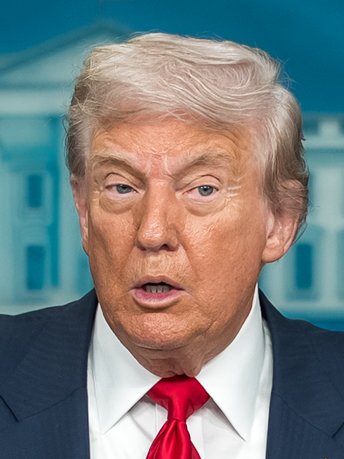
President Donald Trump sat down with Axios White House correspondent Marc Caputo for a 45-minute interview on “The Axios Show” on June 18, recorded in the Roosevelt Room of the White House. Over the course of the conversation, Trump spoke for 87 percent of the time, delivering 7,172 words to Caputo’s 1,215, according to a Roll Call transcript analysis. The interview ranged across Iran, Cuba, artificial intelligence, the India-Pakistan nuclear standoff, and Trump’s own conception of presidential power. What emerged was a portrait of a leader who frames every outcome as total victory, claims credit for averting catastrophe, and insists his authority faces no meaningful check.
On Iran: Victory by Any Definition
The centerpiece of the conversation was the recent memorandum of understanding that ended the U.S.-Iran war. Trump entered the conflict demanding Iran’s unconditional surrender but signed a 14-point MOU that grants Tehran access to at least $300 billion in financing while requiring the U.S. to end its naval blockade and Iran to allow free passage through the Strait of Hormuz.
Trump characterized the deal as “probably unconditional surrender.” Asked what the war taught him about the limits of his power, he replied: “There are no limits.” Pressed by Caputo, he added: “I haven’t learned that lesson yet. I know there are, but there are no limits.”
His explanation for settling short of total military victory was rooted in economic fear. “The only way I can get tougher is if I go in there for another two or three weeks and continue to bomb the hell out of them,” he said. “But what does that get us? The Strait of Hormuz will not be open. We wouldn’t have oil for months. As long as you’re dropping bombs, that thing is automatically closed. This is the kind of thing that could cause a worldwide depression.”
Gasoline prices in the U.S. fell by more than 50 cents per gallon in the month after the strait reopened, reinforcing the economic rationale for his decision. Trump said his primary wish as president was to avoid becoming “the late, great Herbert Hoover.”
On Cuba: The Venezuela Template
When Caputo asked whether Cuba could face the same treatment as Venezuela, where a 48-minute operation with 201 U.S. troops captured President Nicolas Maduro in January, Trump said, “It’s possible. These places are close.” He acknowledged a key difference between the two nations: “Venezuela has oil. Cuba does not. Cuba has nice properties and a beautiful coastline.”
Trump said Secretary of State Marco Rubio, the son of Cuban immigrants, is deeply involved in shaping policy toward Havana. “Cuba wants to talk very badly,” Trump noted, while signaling that pressure would continue. The administration has levied over 240 sanctions against Cuba since January.
On AI and Anthropic: A National Security Threat That Wasn’t
Trump addressed the ongoing dispute with AI company Anthropic, which earlier this month was ordered to shut down foreign nationals’ access to its new Claude Fable 5 and Mythos 5 models. The company complied by suspending access to all users.
Asked whether he viewed Anthropic or its CEO Dario Amodei as a national security threat, Trump said: “Well, not now, but a week ago, maybe.” He said a competitor “turned them in” and that Amodei responded to the administration’s export control requirements “very quickly” and “responsibly.” Trump met with Amodei at the G7 summit in France, which helped improve relations. He did not rule out using the Defense Production Act if necessary, saying, “I have the power to use a lot of things. But I’m not sure I have to do that.”
Trump described AI as “bigger than the internet” and predicted it would produce medical cures 25 years ahead of schedule.
On India, Pakistan, and the World Stage
Trump repeated his claim that he prevented a nuclear war between India and Pakistan. “The Prime Minister of Pakistan said President Trump saved 50 million lives,” he said. “They were gonna use nuclear weapons. 11 planes were shot down. They were at it. And they’re both nuclear armed, heavily.”
He also praised Chinese President Xi Jinping as “very smart” and thanked him for staying out of the Iran conflict. Indian Prime Minister Narendra Modi he called a “great leader.”
The Dominance Frame
Through the interview, Trump returned to a single theme: that his military and political power is without precedent or parallel. He described destroying Iran’s entire navy of 159 ships, eliminating its air force of roughly 200 planes, and collapsing a mountain on top of its nuclear program with B-2 bombers. “If I didn’t attack their nuclear supply 10 months ago with the B-2 bombers,” he said, “Israel would not exist today.”
On Venezuela, he said “we’re running Venezuela” and that American oil companies are now making more money there than under Maduro. He dismissed any decline in his poll numbers as “fake polls” and said, “I would beat any candidate they have by 25 points.”
The image that emerged from the Roosevelt Room was of a president who, having concluded the most significant military conflict of his second term, sees no reason to moderate his approach. Trump’s worldview, as expressed to Caputo, is one in which everything that happened was exactly what he intended, and nothing that he could not control.