

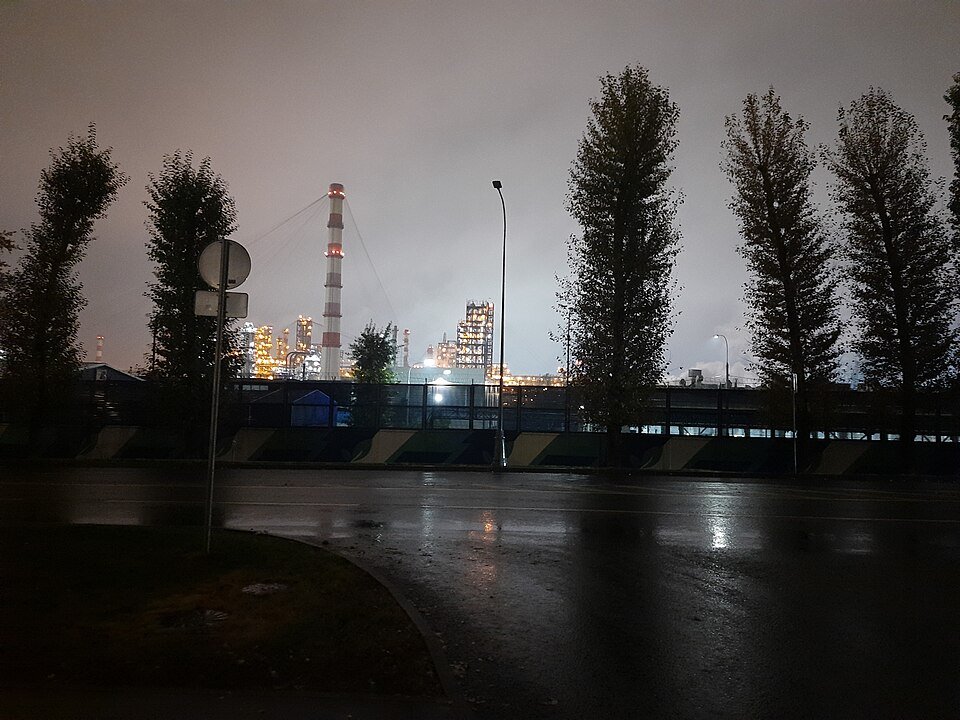
Ukrainian drones struck a Moscow oil refinery for the second time this week on Thursday, as President Volodymyr Zelenskyy presses the United States and European allies to turn the diplomatic momentum from the G7 summit into concrete support for ending the war.
Russia’s Defense Ministry said its air defenses shot down 555 Ukrainian drones across several regions overnight, with almost 200 intercepted as they approached the Russian capital. Moscow Mayor Sergey Sobyanin confirmed that several drones reached the Moscow oil refinery, a facility that supplies roughly 40 percent of the petrol and other refined products consumed by the capital’s multi-million population.
“A few drones managed to reach the Moscow oil refinery,” Sobyanin said, adding that a shopping center also suffered minor damage. Al Jazeera’s Yulia Shapovalova, reporting from Kazan, said the refinery was still burning heavily as emergency services worked to contain the fires. The attack came two days after a previous drone strike on Tuesday halted operations at the same facility, compounding the damage to Russia’s refining capacity.
The strike forced Sheremetyevo Airport, Moscow’s busiest, to suspend flights and evacuate personnel. Passengers took shelter in the car park as drones swarmed the capital’s airspace.
Russia responded by launching ballistic missiles at Kyiv in the second such attack on the Ukrainian capital this week. Tymur Tkachenko, the head of Kyiv’s military administration, urged residents to stay in shelters. In the northeastern city of Sumy, one person was killed in a separate drone attack.
The intensified strikes come at a critical diplomatic moment. Zelenskyy attended the G7 summit in Evian this week, where he held two meetings with Donald Trump on the margins and presented satellite imagery and battlefield data demonstrating Ukrainian progress. Trump, who had previously been skeptical of continued US support for Kyiv, shifted his tone after those meetings, saying at the summit that Russia should “make a deal” and signing a G7 joint statement that committed to increasing Ukraine’s air defense capacity and tightening sanctions on Russia’s oil and gas sector.
The refinery attack belongs to a broader pattern. Ukraine has systematically struck Russian energy infrastructure for months, targeting refineries, fuel depots, and storage facilities deep inside Russian territory. The Moscow refinery is the most symbolic target yet, given its location in the capital and its importance to the city’s fuel supply. Tuesday’s strike had already halted operations; Thursday’s follow-up ensured the facility stays offline. With each successful hit, Russia’s domestic fuel market tightens further, forcing the government to choose between supplying the military and supplying civilians. That choice becomes harder with winter approaching.
Zelenskyy is now seeking to turn that shift into a durable commitment. European leaders at the summit urged Trump to host direct talks between Zelenskyy and Vladimir Putin on US soil, though no such meeting has been scheduled. The G7 agreed to consider extending production licenses to Ukraine so its domestic arms industry can manufacture Western air defense systems and long-range missiles, a move that would significantly reduce Kyiv’s dependence on foreign weapon shipments.
The refinery strike is a demonstration of the leverage Ukraine is trying to build. Hitting Moscow’s fuel supply directly affects the daily life of the Russian capital in a way that frontline fighting does not. Whether that translates into diplomatic leverage depends on whether Trump is willing to use the G7’s declared unity as a basis for active mediation, or whether the Evian commitments remain a joint statement that changes nothing on the ground. For now, the smoke rising from Moscow’s refinery is the most tangible measure of progress either side can point to.