

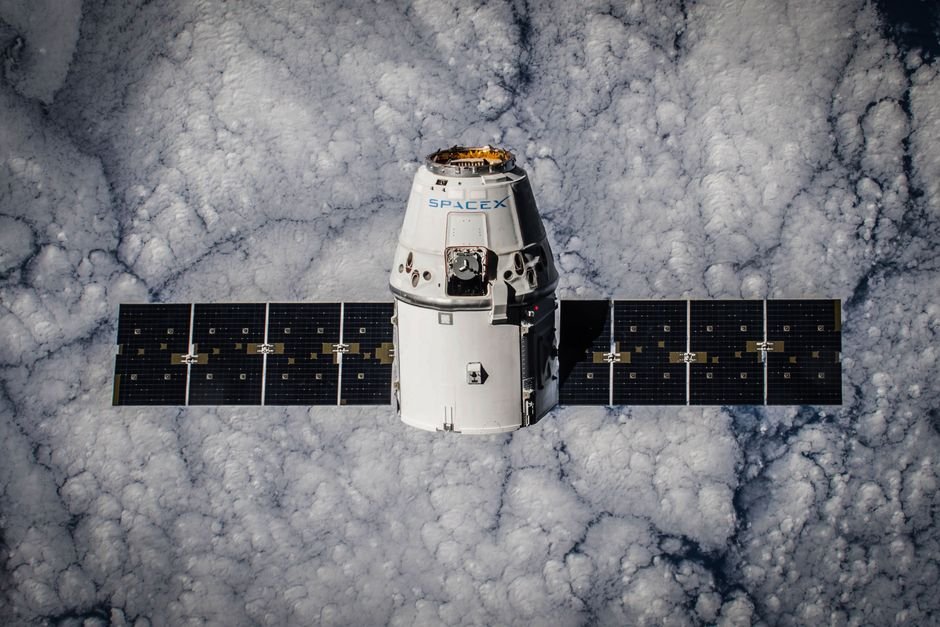
SpaceX has reached the public markets with a valuation of roughly $85 billion, backed not by hype alone but by proven execution in reusable launch, satellite telecommunications, and emerging orbital data centers. Yet an opinion piece published by SpaceNews argues that the company’s most significant long-term challenge is no longer a question of engineering or capital. It is a question of space itself.
Anatolii Papulov, CEO and co-founder of NewOrbit, writes that low-Earth orbit (LEO) is approaching a congestion threshold that threatens the long-term viability of the very megaconstellations that made SpaceX a market force. Currently more than 10,000 satellites operate in the 500 to 700 kilometer altitude band. Starlink satellites alone executed roughly 300,000 collision-avoidance maneuvers in 2025, a 50 percent increase from the prior year. SpaceX has applied for permission to launch up to one million additional satellites.
The collision-avoidance figure underscores a trajectory that experts have warned about for years. The Kessler effect describes a scenario in which a single collision generates thousands of debris fragments, which in turn cause further collisions and still more debris. In the worst case, an exponential cascade could render parts of orbit virtually unusable. With tens of thousands of tracked debris pieces and millions more untracked fragments already in circulation, the margin for error is shrinking.
Papulov’s argument centers on a potential solution: very low-Earth orbit (VLEO), the band between 200 and 300 kilometers in altitude. Historically VLEO has been impractical because atmospheric drag pulls satellites back into the atmosphere within weeks or months. NewOrbit has developed an electric propulsion system that it says enables satellites to operate in VLEO for more than five years, fundamentally changing the commercial calculus.
VLEO offers a self-cleaning property that higher orbits cannot match. Debris that accumulates at 200 kilometers is cleared by atmospheric drag within weeks, eliminating the long-term collision risk that threatens higher bands. This makes VLEO attractive not only for congestion relief but also for emerging applications such as orbital data centers, which require lower repair costs and reduced insurance premiums.
The orbital data center concept has gained momentum as AI-driven electricity demand has surged. Eric Schmidt, former Google CEO, has predicted that AI could consume 99 percent of global electricity, and grid infrastructure spending may need to double to roughly $970 billion per year by 2050. Orbital data centers powered by direct solar collection could bypass terrestrial grid constraints. SpaceX could control a significant share of global AI infrastructure within five to ten years if the concept proves viable.
But LEO congestion is not SpaceX’s problem alone. No competitor currently matches the Falcon 9 and Falcon Heavy cost profile, meaning the burden of orbital traffic management falls disproportionately on the company that operates the largest constellation. Regulators, agencies, and investors must treat orbital sustainability as a design requirement rather than an afterthought. Different orbits, different satellite designs, and new incentives for lower-altitude operations will be needed.
The piece also notes that the International Space Station has conducted approximately 40 debris-avoidance maneuvers in its history. Starlink alone now conducts that many every few hours. The scale of the management problem has shifted by orders of magnitude in less than a decade.
Papulov concludes that SpaceX’s success has proven that speed and scale are achievable in the space industry. The next challenge is making that scale sustainable for centuries rather than years. VLEO technology offers a path forward, but only if industry and government act before the Kessler effect moves from theoretical risk to operational reality.