

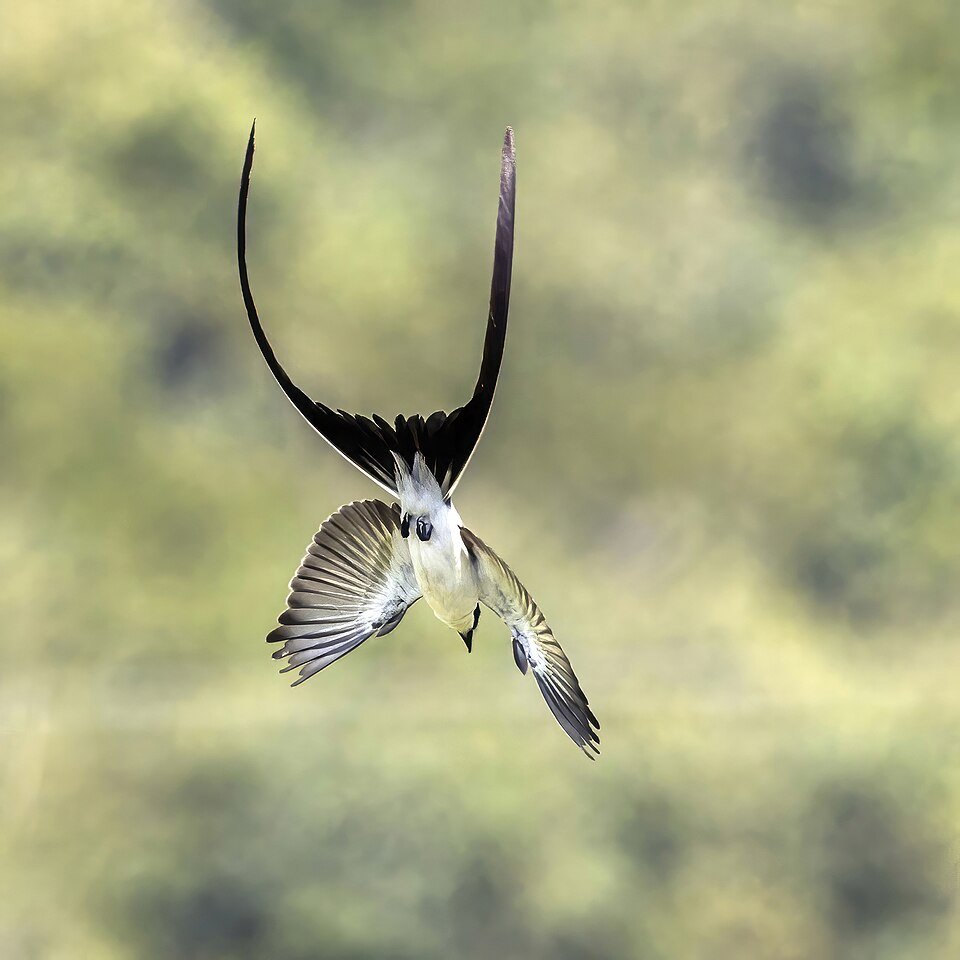
A flycatcher bird can see flicker at 140 flashes per second. A human maxes out at about 60. For decades, this simple fact — the critical flicker fusion threshold (CFFT) — has been the go-to explanation for why animals might perceive time differently from us. The logic was intuitive: a higher flicker rate means faster visual sampling, which means the world appears to move in slow motion.
In a new review published in Trends in Cognitive Sciences, researchers at the University of Sussex and the London School of Economics argue that this single-number explanation is insufficient and potentially misleading. They propose a richer framework for comparing temporal experience across species — one that breaks perceived time into five distinct, experimentally testable “windows.”
The flicker fusion threshold measures how fast a flickering light must be before it appears continuous. A flycatcher, with a CFFT of 140 Hz, sees individual frames where a human sees a solid beam. But temporal perception is not just about sampling rate. Two animals with identical flicker fusion might experience time very differently depending on how long perceptual traces linger, how quickly attention can shift, and how stable their perception remains over time.
“The question ‘do animals see time in slow motion’ is the wrong question,” said Dr. Ishan Singhal, a postdoctoral fellow at the University of Sussex and lead author of the review. “It assumes there is a single speed dial for temporal experience. What we find is that time perception is multidimensional.”
The Five Windows
Singhal and his co-authors — consciousness scientist Anil Seth and philosopher Jonathan Birch — propose that temporal experience can be decomposed into five measurable components.
The synchronisation window is the most familiar: the temporal grain over which sensory information is bound into a unified percept. This is what the flicker fusion threshold measures. Flycatchers and other small, fast-moving birds have exceptionally narrow synchronisation windows, allowing them to track rapid motion that would blur for a human. Jumping spiders, by contrast, are not susceptible to at least two common temporal illusions — likely because their four pairs of eyes process visual information through a fundamentally different architecture.
The revision window measures how quickly perception updates when new information arrives. Squirrels and starlings can fill in missing sounds over gaps that are far shorter than what humans can bridge, suggesting their auditory systems operate at a faster temporal resolution.
The persistence window captures how long a perceptual trace — an afterimage or iconic memory — lingers. The difference can be stark: pigeons have a persistence window of roughly 7 milliseconds, while in humans it is around 84 milliseconds. A pigeon’s sensory snapshot fades more than ten times faster than ours, meaning its perception of the present moment is built from far shorter samples.
The attentional window measures the tempo of attentional sampling — how quickly the brain can shift focus from one thing to another. Macaque monkeys, the researchers note, show attentional blink (the brief gap in awareness that follows a moment of focused attention) just as humans do, but with different timing parameters.
The stability window captures the time over which perception remains stable despite ambiguous sensory input. This is studied using bistable figures like the Necker cube, which the brain flips between two interpretations. Across species, the rate of these perceptual switches varies, hinting at differences in how the brain constructs a stable representation of reality from inherently ambiguous signals.
Why It Matters
The framework is not purely academic. Understanding how animals actually experience time has practical applications. If researchers can characterise the temporal windows of different species, they can design better conservation interventions — such as wind turbine blade patterns that birds can actually see, or warning signals that effectively deter animals from train tracks and highways.
The ecological angle is already visible in nature. The high-contrast patterns on peacock feathers and zebra stripes may exploit temporal constraints in predators: the dazzle pattern overwhelms the predator’s revision window, turning a static pattern into a moving target.
The review covers more than 20 species, from jumping spiders to macaques, but it is a framework proposal rather than a definitive empirical study. The authors acknowledge that while CFFT data is widely available, deep data on all five windows exists for very few species. Most of the evidence comes from a small number of well-studied lab animals.
“We’re proposing a research program, not delivering a finished map,” said Singhal. “The next step is to actually measure these windows systematically across species.”
The Philosophical Gap
As with all research on animal consciousness, there is a fundamental limitation: the framework measures behavior and neural activity, not subjective experience. The assumption that animals have a “stream of experience” at all is philosophically contentious. Singhal, who also holds the William James Prize for theoretical contributions to consciousness science, acknowledges this directly.
The five windows describe how temporal information is processed. Whether they describe what it feels like to be a flycatcher or a pigeon is a different question — one that neuroscience alone cannot yet answer.
Source: Singhal I, Birch J, Seth AK. Timescapes of non-human experience. Trends Cogn. Sci. 2026;30(7):589-603. DOI: 10.1016/j.tics.2026.05.002. Published online 17 June 2026.