

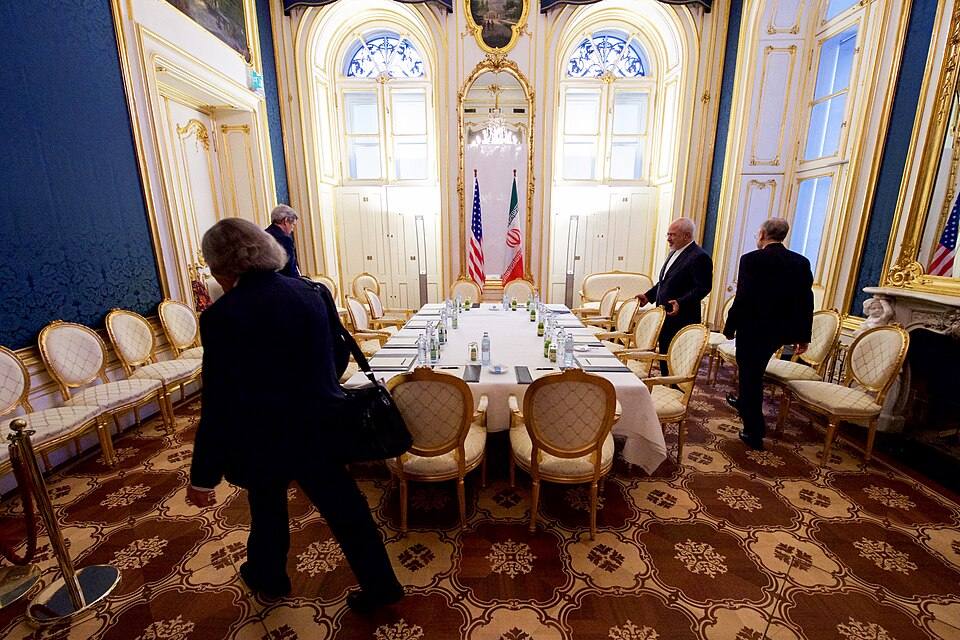
The United States and Iran are set to launch formal negotiations on a final settlement to their conflict on June 19 in Switzerland, officials confirmed, marking the beginning of what is meant to be a 60-day window to resolve the nuclear question that triggered the war.
The framework agreement that made these talks possible was signed electronically by President Donald Trump, Vice President JD Vance, Iranian Deputy Foreign Minister Majid Takht-Ravanchi, and top negotiator Mohammad Bagher Ghalibaf. The physical signing ceremony will take place Friday at the Burgenstock resort, a mountain retreat perched above Lake Lucerne. The Swiss foreign ministry confirmed the venue.
Iranian Foreign Minister Abbas Araghchi described what comes next. “In the final agreement, decisions will be made on the nuclear issues and the lifting of sanctions,” he said. A senior US official confirmed that negotiations on a comprehensive deal would begin immediately after the signing.
The core of the talks will be familiar to anyone who followed the 2015 JCPOA negotiations: Iran’s uranium enrichment program, the fate of its stockpile of highly enriched uranium, the scope of IAEA inspections, and the timeline for sanctions relief. But the context is radically different. In 2015, Iran had not been bombed. In 2026, its nuclear infrastructure at Natanz and Fordow has been heavily damaged by US and Israeli airstrikes. Its supreme leader is dead. Its economy has been strangled by a naval blockade.
The framework agreement that enabled these talks is a stripped-down document compared to the elaborate JCPOA architecture. According to reports, the 14-point memorandum of understanding includes: a moratorium on Iranian uranium enrichment, the release of approximately $50 billion in frozen Iranian assets, the reopening of the Strait of Hormuz on a toll-free basis, enhanced IAEA snap inspections, and the removal of Iran’s stockpile of highly enriched uranium.
The reopening of the strait is already affecting markets. Brent crude has fallen below $87 a barrel, its lowest level since early March, as traders price in the return of Iranian oil to global markets. Saudi Aramco CEO Amin Nasser has cautioned that full market normalization will not occur before 2027, citing the time needed to clear mines from Hormuz, restart idled production fields, and repair damaged energy infrastructure.
But the optimism surrounding the deal is tempered by events on the ground. On the same day officials announced the June 19 talks, Israeli strikes on southern Lebanon killed four people. Iran’s central military command, Khatam al-Anbiya, warned that Israel should “await a harsh response.” The strikes targeted vehicles near the town of Nabatieh, and the Israeli military said it had identified “a suspicious vehicle” near where its soldiers were operating.
The strikes exposed the fragility of the entire framework. Iran has linked the deal to an end of Israeli operations in Lebanon. US officials deny that any such condition exists in the text. But the reality is that Israel is not a party to the agreement, and Prime Minister Benjamin Netanyahu has made clear he will continue operations against Hezbollah regardless of what Washington and Tehran sign.
This is the central tension of the coming 60 days. The framework deal reopens the strait, lifts the blockade, and gets money flowing to Iran. But it defers every hard question about the nuclear program to a negotiation window that can be shattered by a single incident. Iran’s Deputy Foreign Minister Kazem Gharibabadi has already confirmed that the nuclear question is unresolved. Araghchi told state television that “our sword will always hang over the Strait of Hormuz.”
The negotiating calendar is tight. Sixty days from June 19 brings the process to mid-August, deep into the US midterm election season. If the talks are still ongoing by September, they become a campaign issue. If they collapse, the war resumes with no framework to contain it.
Both sides have reason to want these talks to succeed. Trump can claim he ended a war and secured Iran’s nuclear program. Iran can claim sanctions relief and the reopening of the strait. But the same calculation applies in reverse: both sides can walk away blaming the other if the talks fail, and both have domestic constituencies that prefer a harder line.
The world has seen this movie before. In 2015, the JCPOA was hailed as a diplomatic triumph. In 2018, Trump tore it up. In 2026, the same parties are back at the same table, negotiating the same issues, with the same history of failure hanging over every session.
The difference this time is that the war happened. Both sides have bled. Both sides need a result. Whether that shared exhaustion produces a durable agreement or merely a pause before the next round of fighting is the question the Burgenstock talks will answer.