

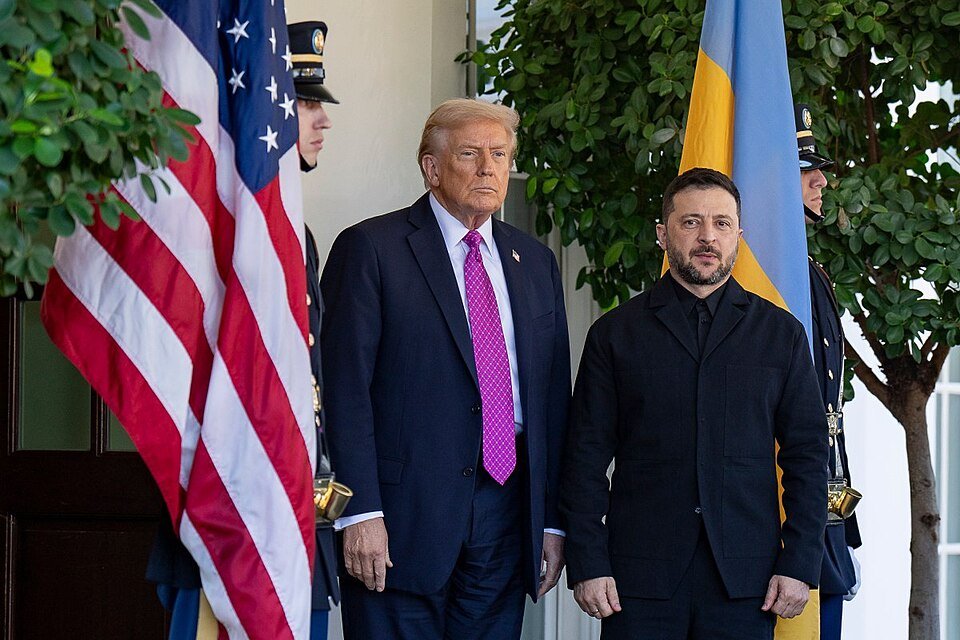
Donald Trump emerged from a closed-door meeting with Volodymyr Zelenskyy at the G7 summit in Evian-les-Bains on Tuesday and gave a clear message to Moscow: “Russia should make a deal.”
The meeting lasted one hour and 15 minutes and included the leaders of Germany, France, Britain, Italy, Canada, and Japan. Trump described it as “very good” and told reporters he would “do whatever I can” to end the war in Ukraine.
“Look, Russia should make a deal,” Trump said. “I settled eight wars. This was the one I thought was going to be the easiest to settle.”
The remark is striking for two reasons. First, because it directs pressure at Russia rather than Ukraine — a shift in tone from a president who has spent months pushing Kyiv toward concessions. Second, because it suggests Trump believes the Kremlin, not Ukraine, is the obstacle to ending the fighting.
Trump arrived at the June 15-17 summit brandishing a preliminary deal to end the conflict with Iran, and European leaders were determined to ensure Ukraine was not forgotten in the shadow of that achievement. Zelenskyy and the Europeans had come to Evian with a coordinated strategy: convince Trump that Ukraine’s battlefield position had improved significantly and that the time was right to increase pressure on Moscow.
They appear to have succeeded.
German government sources said after the talks that the G7 leaders “agreed that support for Ukraine must be increased and that pressure on Russia must be increased.” The sources described Ukraine as being in a “position of strength” while Russia was “under pressure.” That language was echoed by European diplomats who said the tone of the meeting had been constructive and that “we now seem to have joint analysis: that Russia is in the defensive now.”
Zelenskyy posted on X after the meeting: “The key focus is to strengthen air defense for Ukraine and advance diplomacy, to make Russia end its war. Peace is needed.”
Britain and Canada moved quickly to back the rhetoric with action. Prime Minister Keir Starmer announced 70 new sanctions targeting Russia’s shadow fleet, defense supply chains, and illegal financial networks used to circumvent existing measures. Canadian Prime Minister Mark Carney added 162 individuals, companies, and vessels to Canada’s sanctions list.
The meeting was a critical test for Zelenskyy. The Iran war had consumed Washington’s attention for months, and Ukraine’s diplomatic momentum had stalled as US focus shifted to the Strait of Hormuz. Trump’s own peace plan for Ukraine — drafted in multiple iterations since early 2025 — had been rejected by both Kyiv and Moscow on different grounds. With US midterm elections approaching in November, the window for a diplomatic breakthrough was narrowing.
Trump’s comment that Russia “should make a deal” does not mean a deal is imminent. The Kremlin has spent four years refusing to negotiate on anything that does not include recognition of its territorial gains, a ban on Ukrainian NATO membership, and the lifting of sanctions. None of those conditions were on the table in Evian.
But the shift in tone matters. For the first time in months, the public pressure from Washington is pointed at Moscow rather than Kyiv. Whether that translates into actual leverage — reduced military aid to Ukraine is not on the table, but increased sanctions enforcement could be — remains to be seen.
Trump also spoke more broadly about the war’s human cost. “Too many young men are dying on the battlefield on both sides,” he told reporters. “The whole thing is ridiculous. So, yeah, I’m going to do whatever I can.”
The question is what “whatever I can” means in practice. Sanctions enforcement against Russia has been uneven. European allies have been more aggressive than the US in cracking down on the shadow fleet. The threat of new tariffs or secondary sanctions on Russian oil buyers remains theoretical.
For now, Zelenskyy got what he came for: a public statement from the American president that Russia is the one not negotiating in good faith. Whether that statement becomes policy, or remains a summit soundbite, is the real question the coming weeks will answer.