

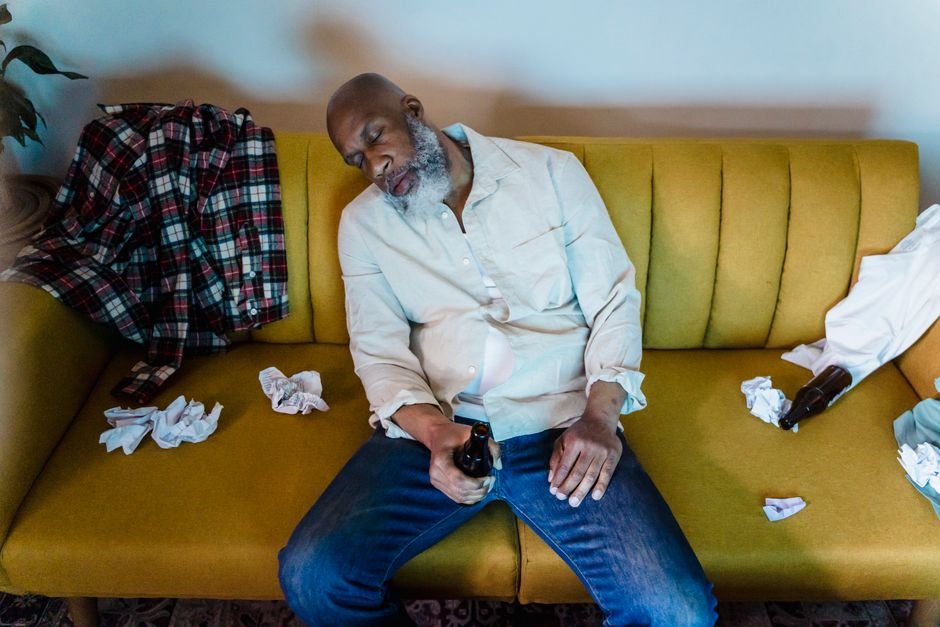
A drink before bed does more than put you to sleep, it can invert the very relationship between sleep and memory, a new study in Current Biology reports. In fruit flies, alcohol makes sleep actively harmful for memory consolidation, and keeping the animals awake paradoxically rescues their ability to remember.
Researchers from the University of Pennsylvania and the Tata Institute of Fundamental Research in Mumbai show that acute ethanol triggers a switch from sleep-dependent to sleep-independent memory, a shift normally reserved for starvation-driven foraging. But because ethanol simultaneously sedates the flies, the sleep-independent pathway cannot operate. The result: alcohol turns sleep, ordinarily the brain’s memory workshop, into an obstacle.
The paradox
In healthy satiated flies, as in humans, sleep is essential for consolidating newly learned appetitive memories. Starvation overrides this requirement: hungry flies switch to a sleep-independent form of memory so they can prioritize foraging over rest. The team asked whether ethanol, which affects both sleep and reward systems, produces a similar switch.
They trained flies on an appetitive memory task after ethanol exposure. Satiated, alcohol-naive flies showed the expected pattern: sleep after training was necessary for memory. But ethanol-exposed flies showed the opposite: sleep now impaired memory, and keeping them awake rescued it.
The mechanism
The switch is molecularly specific. Sleep deprivation after ethanol exposure upregulates neuropeptide F (NPF), the fly homolog of mammalian neuropeptide Y. NPF signals through its receptors on PPL1 dopaminergic neurons, a small cluster of cells in the fly brain that gate reward processing and memory valence. Blocking NPF signaling eliminates the rescue effect; enhancing it mimics it.
This places ethanol-induced memory disruption in the same circuit as starvation-induced memory switching, both engage a reward-seeking program that shifts the brain to sleep-independent consolidation. The difference is that starvation does not sedate, so the switch works. Ethanol does sedate, so the switch to sleep-independent memory fails, producing a net deficit.
Why it matters
The finding challenges a deeply held assumption about alcohol and sleep. While it is well known that alcohol fragments sleep and suppresses REM, the present study suggests something more fundamental: alcohol changes what sleep does to memory. For the first time, it shows that alcohol can make sleep actively detrimental to memory consolidation at the circuit level, through a defined dopaminergic pathway.
If the mechanism translates to mammals, NPF/neuropeptide Y signaling is conserved across species, it has implications for anyone who drinks before studying, before important events, or as a nightly sleep aid. The data suggest that skipping sleep after alcohol exposure may, counterintuitively, preserve memory better than sleeping through intoxication.
Limits
The study was conducted in Drosophila melanogaster. While the NPF-dopamine pathway is evolutionarily conserved, direct translation to human memory consolidation requires verification. The memory task was appetitive (sugar-reward association); whether the same effect holds for aversive or procedural memory is unknown. The ethanol exposure was acute; chronic alcohol use may produce different circuit adaptations.
Bottom line
Acute ethanol in Drosophila inverts the sleep-memory relationship by activating a starvation-like neuropeptide F-dopamine circuit that switches the brain to sleep-independent memory, while simultaneously causing sedation that blocks that pathway. Sleep deprivation rescues memory after alcohol, a paradoxical reversal of the usual sleep-memory logic.
Source
Chouhan NS, Mitra W, Singh K, Sehgal A. “A paradoxical impact of alcohol on sleep-memory coupling.” Current Biology, 2026 Jul 15. DOI: 10.1016/j.cub.2026.06.069. PMID: 42456656.