

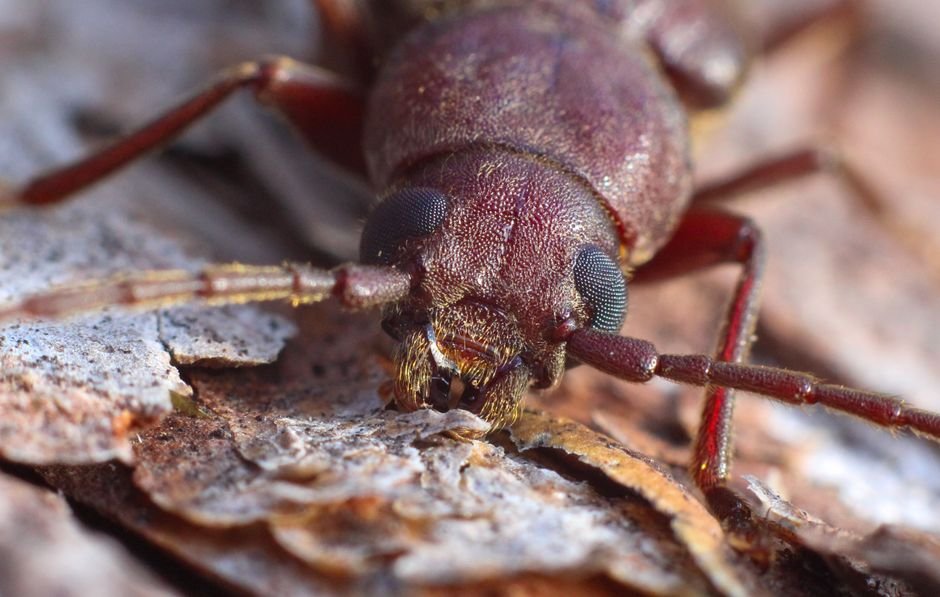
An invasive beetle the size of a chia seed is quietly devastating urban forests across the globe, and new genetic evidence suggests it has arrived not once but at least six separate times.
The polyphagous shot-hole borer (Euwallacea fornicatus), native to China, Taiwan, and Vietnam, is an ambrosia beetle that bores into trees and introduces a symbiotic fungus that clogs water-conducting channels. Unlike many specialist pests, such as the emerald ash borer, which targets a single genus, this beetle infects more than 600 plant species, including oaks, plane trees, box elders, ornamentals, and fruit trees. Infested trees can die within months to years.
“We are losing a lot of the urban forest canopy,” David Richardson, an invasion biologist at Stellenbosch University, told Science.
Six introductions, one global pest
An international genetic study, published in the Journal of Pest Science and reported by Elizabeth Pennisi in Science, has traced the beetle’s global spread. The team found evidence of at least six independent introductions of E. fornicatus and the closely related tea shot-hole borer (E. perbrevis) from Asia to new continents.
The two species are nearly identical morphologically. “They are so damn small and similar,” said Jiri Hulcr of the University of Florida, who was involved in the genetic work. In California, the beetle went undetected for a decade before University of California, Riverside geneticists realized it was not the same species previously known from the region.
The beetle’s current reach spans at least six countries beyond its native range:
- California, spread from Southern California to the San Jose area, threatening Central Valley crops including almonds and pistachios.
- South Africa, first detected in 2012; oaks in Stellenbosch are dying and the beetle has entered native forests around Cape Town.
- Brazil, detected in 2020; spread along 3,500 kilometers of coastline, infesting landscaping favorites like box elders and plane trees.
- Australia, detected in Perth in 2021; a A$40 million pruning and removal program failed to eradicate it, though it has not yet reached optimal habitats.
- Israel, established in avocado groves since 2009.
A generalist threat
The beetle’s broad host range makes it fundamentally different from other high-profile invasive forest pests. It is a generalist attacking hundreds of hardwood species, and it thrives in a wide range of climates, from Mediterranean to subtropical to dry temperate.
Forecasted future spread includes the Mediterranean region, the southeastern United States, Madagascar, and nearly all of eastern Australia. “It is a perfect storm in progress,” Esteban Ceriani Nakamurakare, a forest entomologist at Argentina’s National Scientific and Technical Research Council, told Science, warning that it “will fundamentally alter ecosystem structure and landscape dynamics wherever it gains a foothold.”
The beetle disperses by stowing away in wood pallets, shipping crates, and live plants. A single female can start an infestation, unfertilized eggs develop into males, enabling rapid population establishment from a single arrival. Continued global trade and wood packaging make containment extremely difficult.
Ongoing control efforts
Researchers are pursuing several strategies. At UC Riverside, teams are testing parasitoid wasps as potential biological control agents. At Murdoch University in Australia, scientists have successfully reared the beetle-fungus pair in the lab and are studying chemical attractants and repellents. UC Davis is testing which California tree species are most vulnerable.
But the consensus among researchers is clear: prevention and early detection remain the most effective tools. Once the beetle has established in native forests, eradication is likely impossible. “This study adds evidence showing how difficult it is to prevent the movement of nonnative insects,” said Angela Mech, a forest entomologist at the University of Maine.