

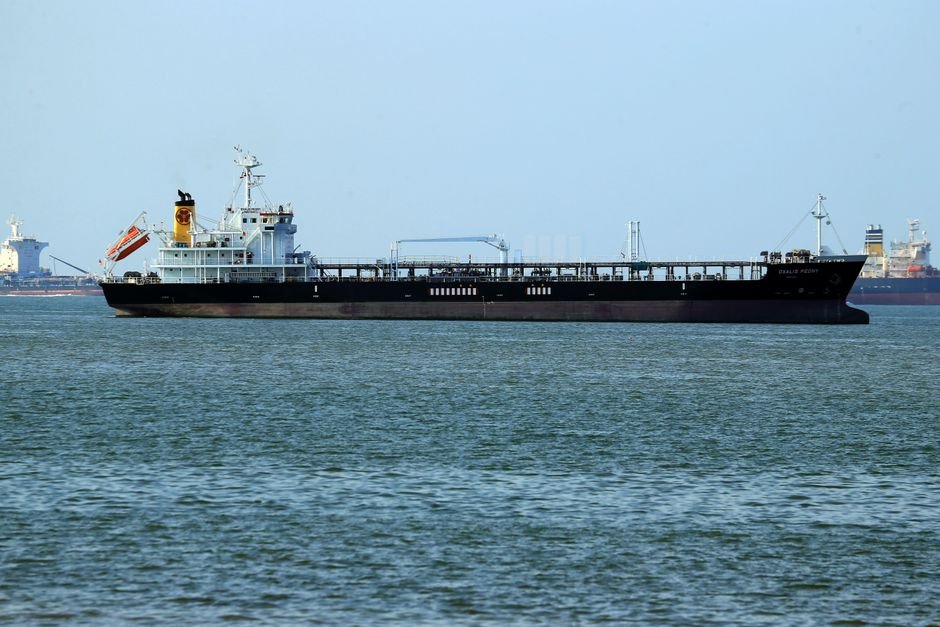
The US military struck an Iranian oil tanker and launched a fresh wave of strikes on Iranian territory as air raid sirens sounded across the Gulf.
A day after Trump threatened to attack Iran’s power plants, the fighting on the ground intensified.
The United States launched another wave of strikes on Iran on July 16, with Iranian media reporting explosions on Qeshm Island, in Bandar Abbas and Chabahar, all strategic locations along Iran’s southern coast. CENTCOM said it had disabled an Iranian oil tanker, though it provided no details on the vessel’s location or condition.
Iran retaliated by striking targets in Kuwait and Jordan, according to Iranian state media, which reported attacks on US military sites in both countries. Air raid sirens sounded in Bahrain and Kuwait as residents took shelter. Iran’s military issued a warning that if the US follows through on its threat to attack civilian infrastructure, “all infrastructure in the region will be crushed under steel blows.”
The strikes on the Iranian oil tanker are significant. Targeting an oil tanker in international waters widens the war beyond military installations and into the commercial shipping that sustains the global economy. The Strait of Hormuz, already operating at a fraction of its normal capacity, has become a battlefield in all but name.
On July 14, an Iranian missile strike hit an oil tanker off the coast of the UAE, killing an Indian sailor and wounding several others. India summoned the Iranian envoy over the attack. Shipping companies are rerouting vessels, those that can afford the longer journey around Africa. Insurance premiums for Gulf transits have become prohibitive for many operators.
The numbers tell the story of a region under siege. The daily average of ships transiting the Strait of Hormuz since the June 14 MOU collapsed stands at roughly 20 vessels, down from 138 before the war. Iran has launched at least 175 missiles and drones since the MOU collapsed. The United States has conducted waves of strikes across three consecutive nights, hitting coastal defense systems, missile and drone sites, and naval capabilities.
The war is not merely a conflict between two countries. It is a slow-burning catastrophe for the entire Gulf region. Kuwait, Bahrain, and Jordan, none of them parties to the original dispute, are being drawn into the crossfire as Iran attacks US military installations on their soil. The UAE has been hit indirectly. India has lost a citizen.
Trump has said the strikes will continue until he says “enough.” Iran has said it will keep firing as long as the US attacks. Neither statement leaves room for the one thing that could actually end this: a ceasefire.