

A new study proposes using directional geoneutrino detection to resolve one of Earth science’s longest-standing debates: whether the deep mantle contains chemically distinct, radiogenically enriched reservoirs. The research, led by Zhihao Xu and collaborators including geochemist William F. McDonough, was published on the arXiv preprint server on June 14.
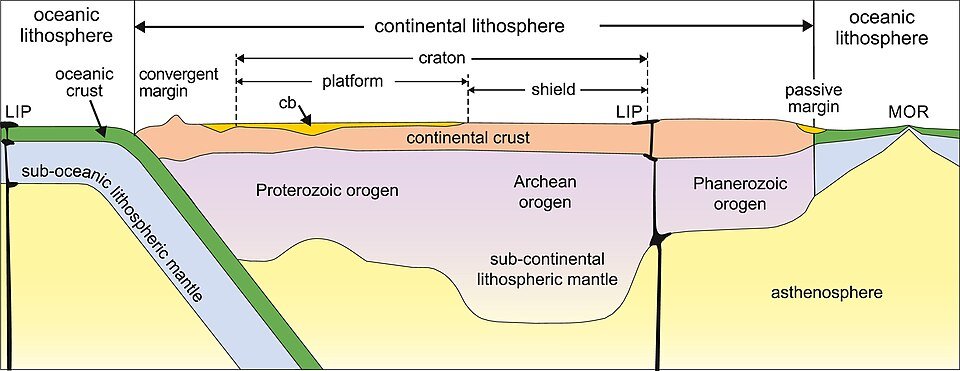
Geoneutrinos are elusive subatomic particles produced by the radioactive decay of heat-producing elements (HPEs) — uranium, thorium, and potassium — inside the Earth. By measuring the geoneutrino flux reaching the surface, scientists can infer the distribution of these elements. However, all current geoneutrino detectors are located on continents and measure only the total angle-integrated flux, producing a fundamental ambiguity: a chemically homogeneous mantle produces the same signal as a heterogeneous one.
The key targets are the Large Low-Velocity Provinces (LLVPs), two continent-sized structures at the base of the mantle beneath Africa and the Pacific. Seismology has mapped them for decades, but their composition — whether they are thermally hot, chemically distinct, or both — remains unknown.
### How Directional Detection Would Work
The study evaluates a proposed Ocean Bottom Detector (OBD) that would measure not just the number of geoneutrinos arriving, but their incoming direction. By modeling realistic LLVP geometries, the team demonstrates that directional information breaks the degeneracy that plagues rate-only measurements.
“Resolving the incoming direction of geoneutrinos can successfully break the non-uniqueness inherent in rate-only measurements,” the authors write. The directional signal would reveal whether the LLVPs host enhanced concentrations of heat-producing elements, providing a direct observational test of chemical heterogeneity in the deep mantle.
### Implications for Earth’s Thermal History
If the LLVPs are indeed radiogenically enriched, they could account for a significant fraction of Earth’s radiogenic heat budget — the internal heat that drives plate tectonics, volcanism, and the geodynamo that generates the planet’s magnetic field. Determining their composition would refine models of Earth’s long-term thermal evolution and the cycling of elements between the surface and deep interior.
Determining the spatial distribution of HPEs within the Earth is critical for understanding the planet’s thermal and chemical evolution, the researchers emphasize. A directional geoneutrino detector deployed on the ocean floor could offer an entirely new observational window into the deep Earth, complementing seismic tomography and geochemical analyses of mantle-derived rocks.
The 22-page paper includes six figures modeling geoneutrino signals for realistic LLVP geometries. It touches multiple disciplines, including geophysics, particle physics, and planetary astrophysics. The authors note that while the OBD concept faces significant engineering challenges — deploying sensitive detectors on the ocean floor at kilometer depths — no fundamental physics barriers prevent its realization.