

The week in the occupied Palestinian territories told two conflicting stories that define the gap between international law and Israeli policy.
On one side, four Western nations coordinated sanctions against Israeli settlers and the organizations that enable them. On the other, the Israeli government pushed forward with a billion-shekel funding package for the very outposts those sanctions are meant to constrain.
The split could not be starker.
The United Kingdom, Canada, France, and Norway announced joint sanctions targeting individuals and entities linked to settler violence in the West Bank. The UK sanctioned six Israeli entities and one individual involved in financing and carrying out attacks against Palestinians. Canada designated two individuals and five entities for “facilitating, supporting, providing funding for, or contributing to the use of attempted use of violence.” France banned Israeli Finance Minister Bezalel Smotrich from entering the country for actively promoting the annexation of the West Bank. Norway joined the coordinated action with its own designations.
The four nations issued a joint statement calling for accountability over “horrific levels” of settler violence and demanded that Israel conduct “swift and thorough investigations” into attacks against Palestinian civilians.
The United Nations Commission of Inquiry on the Occupied Palestinian Territory went further. In a report released last week, it accused Israeli authorities of being directly involved in settler attacks that have killed or injured Palestinians. The report said Israeli security forces had provided a “shield” for the violence, citing incidents where soldiers accompanied masked settler assailants into Palestinian villages. It documented a 130 percent surge in settler attacks since 2023, with at least seven Palestinians killed and 832 injured last year alone.
None of this stopped the Israeli government from moving ahead with one of the largest settlement funding packages in recent memory.
The cabinet referred a plan to allocate approximately one billion shekels – about $338 million – for the establishment of new settlements and the expansion of existing outposts in the occupied West Bank. According to Peace Now, the funding would cover temporary housing, permanent infrastructure including roads and sewage, and new government positions called “community coordinators” whose job is to recruit settlers and help them move in.
The initial plan was to bring the funding before the full cabinet on June 11. But after the New York Times and other international outlets reported on the scale of the proposal, Prime Minister Benjamin Netanyahu quietly moved the decision to a closed-door Security Cabinet meeting on June 14. The procedural shuffle did not change the substance: the money was still moving, just with less public scrutiny.
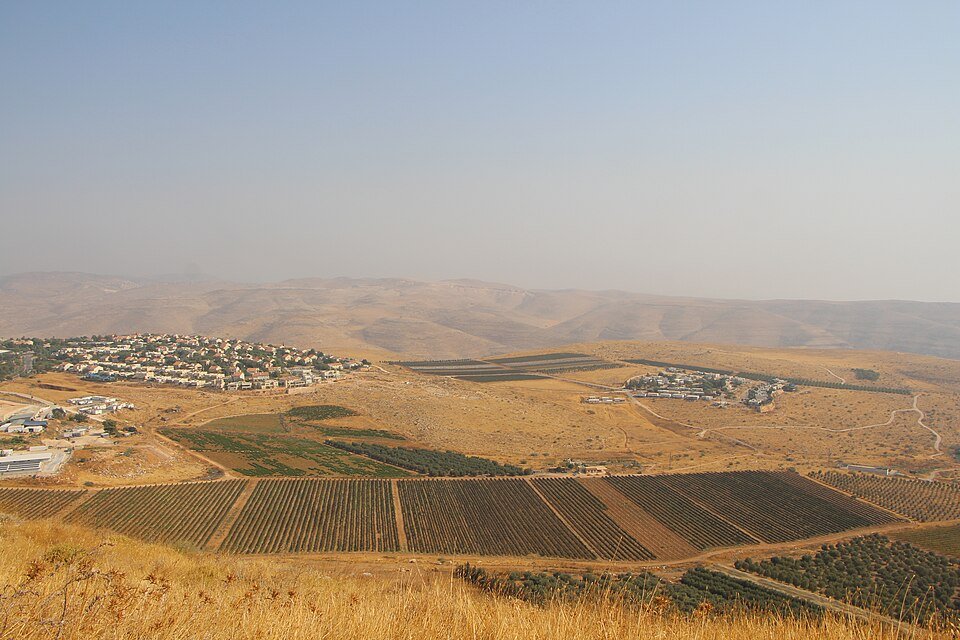
The outposts targeted for this injection of state funding are illegal even under Israeli law. They were built without government authorization, though the government has announced its intent to legalize them retroactively. Since taking office in December 2022, Netanyahu’s coalition has approved the establishment of 103 new settlements – a pace that Peace Now called “the most extensive move of its kind” in more than 30 years.
The scale of the settlement enterprise has grown so rapidly that the numbers are difficult to absorb. In 2025 alone, Israel established 86 new outposts – an average of one to two per week. The Higher Planning Council approved 27,941 housing units in settlements. Peace Now documented that 1,828 incidents of settler violence resulted in bodily injury or property damage, and 22 Palestinian communities were fully or partially displaced.
The international sanctions are real. The UK asset freezes, the Canadian travel bans, the French exclusion of Smotrich – these carry genuine diplomatic and economic weight. But they operate in a different world than the one the Israeli government inhabits.
While four Western capitals announce designations against settler organizations, the Israeli government budgets a billion shekels to build those same organizations roads, water infrastructure, and permanent housing. While the UN accuses Israeli authorities of complicity in attacks against Palestinian civilians, the government creates new civil-service positions dedicated to bringing more settlers into the West Bank.
The contradiction is not accidental. It is the policy.
The money for the settlements comes from the same treasury that funds the military presence that the UN says shields settler violence. The “community coordinators” paid for by this package will operate on land that international law deems occupied territory. The infrastructure they build will sit on ground that the International Court of Justice has advised Israel to evacuate.
None of this is secret. The plan was on the government agenda in plain text. Netanyahu moved it to a closed session not to hide the funding, but to avoid the spectacle of approving it while foreign ministers were announcing sanctions. The decision itself was never in doubt.
Every week brings the same pattern. More outposts. More funding. More violence. More sanctions. And no mechanism to break the cycle.