

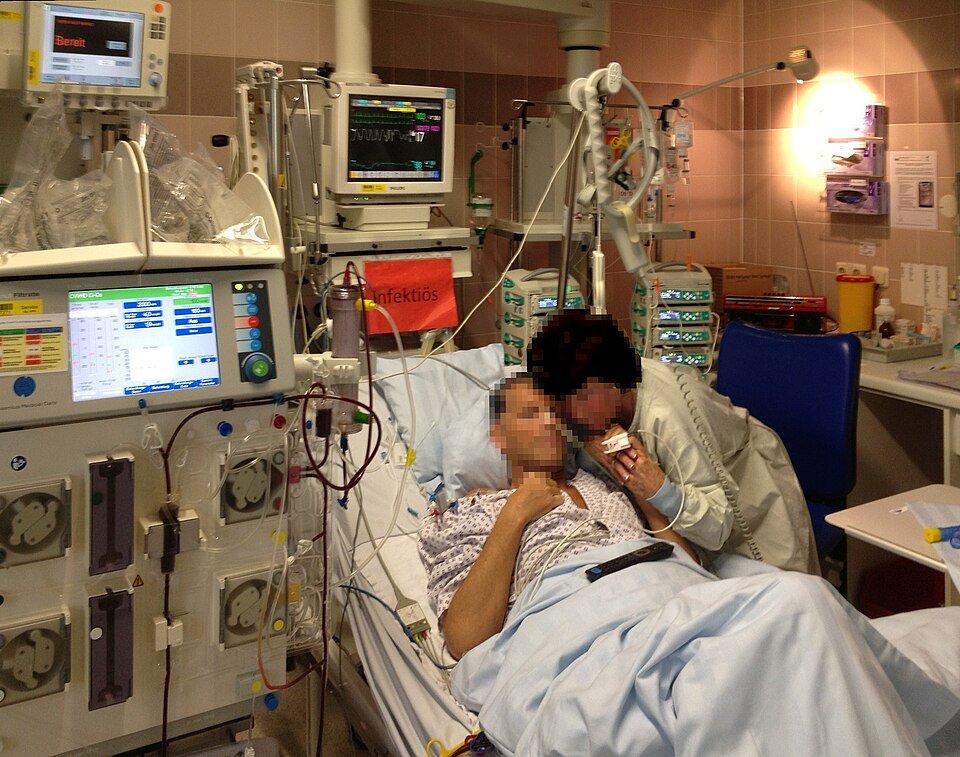
A cross-sectional study of 383 adults on maintenance dialysis in China finds that more than half eat after 10 p.m., with poor sleep and depressive symptoms independently associated with frequent nocturnal eating, pointing to a need for symptom-informed nutrition counseling in this population.
What they found
Researchers at Jining Medical University Affiliated Hospital surveyed adults receiving hemodialysis (76.5%) or peritoneal dialysis. They assessed sleep quality with the PSQI, fatigue with the FACIT-Fatigue scale, and depressive symptoms with the PHQ-2. Nocturnal eating was defined as caloric intake at or after 22:00, with frequent nocturnal eating set at 3 or more nights per week.
Key figures:
- 85.1% of patients had poor sleep quality (PSQI > 5, mean 8.1).
- 54.3% reported any nocturnal eating; 15.7% reported frequent nocturnal eating.
- Each one-point increase in PSQI score was associated with 19% higher odds of frequent nocturnal eating (adjusted OR 1.19, 95% CI 1.07-1.32).
- Less fatigue (higher FACIT-F score) was associated with lower odds of frequent nocturnal eating (aOR 0.96, 95% CI 0.93-1.00).
- A positive depression screen (PHQ-2) was associated with 2.40 times higher odds of frequent nocturnal eating (aOR 2.40, 95% CI 1.29-4.47).
- E-value analysis showed the PHQ-2 association was robust to substantial unmeasured confounding (E-value 4.23).
Why it matters
Sleep disturbance and fatigue are among the most common and debilitating symptoms in maintenance dialysis patients, yet the role of disrupted meal timing, eating late at night when the body’s metabolic regulation is optimized for fasting, has received little attention in nephrology. This study shows that the relationship is clinically significant: each PSQI point increases nocturnal eating risk, and depressive symptoms more than double it. For dialysis care teams, it suggests that screening for sleep and mood symptoms could identify patients who would benefit from chrononutrition-focused dietary counseling.
Limits
The study is cross-sectional, precluding causal inference. Nocturnal eating was self-reported and may be subject to recall bias. The single-center design in China may limit generalizability to dialysis populations with different dietary patterns or schedules.
Bottom line
Meal timing disruption is common in maintenance dialysis patients and is independently associated with poor sleep quality, fatigue, and depressive symptoms. Integrating symptom screening into routine nutrition assessment could help identify patients who need targeted meal-timing counseling.
Source
Chen H, Xu L, Ai S, et al. Meal timing disruption in maintenance dialysis patients: associations with sleep quality and fatigue. Frontiers in Nutrition. 2026;13:1815750. doi:10.3389/fnut.2026.1815750. PMID: 42293212.