

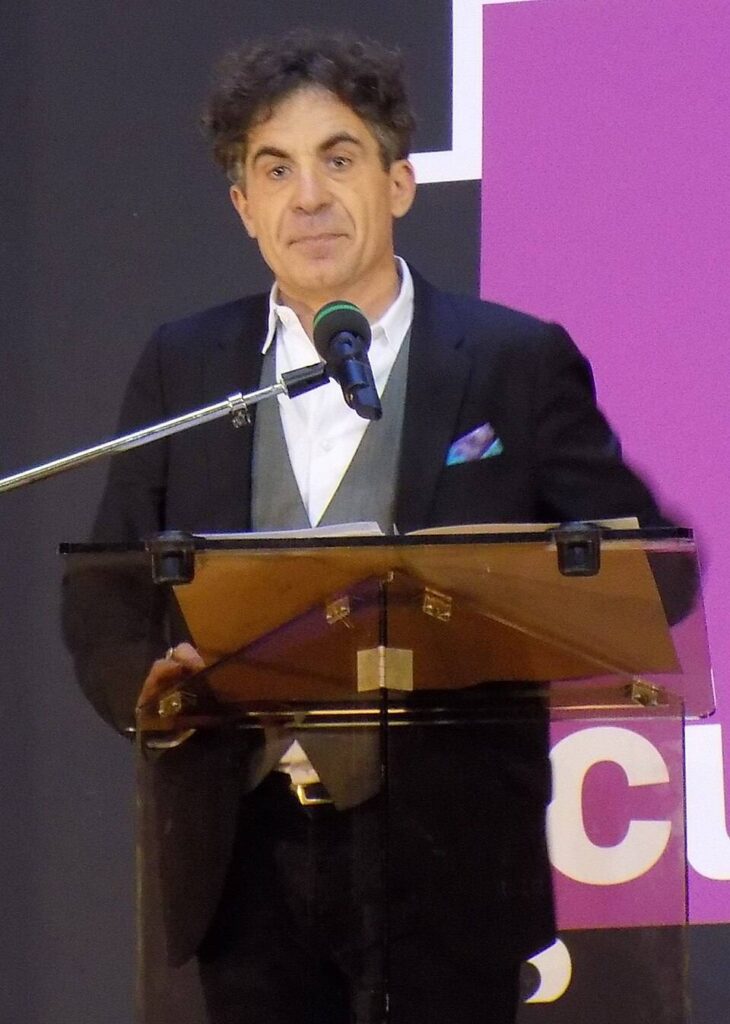
In June 2026, Université Paris Cité revoked the doctorate of Étienne Klein, one of France’s most recognizable public intellectuals, a research director at the CEA (France’s atomic energy commission), a daily radio host on France Culture, the author of more than 30 books, and a former consultant on the design of CERN’s Large Hadron Collider. The decision followed a 20-month investigation that found his 1999 thesis in the philosophy of science contained unattributed copy-paste from more than 100 different authors across over 60% of its pages.
The case has sparked a debate that extends far beyond Klein himself. His thesis was written in 1999, a quarter-century ago, in a pre-digital era when plagiarism detection software did not exist, when citation norms were enforced by editorial memory rather than automated cross-checks, and when the academic culture in France, particularly in the humanities, placed less emphasis on meticulous source attribution than it does today.
The question is not whether Klein plagiarized, the evidence is overwhelming. The question is what we should make of a distinguished scientific career when its foundation document fails a modern audit by a tool that did not exist when it was written.
The Investigation
The Klein case unfolded over several years. In 2016, the French magazine L’Express first reported unattributed passages in his thesis. Klein initially denied the claims, then attributed them to an unconscious habit developed during a period of illness when he read aloud extensively. In 2021, he admitted to what he called “literary plagiarism” while denying “scientific plagiarism”, a distinction his critics rejected on the grounds that a doctoral thesis is, by definition, a scientific document.
In August 2024, the investigative journalism site Arrêt sur images published a systematic analysis using a custom detection tool called Recopilleur. They found that 88 of 429 thesis pages (~20%) contained copy-paste from about 20 authors, including Albert Camus, Louis de Broglie, and crucially, Michel Paty, who had been a member of Klein’s thesis jury. The university launched a formal investigation.
The university’s findings, delivered after 20 months, were far more damning than the initial journalistic exposé. The investigation determined that more than 60% of the thesis pages were affected, involving unattributed material from more than 100 different authors. Klein’s doctorate was revoked. He has avenues of appeal, first through the university and then through administrative courts.
The Man and the Career
It is important to be clear about who Étienne Klein is, because the case cannot be understood without the context of his career.
Klein is not primarily a bench scientist. He is a physicist by training who worked on laser isotope separation, superconducting particle accelerators, and the design of the LHC at CERN. At the CEA, he founded and headed LARSIM, the Laboratory for Research on the Sciences of Matter. He holds a Chevalier de la Légion d’Honneur, has won the Prix Jean Perrin and Prix Jean Rostand for science communication, and is a member of the French Academy of Technologies and the OPECST scientific council.
But his public profile goes far beyond these credentials. Klein hosts La Conversation Scientifique (weekly) and Le Monde Selon Étienne Klein (daily) on France Culture. He has published more than 30 books aimed at making physics accessible to the general public. He is, for millions of French listeners and readers, the voice and face of science, someone who made the arcane worlds of quantum mechanics, relativity, and particle physics feel within reach.
He is also a figure who has courted controversy. In 2022, he posted an image of a slice of chorizo on social media, claiming it was a James Webb Space Telescope image of the star Proxima Centauri. The hoax was intended as a joke about viral misinformation, but it backfired badly, drawing accusations of arrogance from a public frustrated with a perceived elite insider culture. For better or worse, Klein has always been a figure who operates in the spotlight.
The Generational Gap
This is where the Klein case touches something broader than one man’s misconduct.
Klein’s thesis was written in 1999. At the time, plagiarism detection was done by hand, by examiners who might recognize a passage they had read elsewhere, or by the sporadic efforts of whistleblowers with good memories. Automated text-matching tools like Turnitin (founded 1997) existed in embryonic form but were not deployed in French academic institutions. The academic culture, particularly in French philosophy of science, placed a premium on erudition, the demonstration that one had absorbed the literature, and the boundaries between synthesis, paraphrase, unattributed borrowing, and original argument were enforced more by convention than by rule.
Klein himself, in a long statement posted on X after the decision, argued that much of his reuse was “not always conscious,” describing passages as “vectors of shared knowledge.” He expressed “astonishment bordering on stupefaction” at how standards had changed, and argued that the energy spent hunting for textual reuse could be better directed against scientific disinformation.
This argument is self-serving, and it is also not entirely wrong. Many senior scientists currently leading laboratories, sitting on grant committees, and advising governments wrote their doctoral theses in precisely this pre-digital environment. A systematic audit of theses from the 1980s and 1990s using modern detection tools would almost certainly uncover similar patterns, not because that generation of scientists was uniquely dishonest, but because the norms and enforcement mechanisms were fundamentally different.
The question, then, is what we do with that knowledge. Do we re-examine every thesis from the pre-digital era and apply today’s standards retroactively? Or do we recognize that academic integrity is not solely determined by whether a thesis section matches a detection database, but also by a scientist’s lifetime of demonstrated ethics, peer-reviewed output, and contribution to knowledge?
The Spectrum of Plagiarism
Not all plagiarism is equal. A historical review paper that paraphrases a secondary source without attribution is different from a medical researcher fabricating clinical trial data. Klein’s case involves unattributed literary borrowings in a philosophy-of-science thesis, not fabricated experimental data, not falsified results, not ethical violations involving human subjects.
The scientific community has largely absorbed this distinction in its responses. The CEA, Klein’s employer, has noted the university’s decision and said it will act accordingly, but has not called for his dismissal. His radio programmes continue to air. The scientific establishment’s response has been measured, as if recognizing that the revocation of a 27-year-old PhD, while formally correct under current rules, does not retroactively erase 25 years of genuine physics contributions and science communication.
Klein is no longer a PhD holder, but he remains a research director at the CEA, a physicist who contributed to the LHC, and the author of dozens of books that have brought science to a broad public. Whether that should be the case, or whether the revocation should have career consequences, depends on what we believe a doctorate is for. Is it a certification of integrity at a single moment in time, subject to the standards of that moment? Or is it a career-long warrant that must remain valid under every future regime of scrutiny?
What Matters
The Klein case is not a simple story of right and wrong. It is a collision between two legitimate values: the principle that plagiarism, even from an earlier academic era, should have consequences, and the recognition that a scientist’s value is not fully captured by a document written in their forties, under norms that no longer apply.
For every senior scientist whose pre-digital thesis would not survive a modern automated audit, the question is the same: does one document from one era outweigh decades of subsequent work, peer review, public service, and scientific integrity? The answer is not obvious. But it is a conversation that the Klein case, uncomfortable, imperfect, and unavoidably personal, forces the scientific community to have.
Sources:
1. Zhao, C. “French physicist and media star loses doctorate after plagiarism investigation.” Science, June 15, 2026. https://www.science.org/content/article/french-physicist-and-media-star-loses-doctorate-after-plagiarism-investigation
2. Université Paris Cité. Investigation report and sanction decision, June 2026.
3. Guémart, L. & Abbiateci, J. “Les plagiats d’Étienne Klein.” Arrêt sur images, August 2024.
4. Klein, É. Public statement on X, June 12, 2026. “Guillemets, paraphrases et ChatGPT.”
5. L’Express. Initial plagiarism revelations, 2016.
6. Le Monde. Klein interview on plagiarism, 2021.