

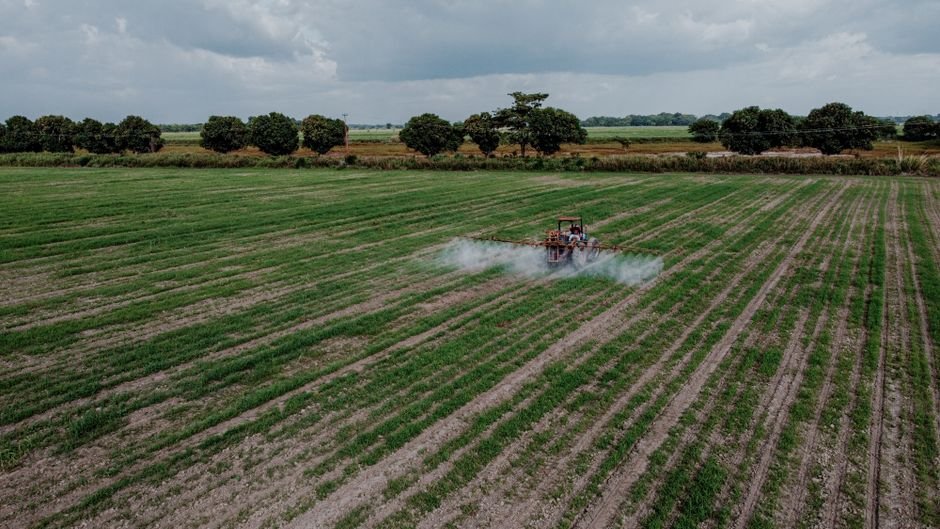
The proliferation of antibiotic resistance is often framed as a problem of clinical antibiotic overuse. But a growing body of evidence points to a less visible driver: agricultural practices. A new study published in Nature Communications shows that the diversity of pesticides applied to soil — not just their presence — actively enriches antibiotic resistance genes (ARGs) through two fundamentally different biological mechanisms.
The finding has implications for how we regulate and manage the hundreds of agrochemicals applied to farmland worldwide.
The experiment
Researchers from the Chinese Academy of Sciences and collaborating institutions conducted a three-year randomized field-block experiment at the Erguna Forest-Steppe Ecotone Ecosystem Research Station in northeast China. They created 96 quadrats (4 m2 each) across 16 treatment combinations applying 0 to 4 different pesticides at standard agricultural doses.
The four pesticides were: omethoate (insecticide), azoxystrobin + propiconazole (fungicide), chlorpyrifos (insecticide), and mefenoxam + mancozeb (fungicide) — all widely used in global agriculture.
To distinguish between bacteria that were merely present and those that were actively translating proteins, the team used BONCAT (bioorthogonal non-canonical amino acid tagging) combined with fluorescence-activated cell sorting and metagenomic sequencing. The active bacterial fraction increased from 18.87% in untreated soil to 40.47% under the highest pesticide diversity.
Two mechanisms, one outcome
The central finding is that pesticide diversity drives active ARG enrichment through two pathways:
Low diversity: When only one or two pesticides were applied, the dominant mechanism was co-selection via efflux pumps in Acinetobacter baumannii. This opportunistic pathogen, better known for hospital-acquired infections, flourished under low-diversity pesticide regimes. Of the 604 ARGs identified in A. baumannii across all samples, 37.82% were efflux pump genes spanning five families (MFS, RND, MATE, ABC, SMR). The bacterium’s abundance was significantly elevated under low-diversity treatments and positively correlated with total active ARG levels (R2 = 0.12, P = 0.019).
High diversity: When three or four pesticides were applied simultaneously, the mechanism shifted. Elevated reactive oxygen species (ROS) and SOS stress responses in the bacterial community promoted horizontal gene transfer (HGT) of ARGs between species. This was validated through culture experiments. High-diversity treatments enriched a different set of resistance genes — those conferring resistance to novobiocin, beta-lactams, tetracyclines, mupirocin, pleuromutilin-tiamulin, polymyxins, vancomycin, and rifamycin — along with increased mobile genetic elements and virulence factor genes.
What makes this significant
While total ARG levels did not change significantly across treatments, the active ARG fraction did — and dramatically. This distinction matters because only actively expressed resistance genes pose an immediate clinical threat. A resistance gene sitting dormant in the soil is less concerning than one being actively transcribed, replicated, and potentially transferred into pathogens.
The study also identified specific high-risk active ARGs — including tolC and vatE — that were enriched under higher pesticide diversity. These genes confer resistance to multiple drug classes and are already clinical concerns.
Mixture interactions were complex. Within low-diversity treatments, certain pesticide combinations (particularly azoxystrobin-propiconazole combined with mefenoxam-mancozeb) produced disproportionately high active ARG levels. Multifactorial regression with 10,000 bootstrap iterations showed that all four pesticides had significant positive main effects, while some two-way interactions were antagonistic but higher-order interactions (three- and four-way) were significantly positive.
Limitations and implications
The study was conducted at a single field site in northeast China, so generalizability to different soil types and climates is limited. The four pesticides tested, while common, do not represent the full diversity of agrochemicals in use globally. The BONCAT-FACS approach captures translational activity but may miss dormant but viable cells. And the three-year duration, while long for a field experiment, is short relative to the decadal persistence of some pesticides in soil.
Nevertheless, the finding that pesticide diversity — not just total load — drives resistance through distinct mechanisms suggests that regulatory approaches focusing on individual pesticide approvals may miss an important interaction effect. A fungicide that is safe in isolation may become a driver of resistance when applied alongside an insecticide.
Sources
Wang YF, Xu JY, Liu Y, et al. “Divergent mechanisms of active antibiotic resistance gene enrichment in soil driven by pesticide diversity.” Nature Communications (2026). DOI: 10.1038/s41467-026-75445-3