

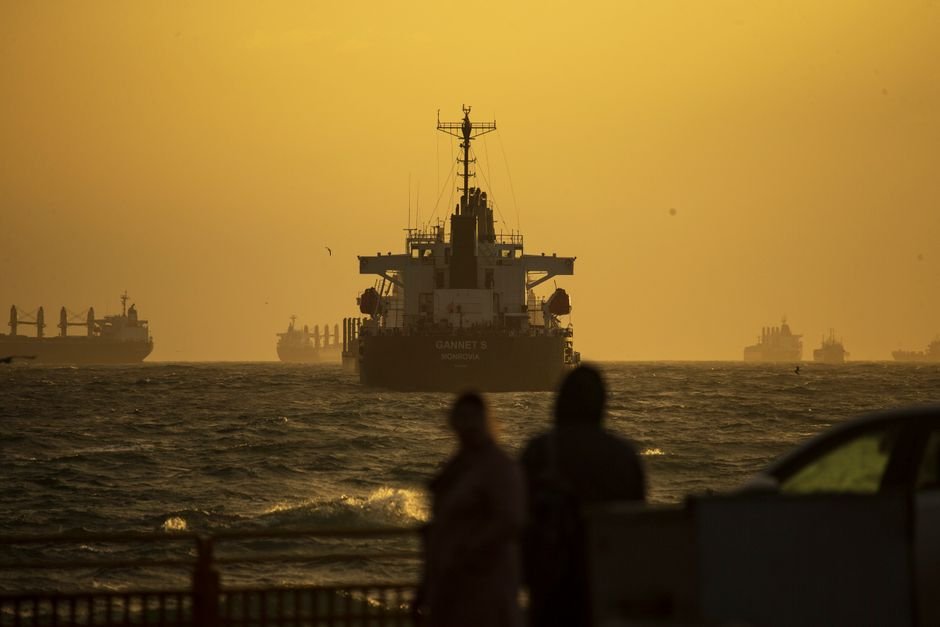
Tehran has warned the United States to keep out of the Strait of Hormuz, telling all commercial vessels they must follow routes set by Iran or face military action. The warning, issued by Iran’s Khatam al-Anbiya Central Headquarters, is the latest escalation in a standoff over who controls the waterway that carries a fifth of the world’s oil.
“Iran will not allow the United States to interfere in the management of the Strait of Hormuz,” the military command said in a statement carried by state media. It warned that any US attempt to disrupt Iran’s control of shipping lanes “will be met with a decisive and swift response.”
The strait, a narrow 34-kilometer (21-mile) channel between Iran and Oman, has been a flashpoint since the start of the US-Iran war. Iran has demanded that all oil tankers and cargo ships use routes it designates and pay fees for passage, a demand the US and Gulf Arab states reject as an illegal seizure of international waters.
Under a 60-day interim truce deal, both sides agreed to let ships pass without interference. But Tehran insists it still controls the routing. Iran has singled out Chinese vessels for free passage as a “gesture of thanks” for Beijing’s support, while all other ships must follow Iranian navigation protocols or face consequences.
“Any failure to comply, deviation from the designated route, or disregard for the navigation protocols of the Islamic Republic of Iran in the Strait of Hormuz will be met with an immediate and forceful response from the armed forces,” the Khatam al-Anbiya command said.
The warning comes as negotiations to end the war continue through Omani and Qatari mediation. An effort by Oman and a UN agency to open an alternative shipping route near Oman’s shore sparked attacks across the Middle East last week, underscoring how fragile any arrangement remains.
The US military’s Central Command, meanwhile, has met with defense officials from 12 Middle Eastern countries in Bahrain, where “leaders underscored their shared commitment to the free flow of commerce through the Strait of Hormuz”, a direct counter to Iran’s position.
The Khatam al-Anbiya command also cautioned the US and Israel against “miscalculation,” saying any aggression would bring a “harsh” response. The statement was issued as Iran prepared for the funeral of Supreme Leader Ayatollah Ali Khamenei, killed in the opening airstrikes of the war, with processions drawing millions and heightening security across the country.
The strait remains open for now. But Iran’s latest warning makes clear that the terms of passage are no longer guaranteed. For any ship trying to move oil through the Gulf, the question is not whether the US disputes Tehran’s authority, but who has the real power to enforce their will on the water.