

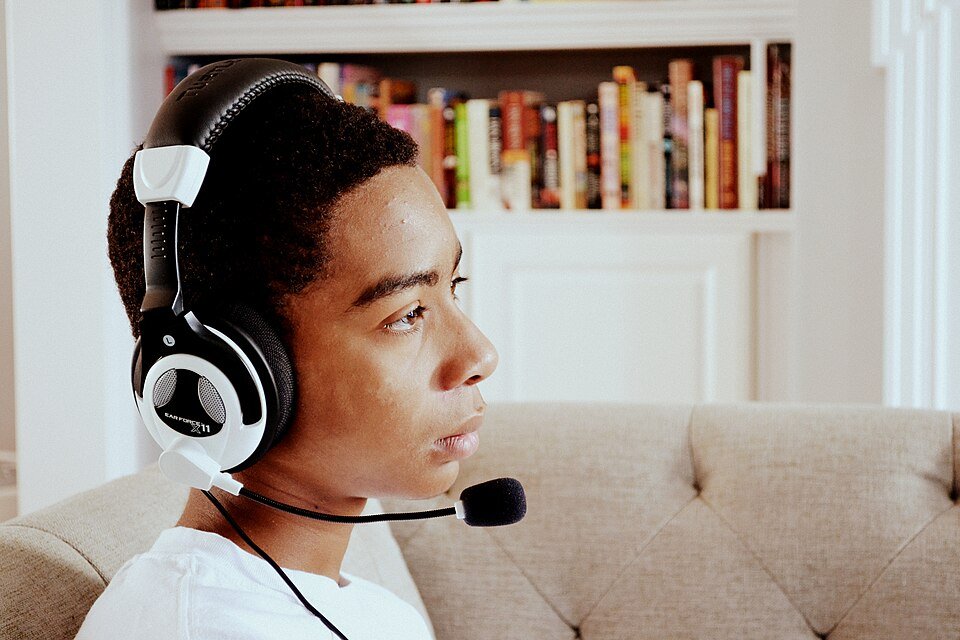
Adolescents with internet gaming disorder show abnormal connectivity between key brain networks that directly ties their depressive symptoms to disrupted sleep, according to a brain imaging study published June 12 in BMC Psychiatry. The finding suggests that a specific brain pathway, running from the front of the brain’s default mode network to the parietal lobe, could serve as both a biomarker for identifying at-risk teens and a target for neuromodulation therapies.
What they found
Researchers at the First Affiliated Hospital of Zhengzhou University recruited 47 adolescents diagnosed with internet gaming disorder (IGD) and 56 healthy controls, all aged roughly 13 to 18. Using resting-state fMRI and a technique called dynamic causal modelling, they mapped the directional “effective connectivity” between three subsystems of the default mode network (DMN), the brain’s introspective circuitry that activates when we daydream, reflect, or think about ourselves.
The IGD group showed two distinct neural differences:
- Stronger communication from the core DMN to the medial temporal subsystem, which governs memory and autobiographical recall. This pattern suggests that gaming-disordered teens’ brains over-rely on memory and self-referential processing even at rest.
- Increased self-connection within the lateral temporal cortex, a region involved in semantic processing and social cognition.
But the most clinically relevant finding involved the dorsal medial prefrontal subsystem. The effective connectivity from the anterior medial prefrontal cortex (aMPFC) to the posterior inferior parietal lobule (pIPL), a pathway linking self-reflection to attention and body awareness, statistically mediated the relationship between depression and sleep disturbances in the IGD group. In plain terms: the more abnormal this connection, the stronger the link between a teen’s depressive symptoms and their sleep problems.
Crucially, this same connectivity measure could predict the severity of sleep disturbances in individual IGD adolescents, using a leave-one-out cross-validation model. This predictive power raises the possibility that a brain scan could flag which teens are most vulnerable to sleep problems before those problems become entrenched.
Why it matters
Internet gaming disorder was added to the International Classification of Diseases (ICD-11) by the World Health Organization in 2019, and its prevalence among adolescents is estimated at 3 to 10 percent globally depending on region and diagnostic criteria. The condition rarely travels alone, comorbid depression and sleep disturbances are common, but the neural mechanisms linking them have been unclear.
The DMN is not a single monolithic system. It is composed of functionally distinct subsystems that interact dynamically. Earlier studies often treated it as a unified network, which may explain why the neural correlates of IGD symptoms have been difficult to pin down. By dissecting the DMN into its component subsystems, the Zhang team has identified a specific neural pathway that could serve multiple clinical purposes: as a screening biomarker, as a target for transcranial magnetic stimulation or other neuromodulation approaches, and as an objective outcome measure for treatment trials.
The mediation finding is particularly important for treatment design. If depression drives sleep disruption through this specific DMN pathway, then interventions that normalize connectivity in the aMPFC-pIPL circuit may improve both mood and sleep simultaneously, rather than treating each symptom domain separately.
Limits
The study is cross-sectional, so the direction of causality cannot be established with certainty. While the mediation model assumes depression drives sleep disruption via DMN connectivity, the reverse is possible: poor sleep may worsen depressive symptoms by degrading DMN function. Longitudinal designs with multiple scanning timepoints are needed to resolve directionality.
The sample size (47 IGD cases) is modest for a brain imaging study, and the results need replication in larger, more diverse populations. All participants were recruited from a single hospital in China, which may limit generalizability to other cultural contexts where gaming patterns and mental health stigma differ.
Bottom line
Internet gaming disorder is not just a behavioral issue, it leaves a measurable signature on the brain’s intrinsic connectivity networks. The discovery that this signature links depression to sleep disruption in a predictable way opens the door to targeted interventions. For clinicians working with adolescents who game excessively and also report mood and sleep problems, the message is clear: these symptoms are interconnected at the neural level, and treatment approaches should address them together, not in isolation.
Source
Zhang M, Ma L, Sun J, Dang J, Tao Q, Wang W, Han S, Zhang Y. “Abnormal effective connectivity of default mode network subsystems affects depressive symptoms and sleep disturbances in adolescents with internet gaming disorder.” BMC Psychiatry. Published online June 12, 2026. doi: 10.1186/s12888-026-08266-9