

Toaster-Sized Thruster Could Give Cubesats Real Maneuvering Power
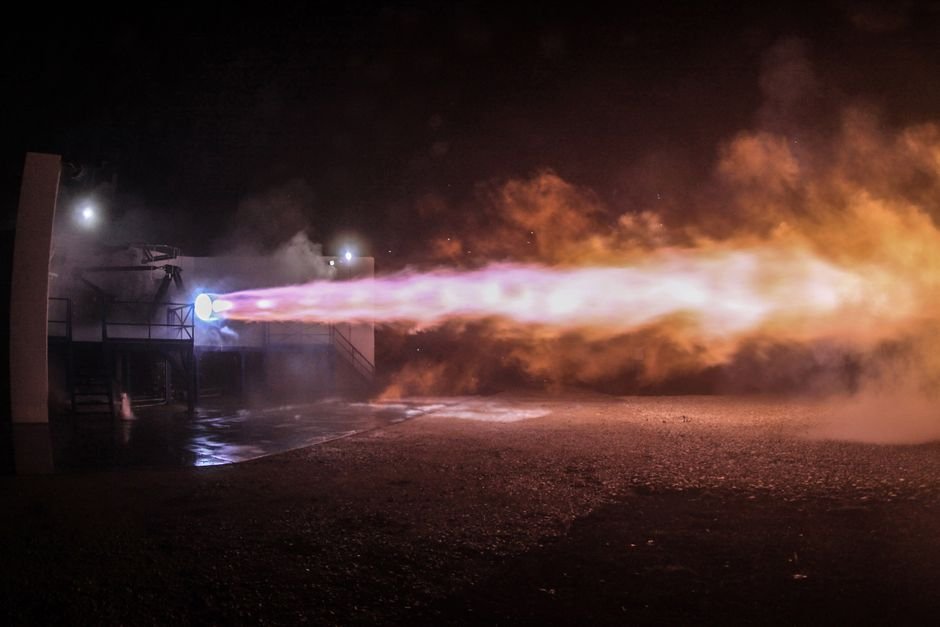
Featured image: [The Parabilis DOTS 2U hybrid propulsion module undergoing hot-fire testing; credit: Parabilis Space Technologies / Space Systems Command]
Cubesats are cheap, quick to build, and have transformed access to space over the past decade. But most of them share a glaring limitation: once they reach orbit, they cannot move. A California startup backed by the U.S. Space Force just demonstrated a propulsion system that could change that.
Parabilis Space Technologies completed hot-fire testing of its Dense Orbital Transfer System (DOTS), a 2U propulsion module roughly the size of a household toaster. The hybrid engine combines solid fuel with a liquid oxidizer, blending the storage advantages of solid propellants with the throttle-ability and restart capability of liquid systems.
Why Cubesats Need to Maneuver
The Space Systems Command, which is evaluating DOTS for future military applications, described the current state of cubesat capabilities bluntly: “While cubesats are cost-effective and useful for one-off experimentation and short-term Earth observation or communications missions, they generally lack any ability to move once they are in space.”
That inability to maneuver limits cubesats to single-mission roles with short orbital lifetimes. Adding propulsion opens a much wider range of applications. A maneuverable cubesat can dodge orbital debris, fly in formation with other spacecraft, reposition to a different orbital slot for a new mission, or operate in very low Earth orbit (VLEO) where atmospheric drag would normally pull a non-propulsive satellite down in weeks.
VLEO is particularly attractive for Earth observation. Operating at altitudes of 250 to 400 kilometers (155 to 250 miles) improves imaging resolution and reduces communications latency, but the residual atmosphere creates drag that demands active station-keeping. A propulsion system like DOTS could keep a cubesat at those altitudes for months instead of days.
How DOTS Works
The DOTS module uses what Parabilis calls a hybrid architecture. A safe-to-handle solid fuel grain provides the energy source, while a liquid oxidizer is injected on demand to control the burn. This avoids the complexity of fully liquid systems (pumps, valves, pressurized tanks for both fuel and oxidizer) while offering performance closer to a liquid engine than a simple solid motor.
The system features a cold-start capability that eliminates lengthy warm-up sequences before firing. For military and rapid-response applications, this means a cubesat could fire its engine within moments of receiving a command, without waiting for propellant conditioning.
Path to Flight
The hot-fire ground tests have been completed successfully. Parabilis CEO Enrico Attanasio called DOTS “a clear leap in cubesat propulsion performance.” The next milestone is a flight demonstration.
“Both government and industry partners have expressed interest in partnering on a flight test,” a Parabilis spokesperson told SpaceNews. “Once we have a definitive partner, we could be ready to fly in less than one year.”
If DOTS reaches orbit, it could open a new class of cubesat missions ranging from on-orbit inspection and debris avoidance to responsive space capabilities that the Space Force has been pursuing under its “tactically responsive launch” and agile satellite programs.
Reviewed by Clark