

One of the great unresolved mysteries of Pacific archaeology is why the ancestors of modern Polynesians, after sailing east to reach Samoa and Tonga roughly 3,000 years ago, stopped for 1,700 years, and then, around 900 to 1100 AD, suddenly launched a breathtaking wave of eastward voyaging that reached Hawaii, New Zealand, Easter Island, and likely the Americas within 250 years.
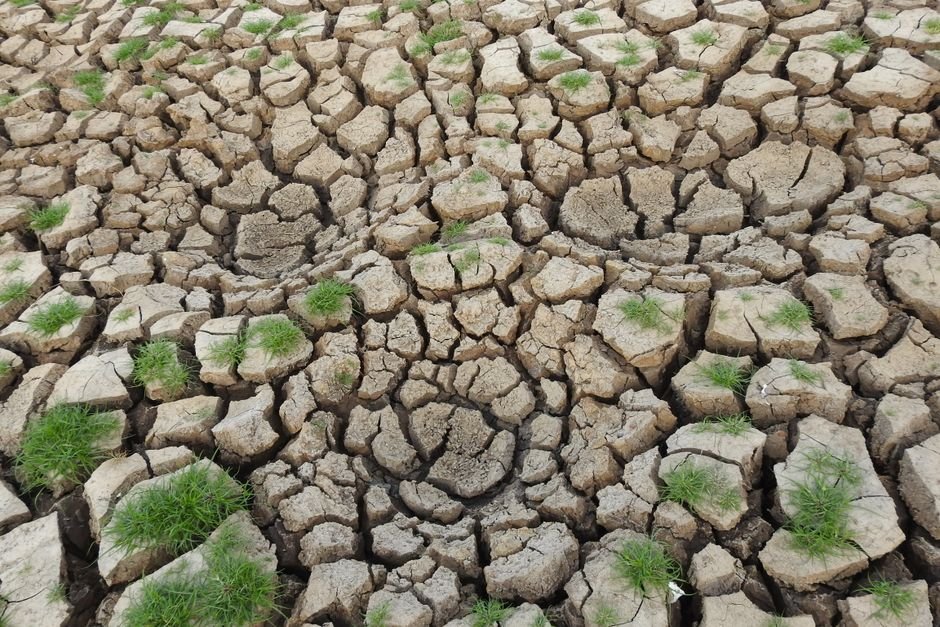
A new study published in the Journal of Pacific Archaeology provides the clearest answer yet: a megadrought, the worst in 2,000 years, made life in the homeland islands unsustainable precisely when population was high and improved canoe technology made the voyage viable.
The geological evidence
The research team, led by David Sear of the University of Southampton, analyzed hydrogen isotopes preserved in ancient mud from swamps and lakes across Samoa, Tonga, the Cook Islands, and French Polynesia. Algae and plants absorb rainwater and lock its isotopic signature into their cell structures, which survive in sediment for millennia, creating a natural rainfall archive.
The results show that between 850 and 1200 AD, the southwest tropical Pacific experienced its driest period in two millennia. The drought was driven by shifts in Pacific sea surface temperatures that displaced the South Pacific Convergence Zone, the region’s main rain belt, farther east, starving Samoa and Tonga of rainfall while making the eastern islands wetter.
Three factors, one trigger
Scholars had long debated three competing explanations: technological innovation (the development of larger double-hulled canoes capable of sailing into the trade winds), social and population pressure (growing populations outstripping limited island resources), and environmental change. The new evidence does not rule out the first two, but positions drought as the decisive catalyst.
As the homeland islands dried out, the eastern islands, the Cooks, the Societies, were experiencing increased rainfall, making them both push and pull. The drought coincided precisely with the first evidence of human settlement in the Southern Cook Islands around 900 AD, consistent with a 2020 PNAS study by the same team.
Genetic evidence from Samoa shows a rapid population increase around 1000 AD, consistent with arrivals from the east, suggesting that early eastward settlers, finding uninhabited islands, sent word back.
Sear’s assessment: “We have confirmed the theory that the end of the Long Pause coincided with a period of mega drought in the homeland islands. As they headed east, they found wetter islands with nobody on them.”
The Moana connection
The story has found a global audience through the Moana films, the 2016 animated original and the 2026 live-action adaptation. Both draw on the mystery of the Long Pause, with Moana leaving her threatened home island to sail beyond the reef to save her people, a fictional echo of the real historical dynamic in which environmental stress forced islanders to risk dangerous eastward voyages.
Sources
[1] Sear, D., et al. “Did changing climate in the tropical South Pacific contribute to the eastward migration and settlement of Polynesia?” Journal of Pacific Archaeology, Vol. 16(2) (2026). DOI: 10.70460/jpa.v16i2.399
[2] Sear, D., et al. “Human settlement of East Polynesia earlier, incremental, and coincident with prolonged South Pacific drought.” PNAS (2020). DOI: 10.1073/pnas.1920975117
[3] Ars Technica. “Why Polynesians suddenly sailed east after 1,700 years.” (2026). https://arstechnica.com/culture/2026/07/the-real-mystery-behind-moana-after-1700-years-why-did-polynesians-suddenly-sail-east/