

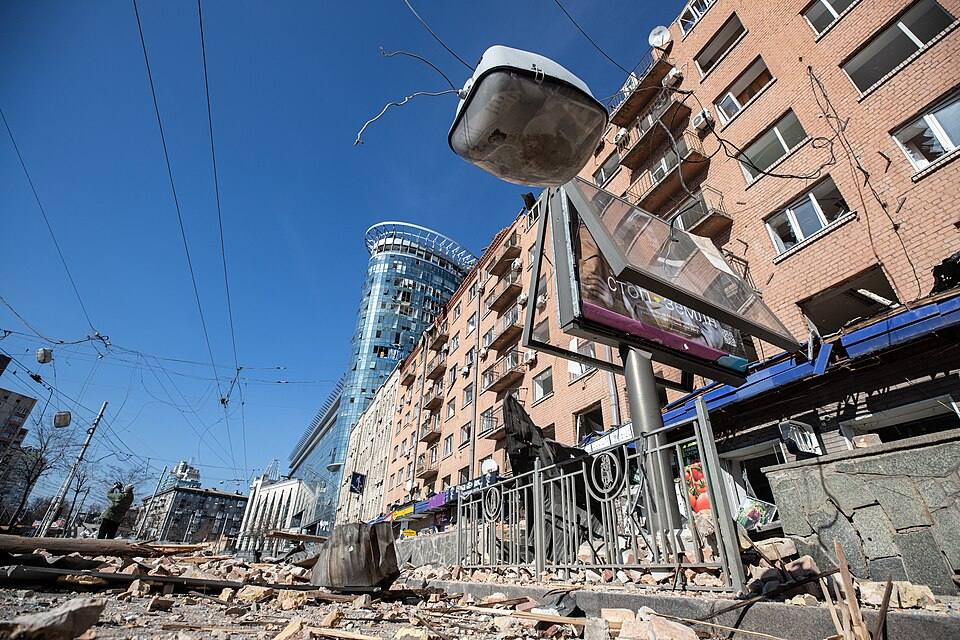
Ukraine Civilian Deaths Hit Highest Monthly Toll Since April 2022, UN Reports
The war in Ukraine killed more civilians in May 2026 than in any month since the first months of the full-scale invasion, the United Nations has reported. The figures are stark: at least 274 dead, 1,763 injured, and a total casualty count exceeding 2,000, the highest monthly toll since April 2022.
The numbers come from the UN Human Rights Monitoring Mission in Ukraine (HRMMU), which published its monthly report on June 12. The mission has been tracking civilian harm since the war began, and its latest findings describe a conflict that is getting worse for ordinary people, not better.
“The total number of civilian casualties in May exceeded 2,000, making it the month with the highest number of civilian victims since April 2022,” said Danielle Bell, head of the monitoring mission. “The intensification of hostilities and the increasingly frequent use of powerful weapons in urban areas led to a high number of civilian deaths and injuries across the country.”
The deadliest single attack came on May 14, when a missile struck a residential building in Kyiv, killing 24 civilians and wounding at least 7. Ten days earlier, on May 5, an aerial bomb hit an industrial zone in Zaporizhzhia, killing 12 and injuring 42. These were not isolated incidents; they were part of a pattern of intensified bombardment that stretched across the country.
The UN’s Rosemary DiCarlo, Under-Secretary-General for Political and Peacebuilding Affairs, told the Security Council on June 8 that “the last few months have seen some of the most extensive aerial attacks of the war.” She described how, just hours after a previous council briefing on June 1, Russia launched one of its biggest missile and drone bombardments across Ukraine: 7 killed and 89 injured in Kyiv; 16 dead in Dnipro, including two children; and additional casualties reported in Kharkiv, Poltava, Sumy, Zaporizhzhia, and Chernihiv.
The scale of the May toll is driven partly by Russia’s increased use of powerful aerial bombs in populated areas. The HRMMU report notes that missile strikes and glide bombs, weapons that can be launched from aircraft well behind Russian lines, have become the primary cause of mass-casualty events in cities far from the front. The attack in Zaporizhzhia and the Kyiv residential strike both fit this pattern.
“The harm to civilians that we documented was not limited to communities near the front line,” Bell said. “In cities across Ukraine, repeated attacks using missiles and aerial bombs resulted in civilian deaths and injuries far from areas of active ground fighting.”
Near the front, the weapon of choice has shifted to short-range drones. In May, at least 64 civilians were killed and 539 injured by drone strikes, the highest recorded use of this type of weaponry since the invasion began in February 2022. Kherson, a city that has been subjected to near-constant drone attacks since Ukrainian forces liberated it in late 2022, was hit hardest: 14 killed and 221 wounded in a single month.
The UN also documented casualties in territory occupied by Russia. On the night of May 21-22, in the occupied city of Starobilsk in the Luhansk region, 21 people were killed when shells struck an educational complex. The mission confirmed civilian deaths and injuries in occupied areas but noted that access constraints made regular verification difficult.
On the Russian side of the border, Moscow’s authorities reported 47 civilians killed and 298 injured on territory under Russian control. The UN emphasized that it lacked independent sources to regularly verify these figures.
The May casualty record extends a grim trend. The year 2025 was already the deadliest for Ukrainian civilians since 2022, with over 2,500 killed and 12,000 injured. The spring and summer months have historically seen higher casualty rates as improved weather allows for more intensive operations. But the 2026 escalation, the UN report makes clear, is significantly more pronounced than in previous years.
The human cost is matched by a humanitarian crisis that shows no sign of easing. Indrika Ratwatte, Acting Assistant Secretary-General for Humanitarian Affairs, told the Security Council that 10.8 million people in Ukraine currently require humanitarian assistance, but funding has reached less than half of what is needed.
“These attacks are unacceptable,” Ratwatte said. “International rules obliging civilian protection exist to limit suffering and preserve dignity precisely when there is war. They must be respected.”
His words were directed at the Security Council, the same body that, meeting for the fifth time in three weeks on Ukraine, has been unable to agree on any meaningful action to stop the killing.