

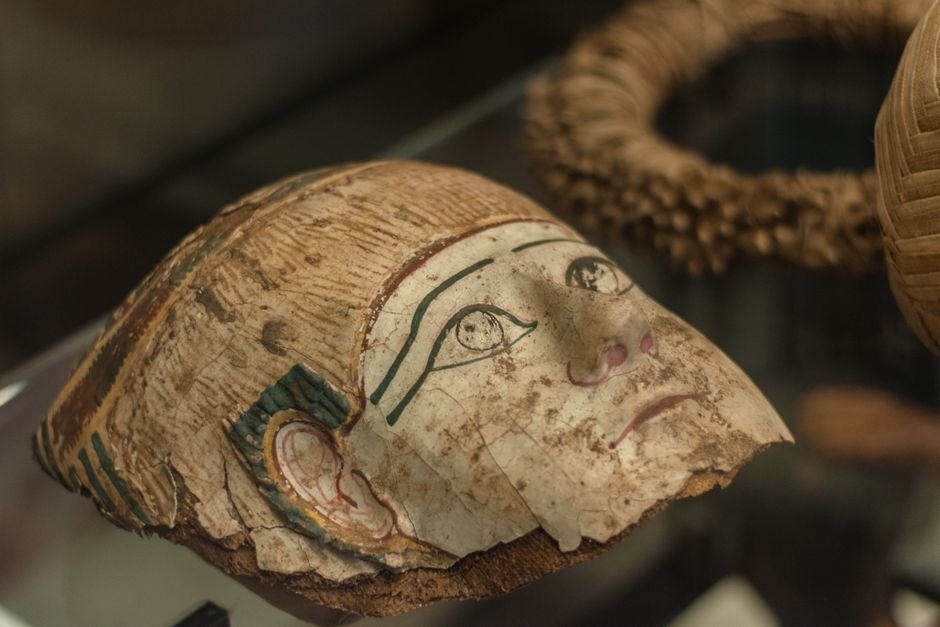
In May 1994, an Egyptologist named Bob Brier and an anatomist named Ronn Wade began what no one had attempted in roughly 2,000 years: mummifying a modern human body using exclusively ancient Egyptian tools and techniques. The body belonged to a 76-year-old Baltimore man who had died of a heart attack and donated his remains to science. By the end of the project, he weighed 23 kilograms (51 pounds) and looked, in Brier’s words, “just like Ramses the Great.”
The story of this remarkable experiment is now the subject of Sam Kean’s book “Dinner with King Tut: How Rogue Archaeologists Are Re-creating the Sights, Sounds, Smells, and Tastes of Lost Civilizations” (Little, Brown and Co., 2025), and it offers a rare window into what experimental archaeology can teach us about ancient practices.
The procedure
Brier and Wade followed Egyptian embalming methods as closely as the historical record allowed. Brain removal came first. Brier initially tried a hooked rod through the nostril, the classic Egyptian method, but the brain tissue was too soft. He succeeded by squirting water up the nose and whisking with a rod until the brain liquefied and poured out like what he described as a “strawberry milkshake.”
Next came organ removal through a 9-centimeter (3.5-inch) incision in the left abdomen. The team removed the spleen, liver, gallbladder, lungs, and 6.7 meters (22 feet) of intestines. The heart was left in place, the ancient Egyptians considered it the seat of intelligence and left it for the afterlife. The most difficult step was detaching the lungs from the heart while working blind through the small incision.
For the dehydration step, Brier personally dug natron, a naturally occurring salt mixture, from Egyptian wadis and smuggled hundreds of pounds of it back through JFK Airport in suitcases packed among film crew equipment. The body was packed with 29 linen bags of natron in the torso, laid on 96 kilograms (211 pounds) of natron, and buried under another 264 kilograms (583 pounds) of the salt. Over 35 days, Brier periodically cracked the natron crust with an iron rod to check progress.
The results were dramatic. The body’s weight dropped from 85 kilograms (188 pounds) to 36 kilograms (79 pounds), 14 kilograms (31 pounds) from organ removal, the rest from water loss. The skin tightened, shriveled, and turned a brown-yellow. Lips retracted into the classic hollow-eyed grin. Wispy hair stood up. After only five weeks, the body already displayed the iconic Egyptian mummy appearance.
This was a key archaeological insight: the classic mummy look is not a result of 3,000 years in a dry desert environment. The natron dehydration process alone produces it within weeks.
Obsidian over copper
One practical finding surprised the researchers. They fabricated replica tools in copper, bronze, and obsidian based on ancient Egyptian designs. Copper blades, long assumed by scholars to be the primary embalming tool, could not cut through human flesh effectively and were quickly abandoned. Obsidian, volcanic glass, worked far better, producing the clean incisions needed for organ removal.
The finding suggests that Egyptian embalmers may have relied more heavily on obsidian tools than the archaeological record currently reflects. Obsidian does not preserve well in the archaeological context, so its absence from embalming tool assemblages may be a preservation bias rather than evidence it was not used.
Afterlife of a modern mummy
After dehydration, the body received a full massage with lotus, cedar, and palm oils (which restored joint flexibility), and was wrapped in linen bandages with amulets and papyrus spell scraps between layers. The mummy dried for three more months to a final weight of 23 kilograms (51 pounds). Brier gave the mummy the nickname “E. M. Balm.”
For the past 30 years, the mummy has been stored in a metal casket at the University of Maryland at room temperature. It has been partially unwrapped twice for inspection. There is no decay. Brier’s assessment: “He’s dead and well.”
The experiment was formally documented in the Journal of Plastination in 1996 (Brier & Wade, “The Use of Natron in Human Mummification: A Modern Experiment”) and also published in Zeitschrift fur Agyptische Sprache und Altertumskunde in 1997. Kean’s “Dinner with King Tut” places the mummification within a broader tradition of experimental archaeologists who have recreated everything from ancient brews to prehistoric tools.
Sources
[1] Live Science. “‘Some people called it horrifying’: ‘Dinner with King Tut’ author on using Egyptian mummification techniques on a modern-day human body.” July 11, 2026. https://www.livescience.com/archaeology/some-people-called-it-horrifying-dinner-with-king-tut-author-on-using-egyptian-mummification-techniques-on-a-modern-day-human-body
[2] Live Science. “‘He looked like Ramses the Great’: How experimental archaeologists used ancient techniques to mummify a modern-day person.” July 11, 2026. https://www.livescience.com/archaeology/ancient-egyptians/he-looked-like-ramses-the-great-how-experimental-archaeologists-used-ancient-techniques-to-mummify-a-modern-day-person
[3] Brier, B. & Wade, R.S. “The Use of Natron in Human Mummification: A Modern Experiment.” Journal of Plastination, Vol. 11(1), pp. 20-21 (1996). DOI: 10.56507/LTYV6432
[4] Kean, S. “Dinner with King Tut: How Rogue Archaeologists Are Re-creating the Sights, Sounds, Smells, and Tastes of Lost Civilizations.” Little, Brown and Co. (2025). https://samkean.com/books/dinner-with-king-tut/