

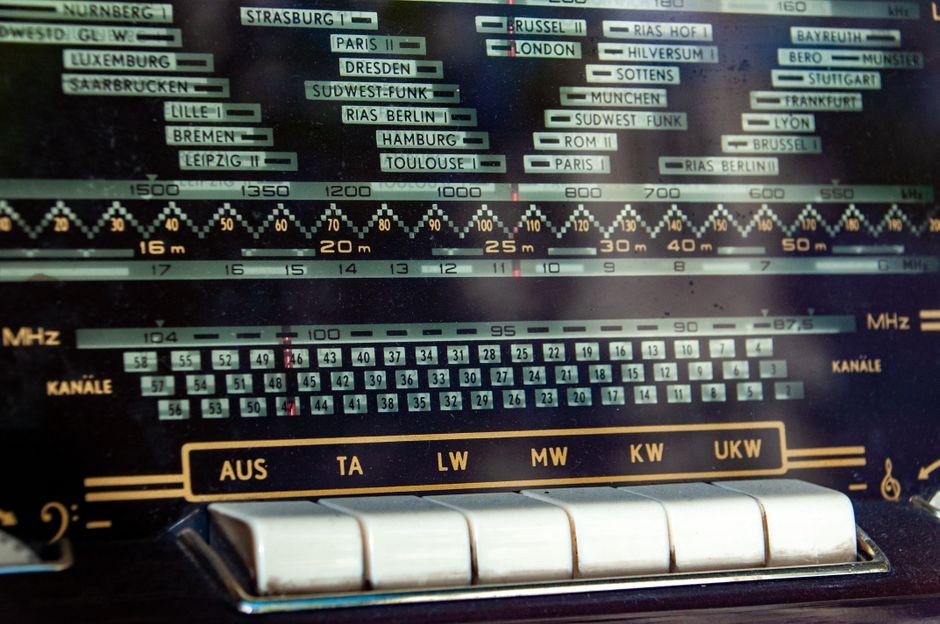
High-frequency radio, the long-range communication technology that satellites displaced decades ago, is making a comeback, driven by growing vulnerabilities in space-based infrastructure and advances in modern waveforms that address its historical shortcomings.
A white paper published by Rohde & Schwarz in partnership with IEEE Spectrum examines the forces behind HF’s strategic resurgence. The technology, which operates in the 3 to 30 MHz range and propagates signals globally by refracting off the ionosphere’s D, E, and F layers, was the primary medium for long-distance communication for most of the 20th century. Satellites pushed HF into niche military and amateur-radio use from the 1970s onward, offering higher data rates, predictable links, and simpler operation.
Why HF is coming back
The reversal is driven by the recognition that satellites, for all their capability, are vulnerable on multiple fronts:
- Anti-satellite weapons have been tested by multiple nations, raising the risk of capability loss in a conflict.
- Fixed-frequency satellite transponders can be jammed.
- Solar flares can physically damage spacecraft electronics.
- Persistent coverage gaps exist in polar regions and heavily forested terrain.
These vulnerabilities have renewed demand for an independent, infrastructure-free global communications layer that does not depend on orbital assets. HF fills that role: it requires no satellites, no cables, and no third-party infrastructure, just a transmitter, a receiver, and the ionosphere.
Modern technology makes HF practical
HF’s traditional drawbacks, low data rates, unreliable links, the need for skilled operators to manually select frequencies, have been addressed by two key technologies:
Wideband HF (MIL-STD-188-110D) extends channel bandwidth to 48 kHz, supporting data rates up to 240 kbit/s using advanced modulation, forward error correction, and interleaving. While modest by modern broadband standards, this is sufficient for voice, text, and tactical data links.
Automatic Link Establishment (ALE), now in its fourth generation, automates frequency management and link negotiation. Modern ALE systems continuously monitor channel conditions across the HF spectrum and automatically select the best available frequency for a given path, time of day, and solar conditions, removing the need for highly trained operators.
The combination of wideband waveforms and automated link management transforms HF from a temperamental, operator-intensive medium into a reliable backup and alternative to satellite communications. For military and government users who cannot afford to lose connectivity when satellites are compromised, the rebirth of HF represents a strategic hedge against the fragility of space-based infrastructure.
Sources: The Rebirth of High Frequency (IEEE Spectrum / Rohde & Schwarz, Jul 2026)